NR-1 Nuclear Submarine

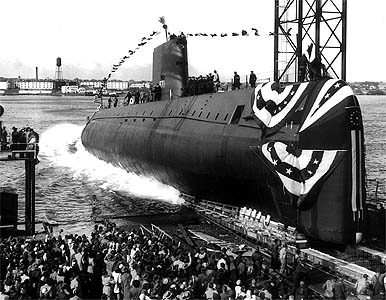
Deep Submergence Vessel NR-1 was a unique United States Navy (USN) nuclear-powered ocean engineering and research submarine, built by the Electric Boat Division of General Dynamics at Groton, ConnecticutNR-1 was launched on 25 January 1969, completed initial sea trials 19 August 1969, and was home-ported at Naval Submarine Base New LondonNR-1 was the smallest nuclear submarine ever put into operation. The vessel was casually known as “Nerwin” and was never officially named or commissioned. The U.S. Navy is allocated a specific number of warships by the U.S. Congress, but Admiral Hyman Rickover avoided using one of those allocations for the construction of NR-1 in order to circumvent the oversight that a warship receives from various bureaus. More info on Wikipedia.

Submarine 3d Model
Rotate the model

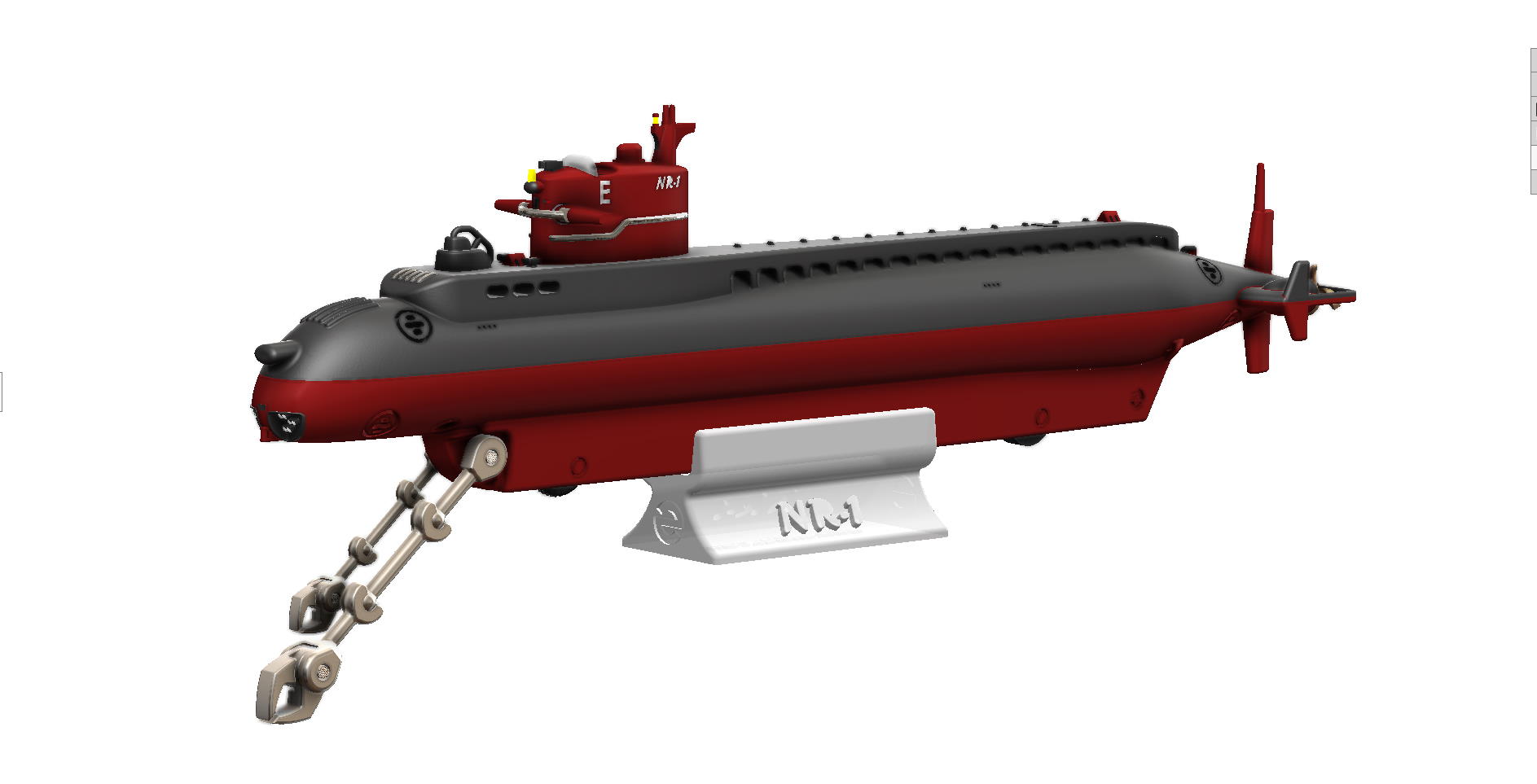
This is a 3d printable model of the well known NR-1. The details are as faithful to the real thing as much as 3d printing requirements allow. The model details are improved for enabling an easier printing with minimal supports. There is also a 1meter hull available for R/C model builders.

Continue reading for more information and STL files

Read more

X-Ray Class Submarine

The Paltus-class submarine is a Russian special purpose mini-submarine of project 1851.1. Two boats were completed – AS-21 and AS-35 as a follow up of the single “X-Ray”-class boat AS-23 (Project 1851). 

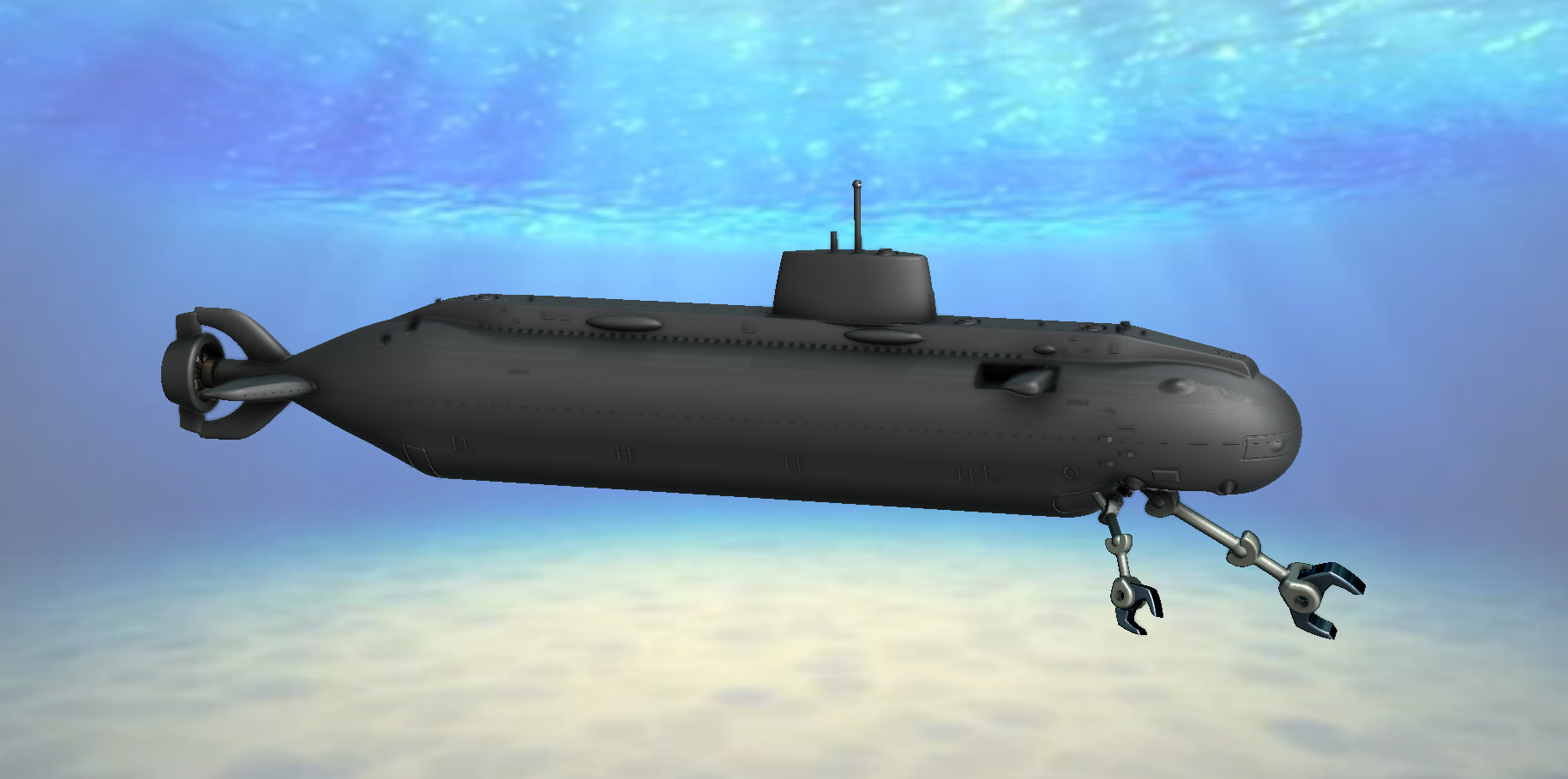
X-ray with various gripper options

The surface displacement is approximately 300 tons with a length of 98 feet (30 m). The propulsion comes from nuclear power with the operating depth in excess of 3,800 feet (1,200 m). The designer, according to Polmar was Sergei Bavilin who had designed the earlier diesel electric Project 865/Piranya small submarine of similar dimensions

Continue reading for more renderings and STL files for 3d printing this sub.

Read more

Zeeteyfel Submarine with tank tracks

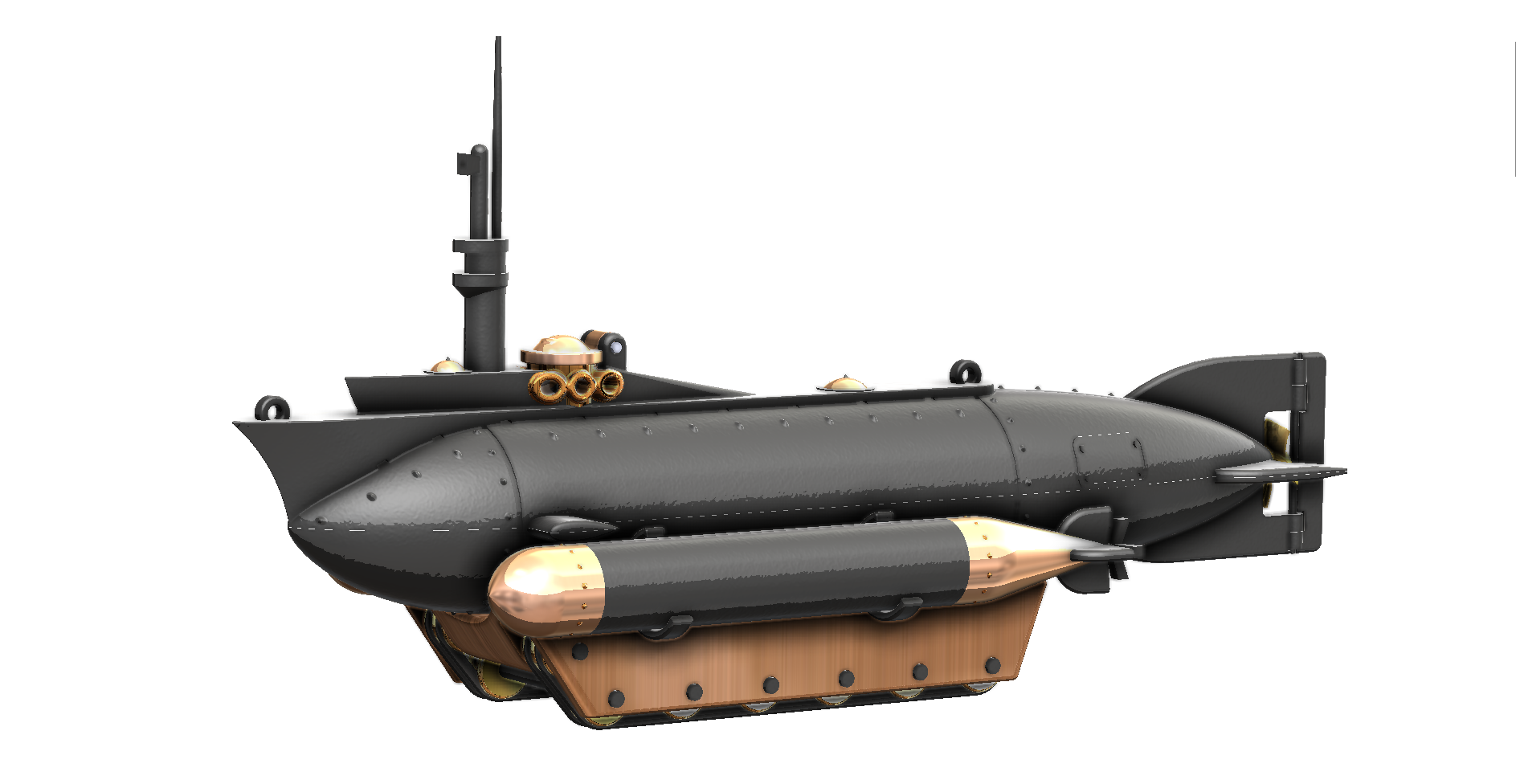
German engineers were able to create a number of interesting mini-submarine projects. One of them was a kind of crossing a submarine with a tank. This very interesting example was the ultra-small amphibious submarine “Seeteufel” (translated from German as “monkfish”) with a caterpillar mover. This boat was intended both for independent carrying out torpedo attacks and for delivering small groups of swimmers-saboteurs to the target of the attack.

.

Seeteufel was a rather unusual, even amazing, development. This “pocket” submarine was supposed to feel at home on the water surface, under water, and on land. This combat apparatus, as if descended from the pages of books by the famous science fiction writer Jules Verne. This boat attracted special attention and sympathy from the sabotage detachment “K” specially created in the German fleet. Members of this squad are accustomed to evaluate military equipment from the point of view of its combat use behind the front line of the enemy, so they could not but like this machine.

Read more

Bushnell’s Turtle Submersible

Side view

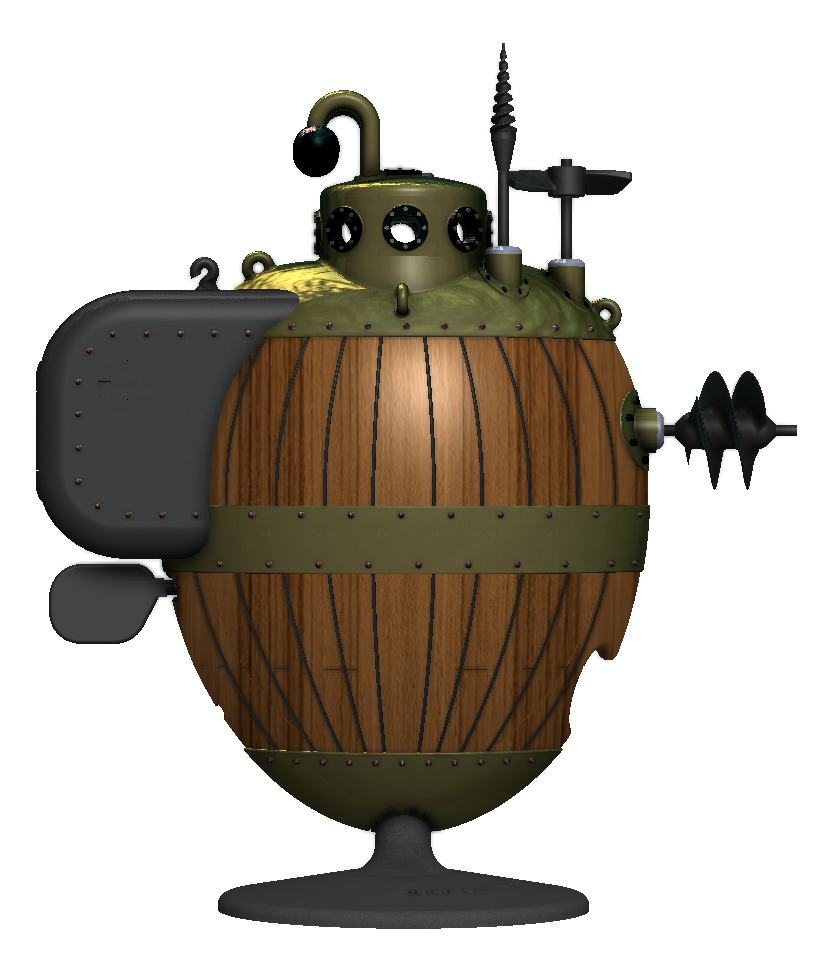
In 1776, during the American Revolution, inventor David Bushnell decided to take his skills to the next level and build a submarine. And not just any submarine, mind you – this one was specifically designed to attack British ships!

Now, you might be thinking, “But wait, how could a guy in the 18th century possibly build a functional submarine?” Well, let me tell you, Bushnell was no ordinary inventor. He was a genius, a visionary, and a bit of a madman.

Turtle (also called American Turtle) was the world’s first submersible vessel with a documented record of use in combat. It was built in 1775 by American David Bushnell as a means of attaching explosive charges to ships in a harbor, for use against Royal Navy vessels occupying American harbors during the American Revolutionary War. More on Wikipedia.

The submarine he built was called the Turtle, and it was shaped like, you guessed it, a turtle. It was about six feet long and three feet wide, and it had a hatch on top that could be opened and closed by the operator.

Continue reading for more renderings and a free hi rez stl file for a 3d printable display model.

Read more

SP-350 Denise, Cousteau’s Science Submersible

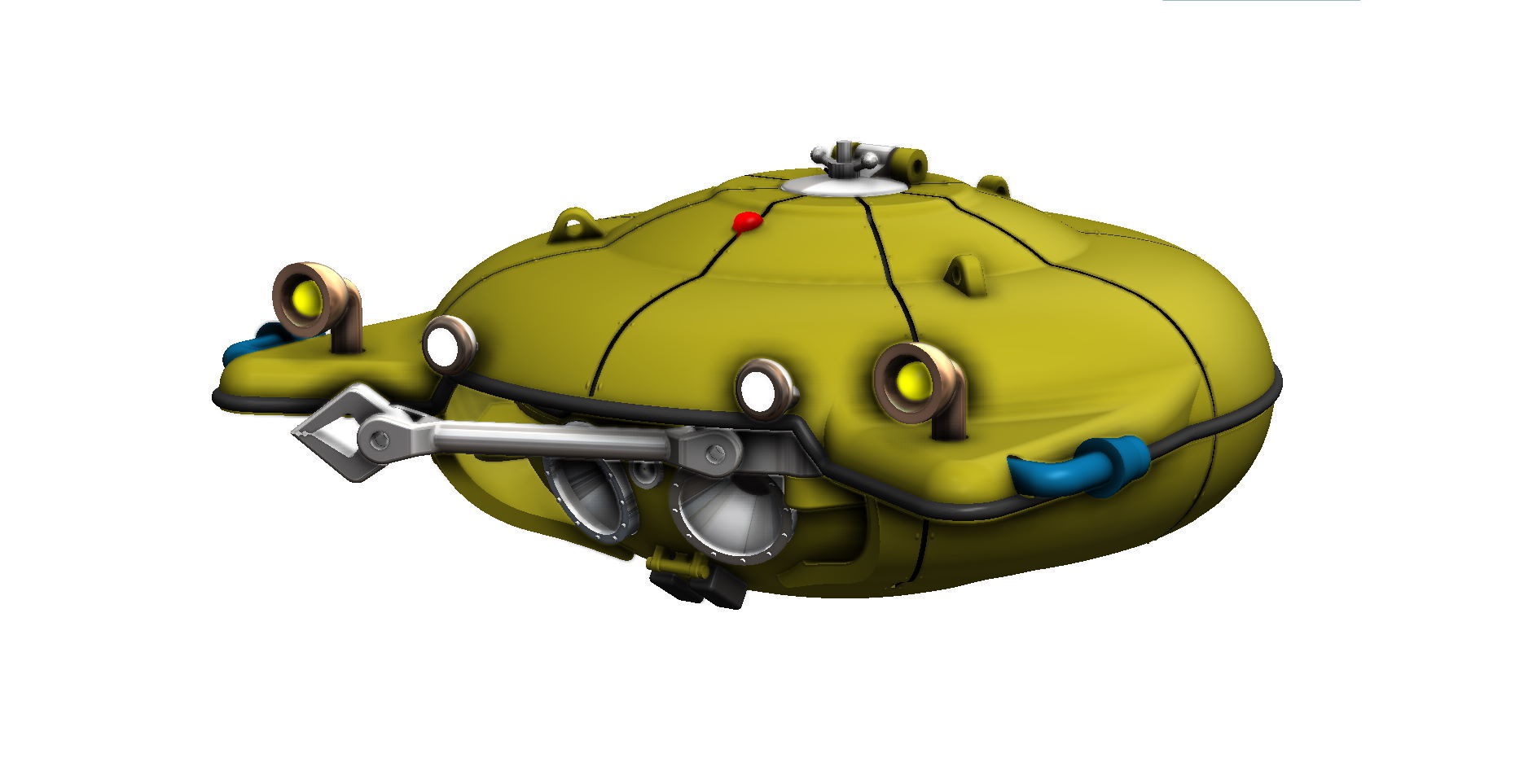
The SP-350 Denise, famous as the “Diving saucer” (Soucoupe plongeante), is a small submarine designed to hold two people, and is capable of exploring depths of up to 400 metres (1,300 ft). It was invented by Jacques-Yves Cousteau and engineer Jean Mollard at the French Centre for Undersea Research.[1] It was built in the year 1959 and usually operated from Cousteau’s ship, the Calypso. More on Wikipedia.

Continue reading for more renderings, information and STL files for 3d printing.

Read more

Type 209-1400 Submarine

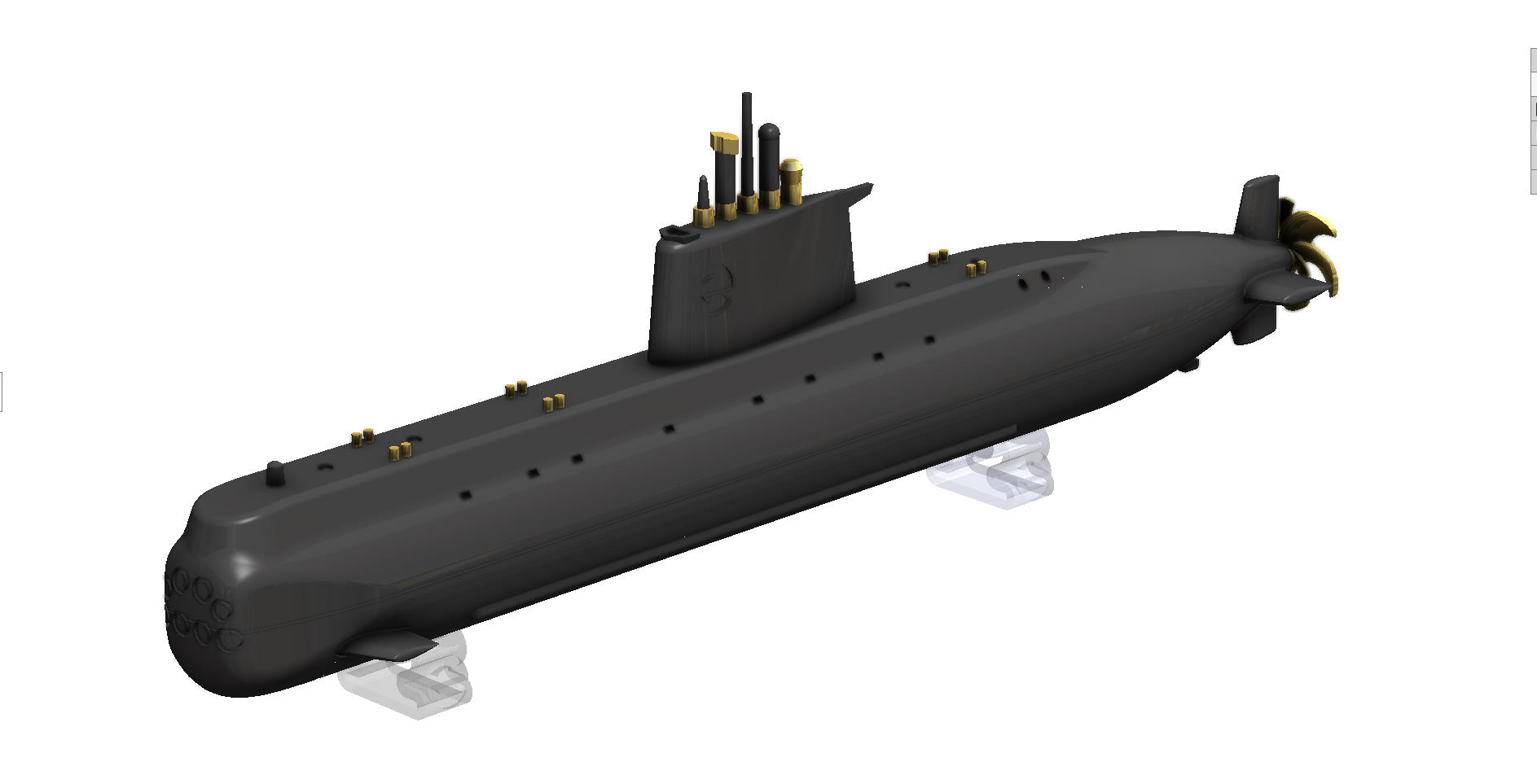
The Type 209 is a class of diesel-electric attack submarine developed exclusively for export by Howaldtswerke-Deutsche Werft of Germany. The original variant (Type 209/1100) was designed in the late 1960s. The class is exclusively designed for export market. Despite not being operated by the German Navy, five variants of the class (209/1100, 209/1200, 209/1300, 209/1400 and 209/1500) have been successfully exported to 13 countries, with 61 submarines being built and commissioned between 1971 and 2008. More on wikipedia.

Read more for more renderings and download link for the STL files.

Read more

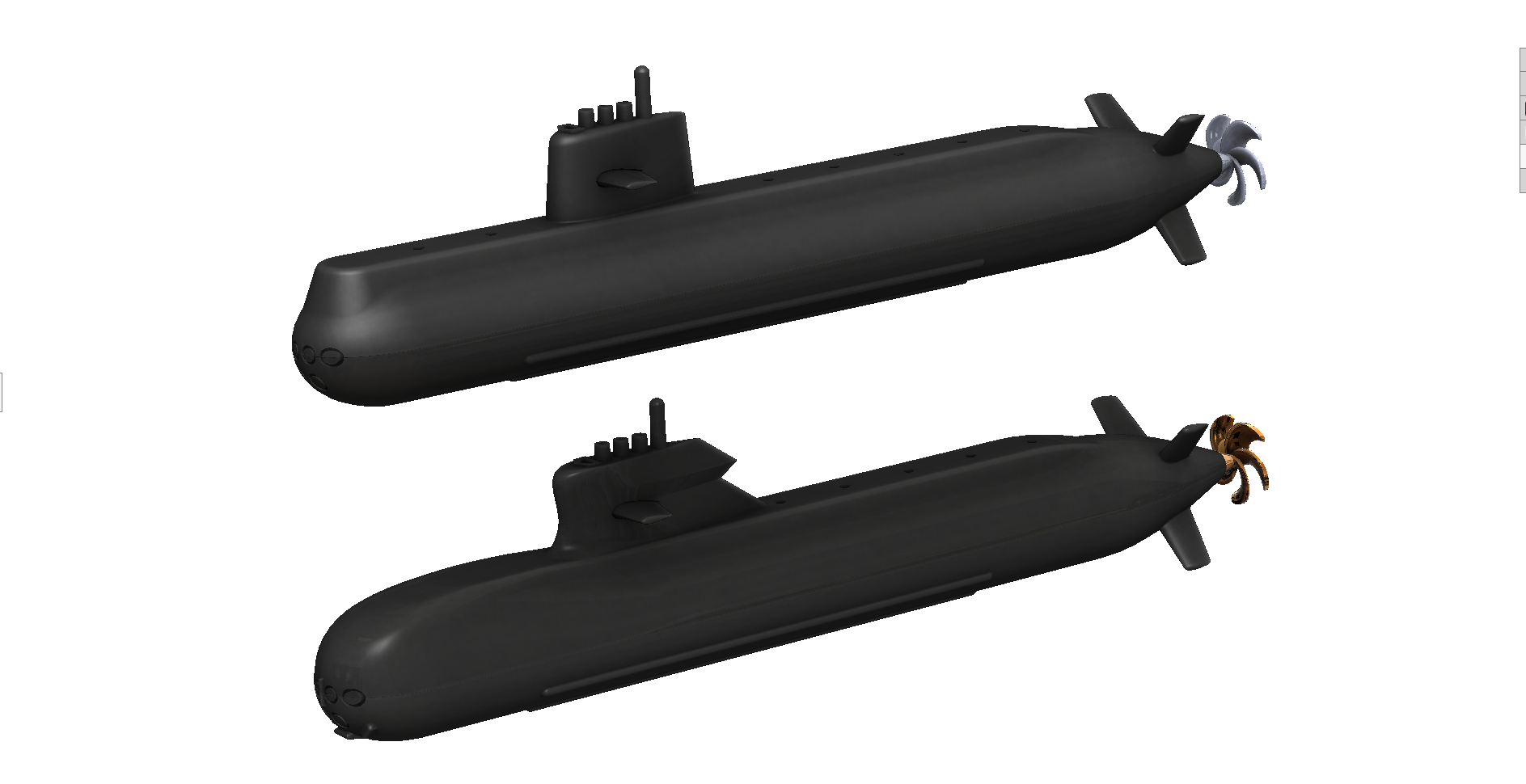
Gotland and A26 Class Submarines

The Gotland-class submarines of the Swedish Navy are modern diesel-electric submarines, which were designed and built by the Kockumsshipyard in Sweden. They are the first submarines in the world to feature a Stirling engineair-independent propulsion (AIP) system, which extends their underwater endurance from a few days to weeks. This capability had previously only been available with nuclear-powered submarines. Read More on Wikipedia.

I modeled the sub to be easily printable. Also made the newer swedish sub A26 with its distinctive sail design.

Read more

Submarine Kursk

K-141 Kursk (Russian: Атомная Подводная Лодка «Курск» (АПЛ «Курск»), translAtomnaya Podvodnaya Lodka “Kursk” (APL “Kursk”), meaning “Atomic-powered submarine Kursk“) was an Oscar II-class nuclear-powered cruise missile submarine of the Russian Navy.

Here is a 3d model of the Kursk. It is specificly optimized for 3d printing.

the missile silo doors open & close, the propellers turn. Read more for more images and the STL files.

Read more

Delfin Submarine

Delfin (Дельфин, lit. ’Dolphin’) was one of the first combat-capable submarines in history. She was commissioned in 1903 and decommissioned in 1917, having served during World War I.

I’ve modeled this funny looking submarine, trying to make 3d printing possible and as easy as possible with minimal supports. Some thin details are enlarged and strengthened.

Read more

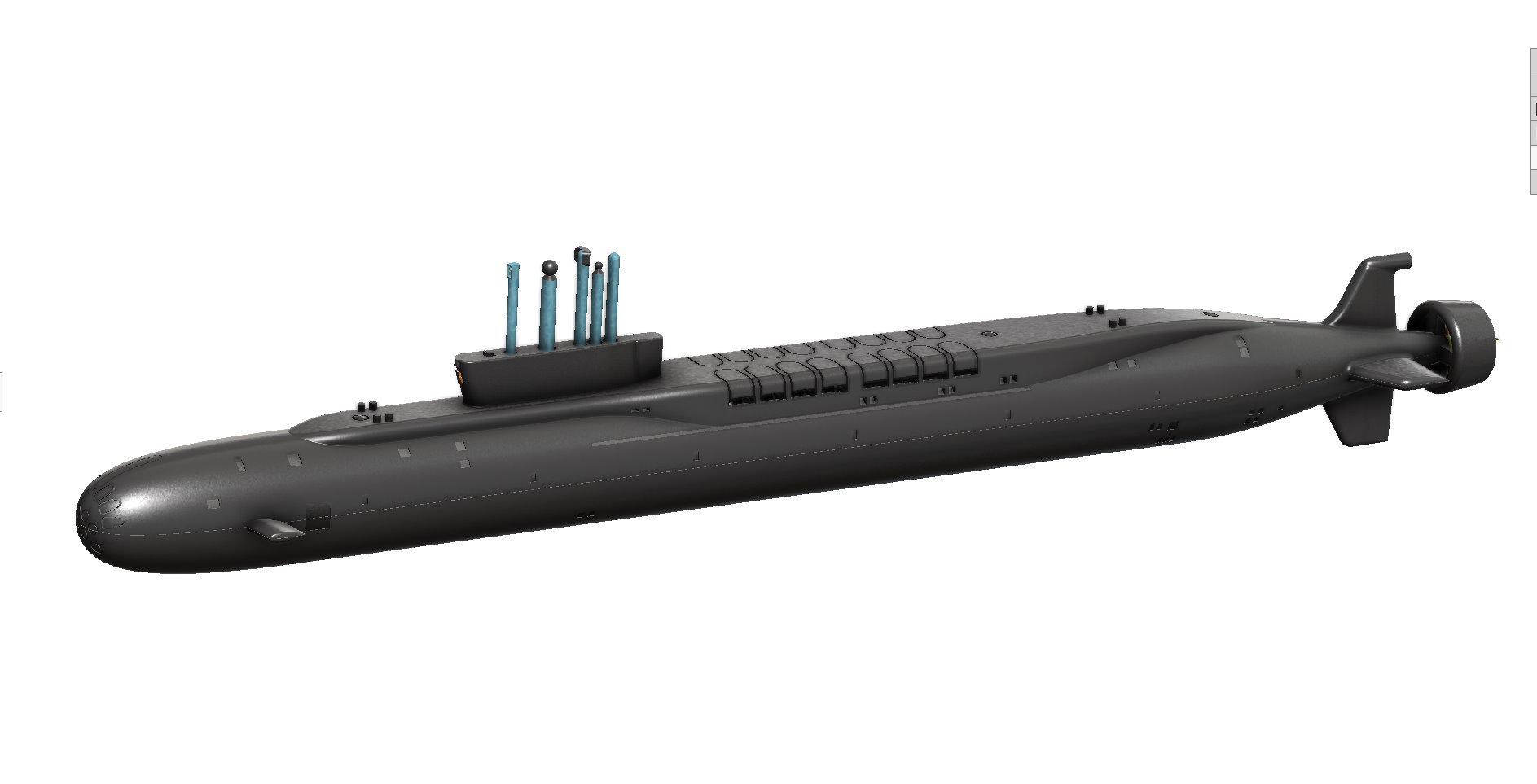
Vanguard Class Submarine

The Vanguard class is a class of nuclear-powered ballistic missile submarines (SSBNs) in service with the Royal Navy. The class was introduced in 1994 as part of the Trident nuclear programme, and comprises four vessels: Vanguard, Victorious, Vigilant and Vengeance, built between 1986 and 1999 at Barrow-in-Furness by Vickers Shipbuilding and Engineering, now owned by BAE Systems. All four boats are based at HM Naval Base Clyde (HMS Neptune), 40 km (25 mi) west of Glasgow, Scotland.

Since the decommissioning of the Royal Air Force WE.177 free-fall thermonuclear weapons during March 1998, the four Vanguard submarines are the sole platforms for the United Kingdom’s nuclear weapons. Each submarine is armed with up to 16 UGM-133 Trident II missiles.

Well, let’s dive into some fun facts about these fascinating underwater behemoths.

  1. Silent Giants: Vanguard class submarines are often referred to as “silent giants” because of their remarkable stealth capabilities. These submarines are designed to be incredibly quiet, allowing them to navigate through the depths of the ocean without being detected easily. They move so quietly that some marine creatures might mistake them for the “James Pond” of the sea!
  2. Underwater Hide and Seek: Vanguard submarines play an epic game of underwater hide and seek with other naval vessels. Equipped with advanced detection systems, they can sneak up on unsuspecting ships without being noticed until they want to reveal their presence. It’s like a real-life game of “Where’s Waldo?” but with submarines!
  3. Deep Sea Party: While Vanguard submarines are primarily used for strategic defense, they’re not all business. These submarines have crew members who spend months underwater, and they find creative ways to keep themselves entertained during their downtime. Rumor has it that they’ve perfected the art of deep-sea karaoke, with renditions of “Under the Sea” that would make even Ariel jealous!
  4. “Sea-nanigans”: Being submerged for long periods can sometimes lead to a touch of cabin fever. So, to keep things light-hearted, the crew of Vanguard submarines often engage in friendly “sea-nanigans” (sea shenanigans). These may include pranks, impromptu talent shows, or even the occasional underwater dance party. It’s all about maintaining morale and having a good laugh while sailing the deep blue.
  5. Submarine-Speak: Life aboard a Vanguard submarine comes with its own unique jargon. Crew members have developed a distinctive lingo to communicate in their tight-knit environment. They’ve come up with creative terms like “depth charges” for snacks, “sonar serenades” for singing in the shower, and “submarine shuffle” for dancing in the limited space. It’s like having a secret language that only submariners can truly understand.
  6. Submerged Sightseeing: While most people associate submarines with battles and secrecy, Vanguard submarines also get to explore the stunning underwater landscapes. Their crews often have the opportunity to observe mesmerizing marine life, underwater canyons, and even shipwrecks during their patrols. It’s like having a front-row seat to nature’s own aquatic ballet.

So, there you have it! The Vanguard class submarines, not only masters of stealth and defense but also hosts to a world of underwater entertainment and adventures. It’s a unique blend of serious business and fun-filled moments beneath the waves.

Continue reading for more renderings and STL file for 3d printing.

Read more