Submarine

Tupolev G-5 Torpedo Boat

History, Design, and Our 1:24 Scale 3D Printable Model

The Tupolev G-5 occupies a unique place in naval history as one of the most distinctive fast attack craft of the interwar and early Second World War period. Designed in the early 1930s by the Tupolev Design Bureau, the G-5 was the Soviet Union’s answer to the growing demand for high-speed torpedo boats capable of striking larger surface vessels and withdrawing before retaliation. Built primarily from duralumin, the same lightweight alloy used in aircraft construction, the G-5 reflected its aviation heritage in both material choice and overall design philosophy.

Compact, aggressively streamlined, and extraordinarily fast for its time, the G-5 was capable of speeds exceeding 50 knots under ideal conditions, making it one of the fastest military vessels of its era. It carried its torpedoes externally, launched rearward from open cradles—a bold and unconventional solution that allowed the hull to remain slim and hydrodynamically efficient. Over its service life, the G-5 appeared in numerous configurations, with variations in armament, deck equipment, crew layout, and superstructure, adapting to changing combat requirements throughout the 1930s and into World War II.

Continue reading for more information and renderings

or proceed directly to our purchase page on Cults3D.

Read More

Qing-Class Submarine

Interpreting a Modern Naval Enigma Through 3D Modeling

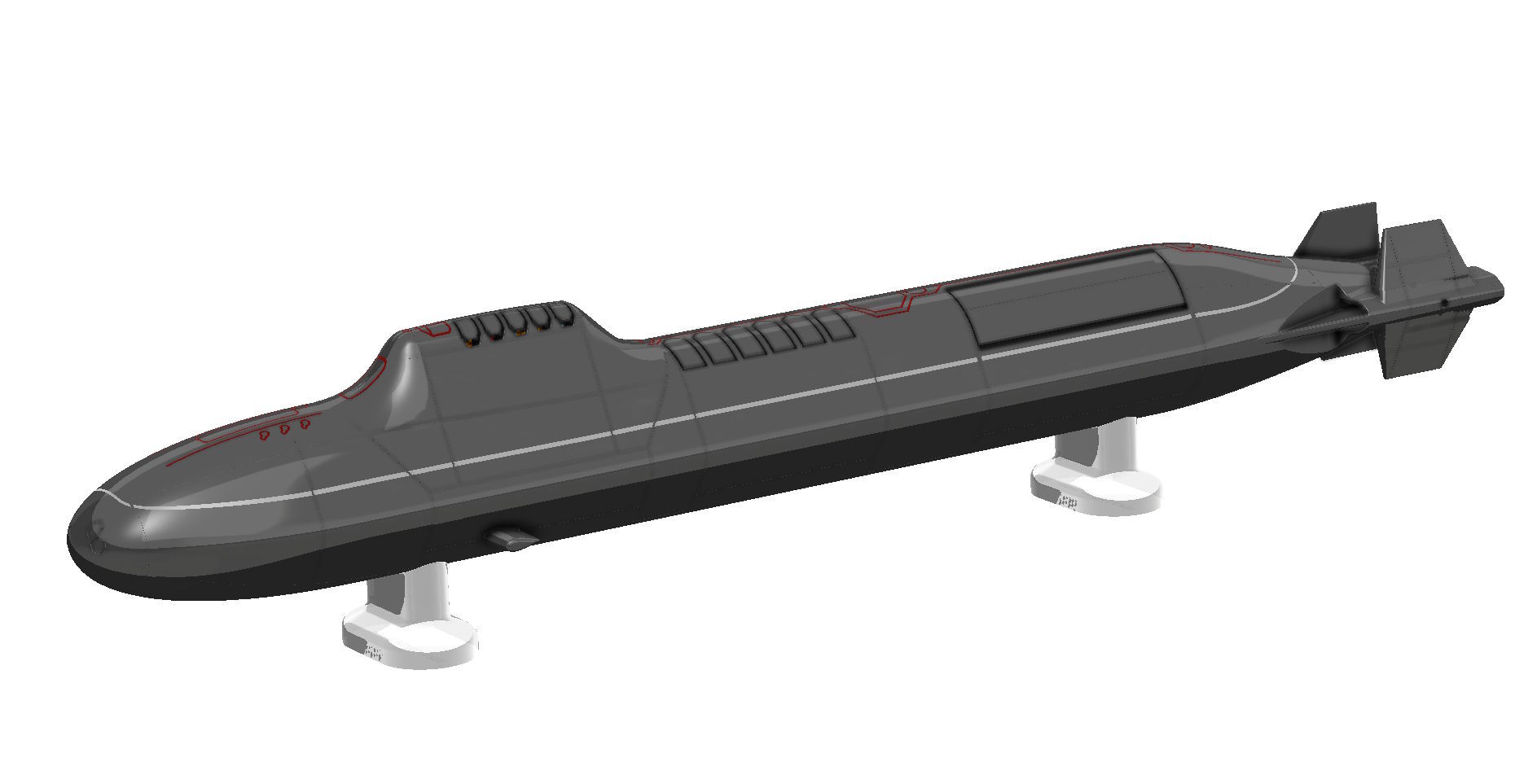
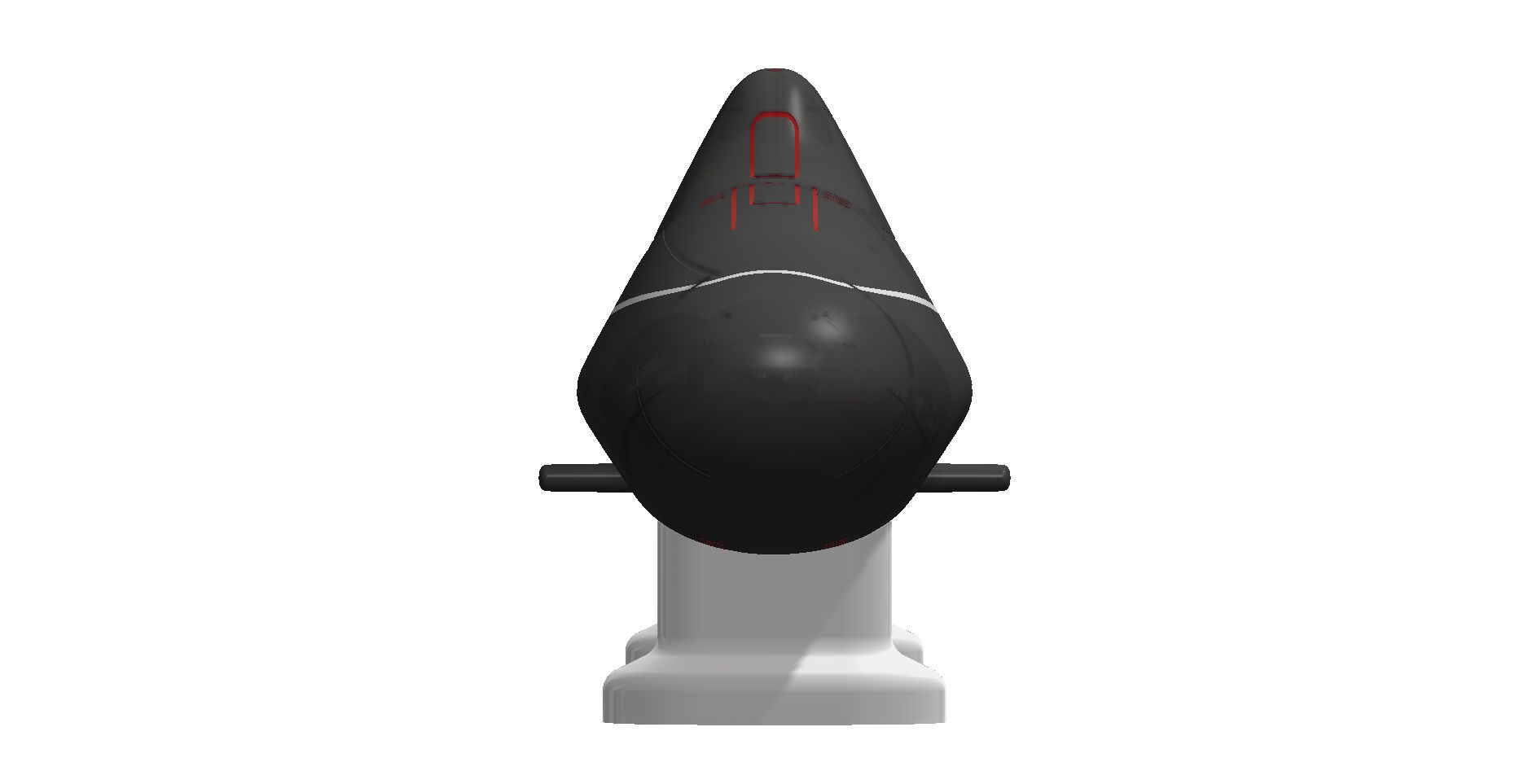
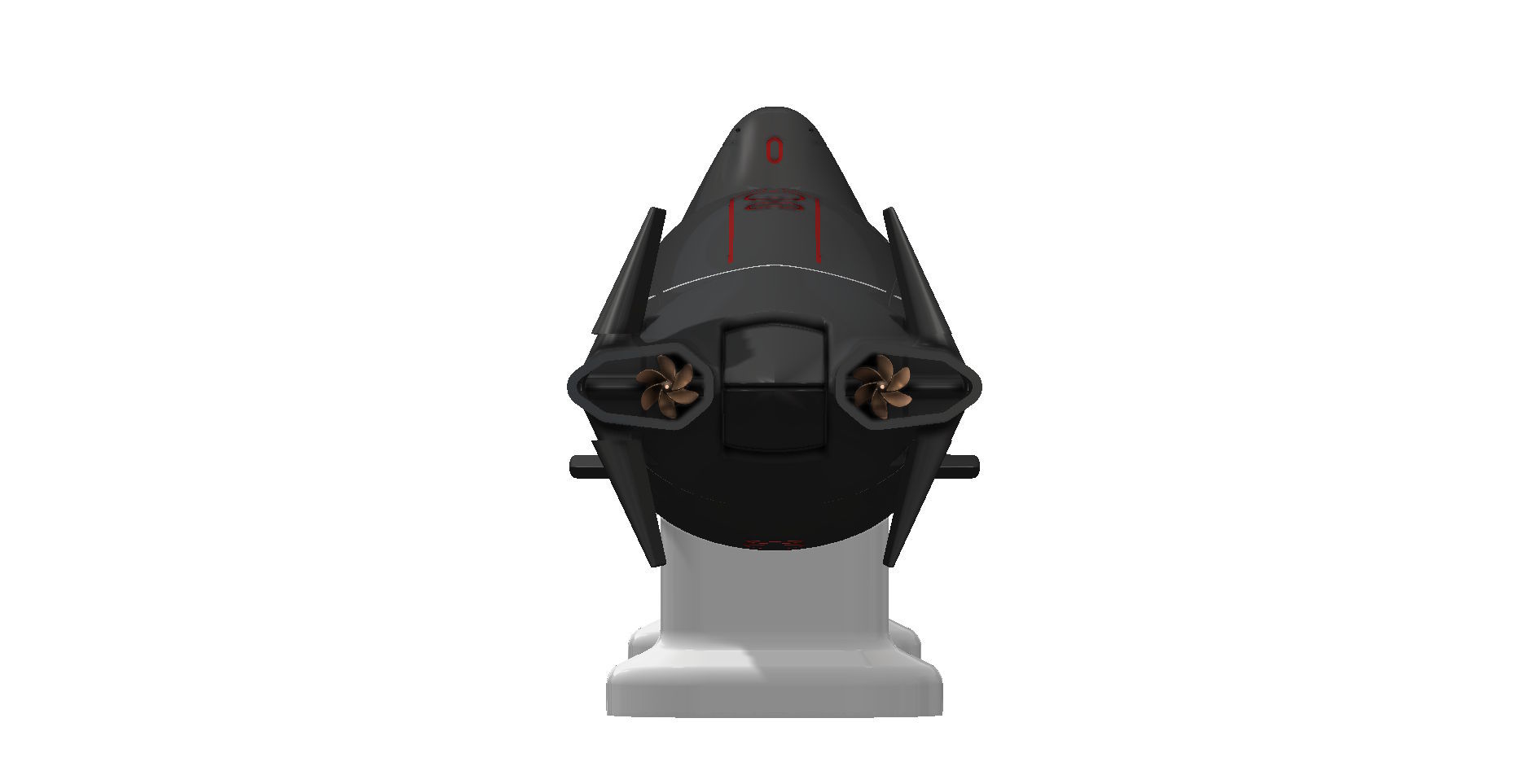
The Qing-class submarine represents one of the most modern and least publicly documented submarine designs to emerge in recent decades. As a nuclear-powered ballistic missile submarine (SSBN) developed by China, it occupies a strategic role that is inherently opaque, with limited officially released plans, drawings, or dimensional data. This combination of technological significance and visual secrecy makes the Qing class both fascinating and challenging to interpret—particularly for modelers working without access to authoritative blueprints.

Our Qing-class 3D model is therefore not a literal reproduction, but a carefully researched and technically reasoned interpretation. Publicly available photographs, satellite imagery, comparative analysis with earlier Chinese submarine classes, and established submarine design principles were used to reconstruct the vessel’s overall proportions, hull geometry, and defining external features. Where reliable information ends, informed design judgment begins—always with the goal of maintaining visual plausibility, structural coherence, and a clean, manufacturable result.

Continue reading for more information and renderings,

or you can directly visit our purchase page on Cults3D.

Read More

USS Growler (SSG-577) 3D model

A Cold War Missile Submarine and It’s Mighty Weapon the Regulus 1, Recreated in 3D

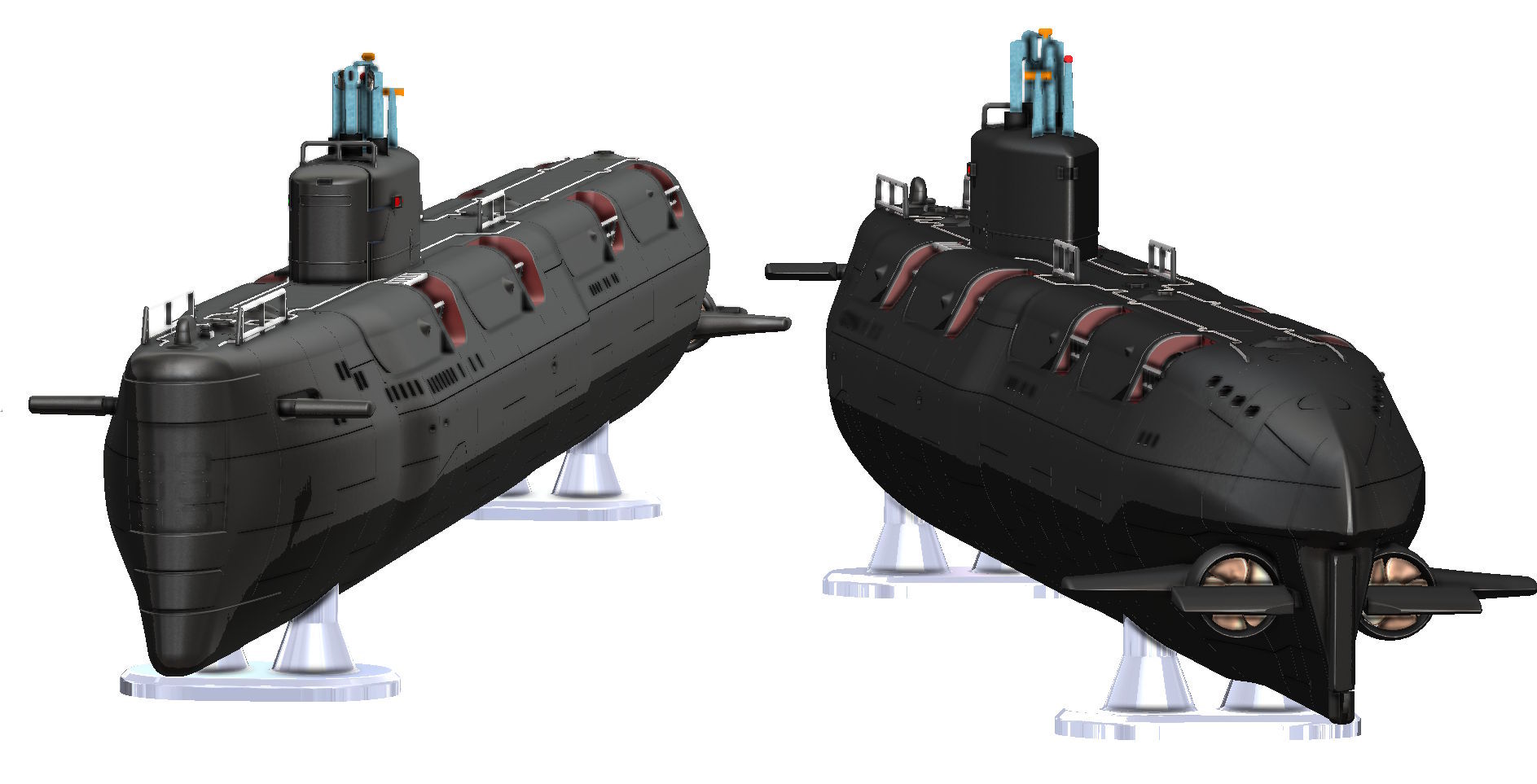
The USS Growler (SSG-577) occupies a unique and transitional place in naval history. Conceived during the early years of the Cold War, Growler was part of the U.S. Navy’s first serious attempt to field a submarine-launched strategic missile capability. Long before ballistic missile submarines became dominant, vessels like Growler were designed around the Regulus cruise missile, a large, aircraft-like weapon that required deck storage, surface launch, and complex handling procedures. This requirement fundamentally shaped the submarine’s appearance, resulting in its most recognizable feature: the massive twin missile hangars integrated into the forward deck.

Continue reading for more info or CLICK HERE for the purchase page on Cults3d.

If you are looking for the Regulus 3d model only CLICK HERE.

Read More

Sjöormen-Class Submarine

Swedish Innovation Beneath the Surface:

The Sjöormen-class submarines occupy a unique and important place in Cold War naval history. Introduced by Sweden in the late 1960s, the class represented a decisive break from traditional submarine design thinking and placed Swedish underwater engineering at the forefront of diesel–electric submarine development. Built for operations in the confined, shallow, and acoustically complex waters of the Baltic Sea, these submarines prioritized stealth, maneuverability, and hydrodynamic efficiency over raw size or speed. As a result, the Sjöormen class became widely respected—both publicly and quietly within naval circles—for its advanced design choices and remarkably low acoustic signature.

Continue reading for more info and renderings, or CLICK HERE to proceed to the purchase page on Cults3d.

Read More

Scorpène-Class Submarine

1:87 Scale, 763mm 3D Printable Model

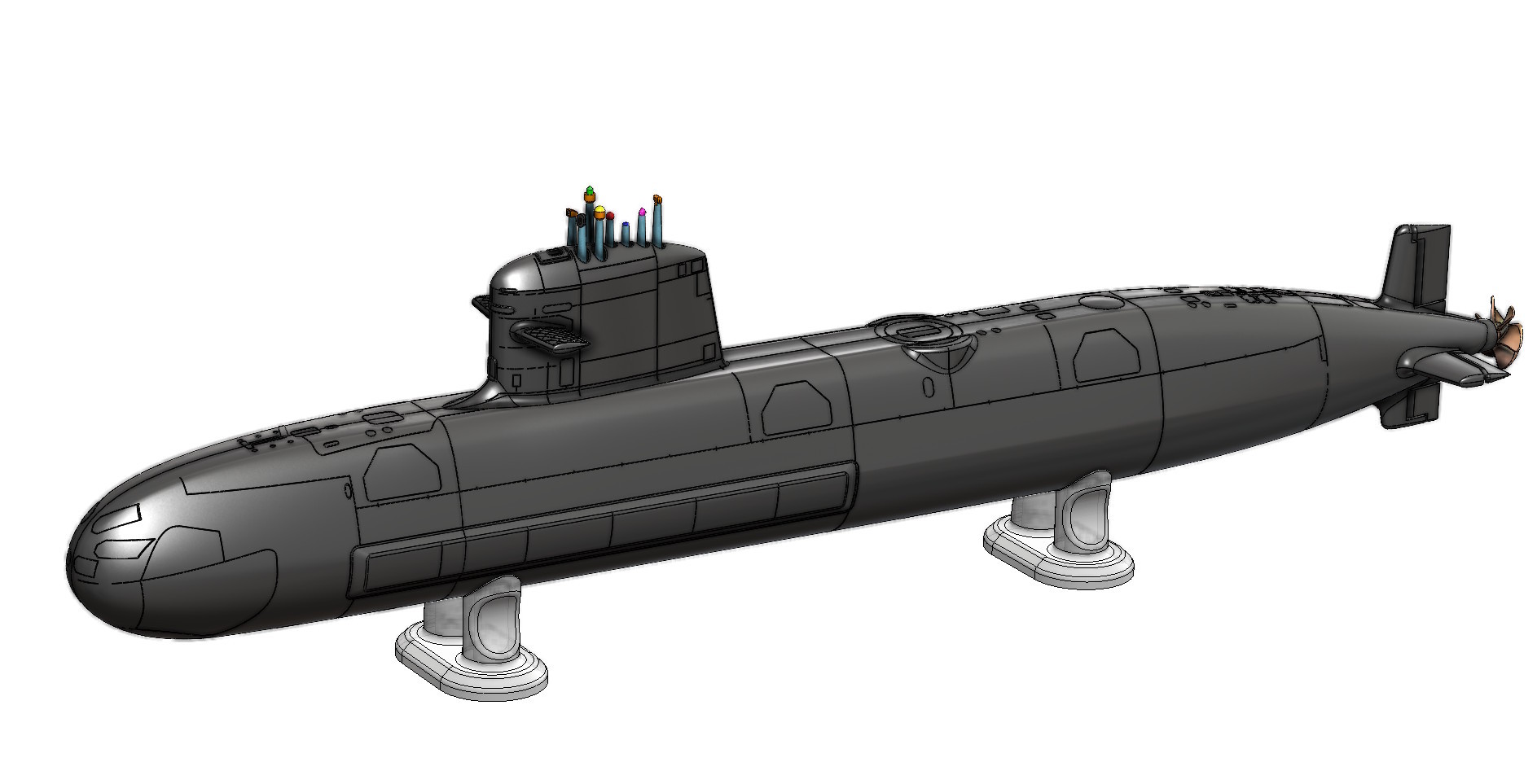
The French Scorpène-class submarines represent one of the most successful and widely adopted modern submarine designs in the world. Developed by Naval Group (formerly DCNS), the Scorpène class combines compact dimensions with advanced stealth, long endurance, and multi-role flexibility. These diesel-electric attack submarines have been built for and operated by several nations — including India, Brazil, Chile, and Malaysia — each version tailored to local operational requirements. With their quiet propulsion systems, advanced combat management, and modular construction, the Scorpène-class has become a global standard for next-generation conventional submarines.

To bring this modern masterpiece into digital form, we created a 1:87 scale, 3D printable model of the Scorpène-class submarine, designed to capture both the beauty and engineering precision of the original vessel. Measuring 763 mm in length, this version consists of 35 separate high-poly STL files, optimized for easy printing with most FDM and resin printers. The hull interior is mostly empty, with a 5–7 mm wall thickness, reinforced by three internal bulkheads that ensure alignment and add rigidity during assembly. These features make the model both durable and straightforward to build, even for large-format prints.

—-> Click this link to go to the model purchase page <—-

Continue reading for more information, renderings, and a free STL file for a desktop model of the Scorpène-Class.

Read More

Soviet Echo Class Submarine

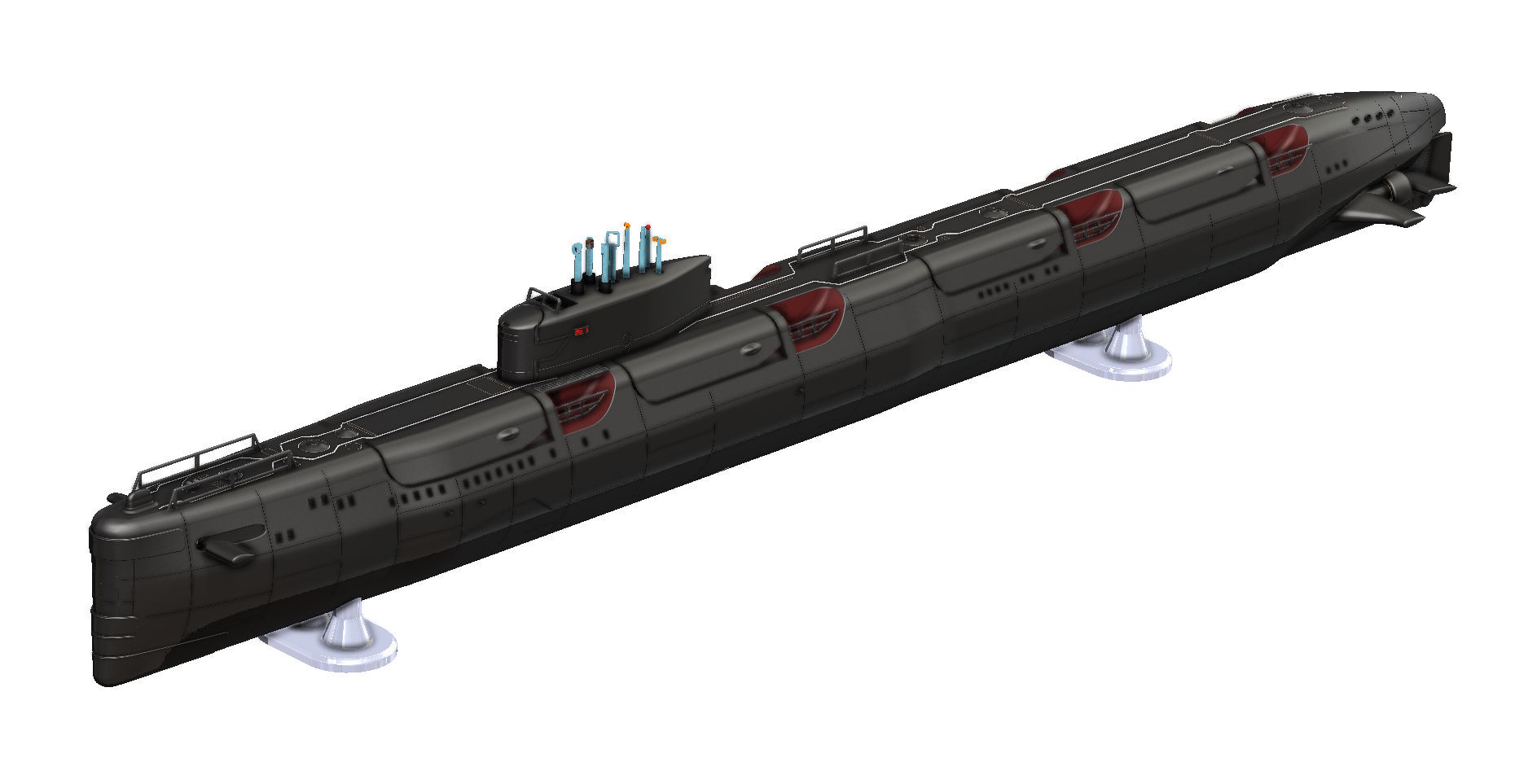
The Soviet Echo Class submarines (Project 659) were among the most distinctive nuclear-powered cruise missile submarines of the Cold War. Developed in the late 1950s and entering service in the early 1960s, the Echo Class was designed primarily to carry and launch long-range cruise missiles against carrier groups and land-based targets. These submarines featured a characteristic raised missile deck with paired silos, giving them their unmistakable silhouette. Armed with up to eight missiles and supported by torpedoes, the Echo Class represented a significant leap in Soviet naval strategy, reflecting the shift toward nuclear propulsion and underwater missile platforms as a counterbalance to Western naval superiority. Though eventually superseded by more advanced classes, the Echo Class played an important role in shaping submarine development and nuclear deterrence during the Cold War.

The 1.4 Meter Multi-Piece 3D Printable Echo Class Model

For enthusiasts, modelers, and Cold War historians alike, I’ve created a 1.4-meter-long, highly detailed 3D printable model of the Echo Class submarine(<<<—Click this link to get the model). This model is carefully divided into more than 50 parts, designed to fit on standard 3D printers with a 22 × 22 × 25 cm build volume. The hull is hollow, giving makers the freedom to customize it for RC projects, lighting installations, or static display builds. Functional features include articulated missile hatches, dive planes, rudder, periscopes, and radar domes, all modeled with precision for both visual appeal and interactive play. To ensure strong assembly, the junction points are fitted with screw-together connections, making it possible to achieve both sturdiness and easy handling during the build.

Read More

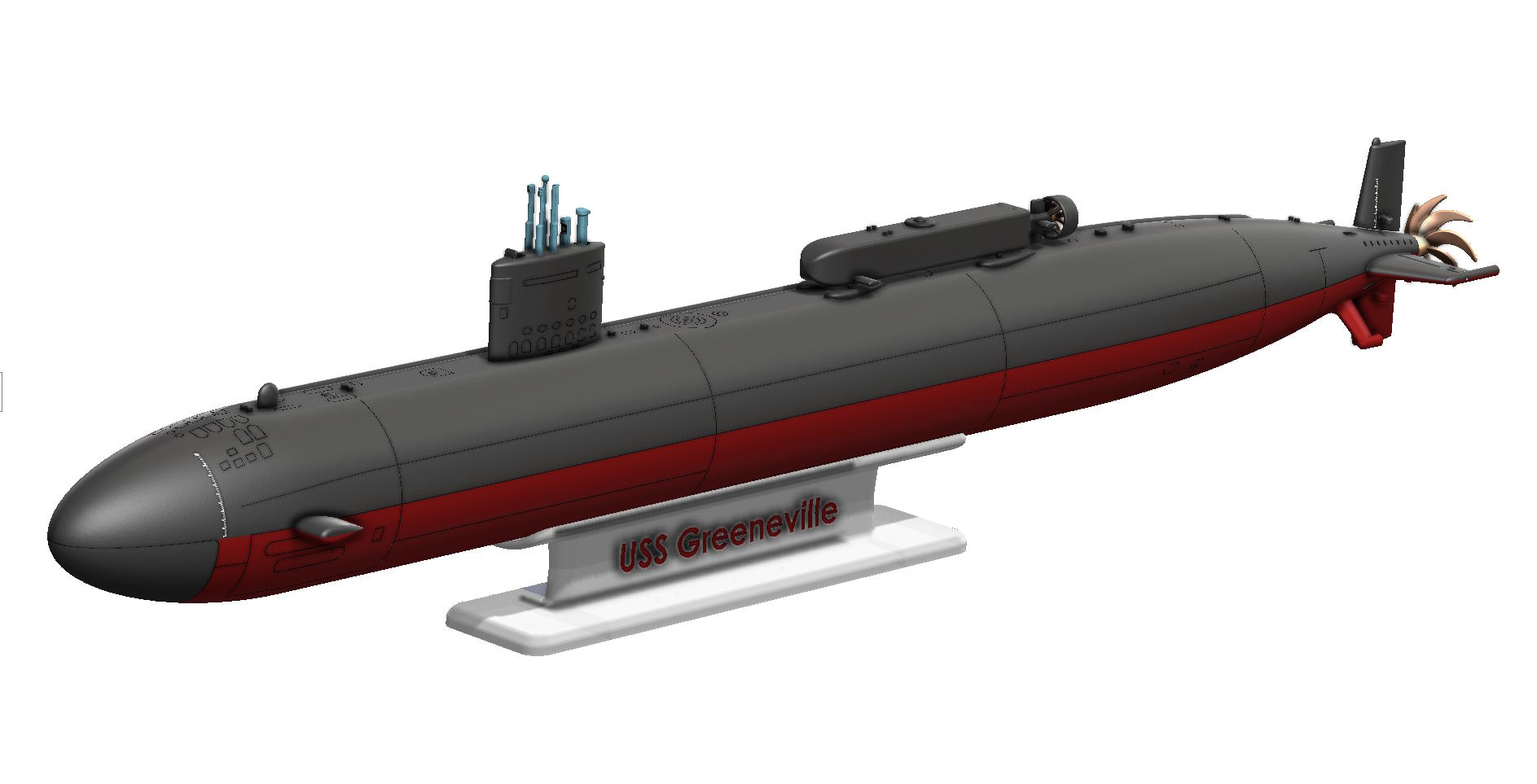
Los Angeles Class Nuclear Attack Submarine

In the shadowy depths of the world’s oceans lurks a metal shark with a nuclear heart—the USS Greeneville, one of the most spirited troublemakers in the illustrious Los Angeles-class of submarines. This is not your grandfather’s rusty U-boat; the Greeneville is a 6,000-ton underwater Ferrari armed with torpedoes, missiles, and enough sonar gear to make a dolphin jealous. She’s been patrolling the deep since 1996, and if submarines had high school yearbooks, the Greeneville would’ve been voted “Most Likely to Accidentally Bump Into Things.” One of her more famous (okay, infamous) moments came in 2001, when she surfaced under a Japanese fishing vessel during a demonstration for civilian guests. No one said nuclear-powered stealth boats were great at parties.

Continue reading for more information and your free Greeneville tabletop model STL file. We also have a 1m R/C convertable model, consisting of 40 hi rez parts for easy printing, If you want to support our site and start a great project —–> Get the 3d model from here.

Read More

Kilo Class Russian Submarine

The Kilo-class submarine is like the ninja of the seas—stealthy, deadly, and almost impossible to detect. Built by the Russians, these diesel-electric attack submarines have been around since the 1980s, and despite their age, they’re still making waves (literally). NATO gave them the name “Kilo-class,” but the Russians call them Project 877 Paltus, and the upgraded versions go by Project 636 Varshavyanka—because apparently, long, complicated names make things sound cooler.

Continue reading for more info, renderings and a free STL file for 3d printing your own Kilo Class.

If you want to directly buy our multi-piece hi-poly STL file pack, ———–>>CLICK HERE <<———

Read More

Holland 1 Submarine 1m model free downlad

John Philip Holland, an Irish-born engineer and inventor, was a visionary whose daring spirit and ingenuity helped shape the future of submarine warfare. His journey into underwater navigation began with a bold and risky experiment: the construction and personal testing of a one-man submarine in 1878.

At a time when the concept of a practical, fully submersible vessel was met with skepticism, Holland refused to be discouraged. Instead, he designed and built a 14-foot-long experimental submarine, known as Holland I, which was powered by a simple hand-cranked propulsion system and equipped with ballast tanks for controlled submersion.

Continue reading for more info and free STL files for the multi-part 3d model.

Very high-poly paid model is here.

Read More

Walter V-80 Experimental Submarine

The Walter V-80 was an experimental German submarine built during World War II to test the innovative Walter propulsion system, which used high-concentration hydrogen peroxide (T-Stoff) to generate steam for a turbine, allowing the submarine to operate underwater for extended periods without surfacing. This air-independent propulsion (AIP) system was a major advancement over conventional diesel-electric submarines, which had to surface frequently to recharge their batteries. The V-80 was constructed at the Friedrich Krupp Germaniawerft shipyard in Kiel and was completed in 1940. It was a relatively small vessel, weighing 76 tons and carrying a crew of four.

Please continue reading the rest of the article for more info, renderings and a free STL file for a display version of the sub.

If you want to directly go to our multi-piece hi-rez STL file pack purchase page, you can click here <———- or the image below.

Read More