
A New Kind of Warship

When the United States Navy introduced the Littoral Combat Ship concept in the early 2000s, it represented a fundamental rethinking of what a modern surface combatant could and should be. Traditional warships were large, heavily armed, and designed for blue-water operations far out at sea. The LCS was conceived for an entirely different environment — the littoral zone, the shallow coastal and near-shore waters where conventional warships struggle to operate effectively, yet where a growing number of real-world threats were emerging. Fast, nimble, and built around a modular mission system architecture, the LCS was envisioned as a vessel that could be rapidly reconfigured for entirely different combat roles depending on the threat — surface warfare one week, mine countermeasures the next, anti-submarine operations the week after.


The Freedom Class is one of two LCS variants developed for the US Navy, built by Lockheed Martin and Fincantieri Marinette Marine at their Wisconsin shipyard. Where its sister variant, the Independence Class, adopted a radical trimaran hull form, the Freedom Class took a more conventional semi-planing monohull approach — sleek, fast, and remarkably capable for its size. Displacing around 3,900 tons at full load and stretching just under 116 meters in length, Freedom-Class ships are powered by a combined diesel and gas turbine propulsion system driving quadruple waterjets, allowing them to reach speeds well in excess of 40 knots — making them among the fastest warships of their displacement in any navy in the world.
Continue reading for more info or here are the purchase links of the model.
Version with multiple water jet and propeller propulsion options.
Version with propeller propulsion option only, no water jets.


The ships are designed around a large mission bay amidships that can accommodate modular mission packages, unmanned vehicles, and embarked special operations forces. A spacious flight deck and hangar aft can operate a range of helicopters and unmanned aerial vehicles. The angular, stealthy superstructure houses the ship’s sensors, communications systems, and weapons fit, which includes a 57mm Mk 110 deck gun forward, close-in weapon systems, and provisions for a variety of mission-specific weapons depending on the installed package. The Freedom Class is, in short, a ship designed not for one mission but for many — a Swiss Army knife of modern naval warfare, built for speed, agility, and adaptability above all else.


Modeling the Freedom Class — Our Design Approach


Creating an accurate scale model of a warship whose technical blueprints are not publicly available is a challenge that demands patience, resourcefulness, and a great deal of careful observation. Our Freedom-Class model was developed primarily through extensive photographic study of the ships themselves, combined with available technical documentation from similar vessel types to reconstruct accurate hull lines, waterplane geometry, and structural proportions. Every visible external feature was studied from multiple angles and in multiple lighting conditions to ensure that the model captures not just the general shape of the ship but the specific character and detail of the Freedom Class in particular.
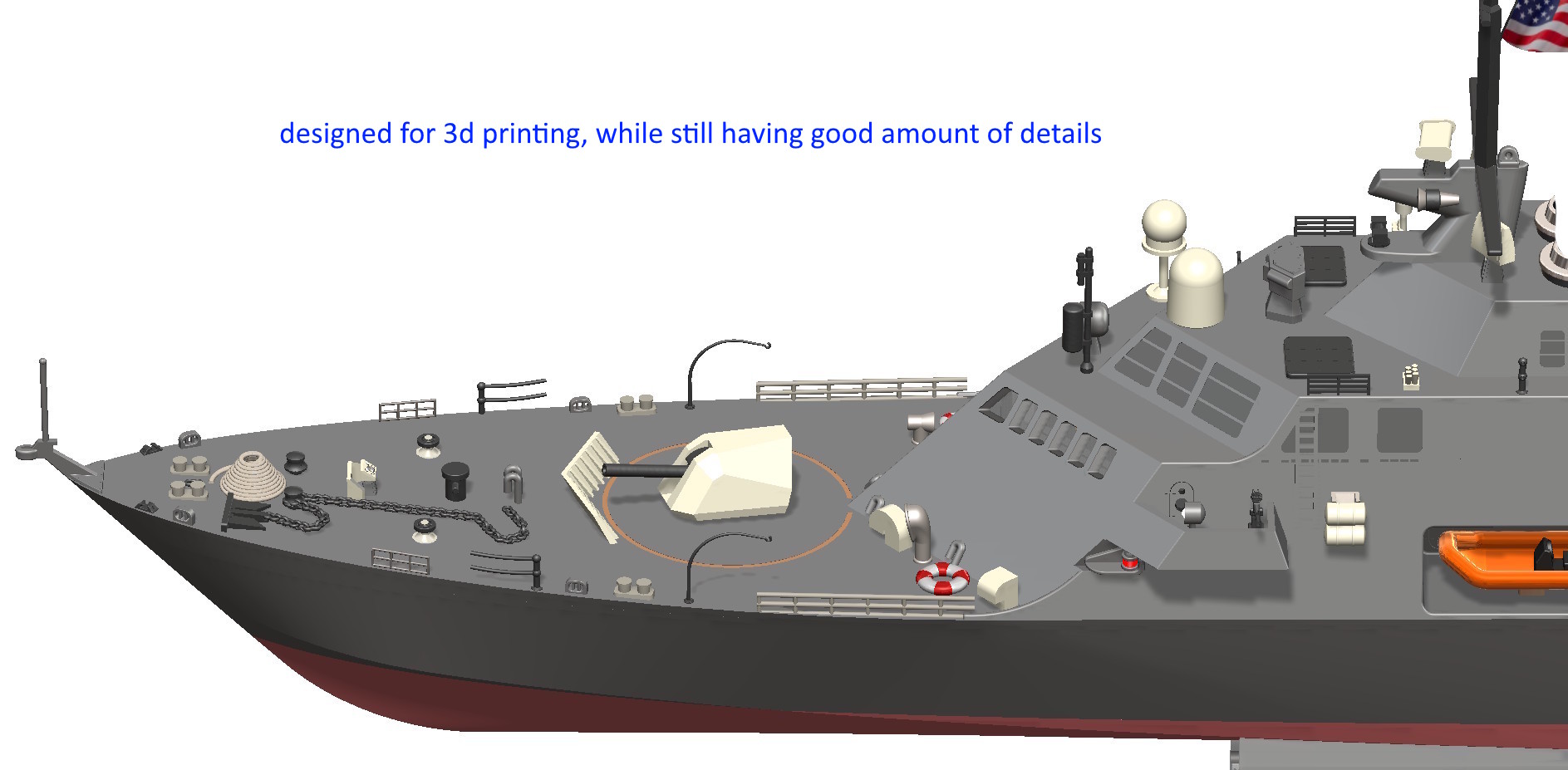


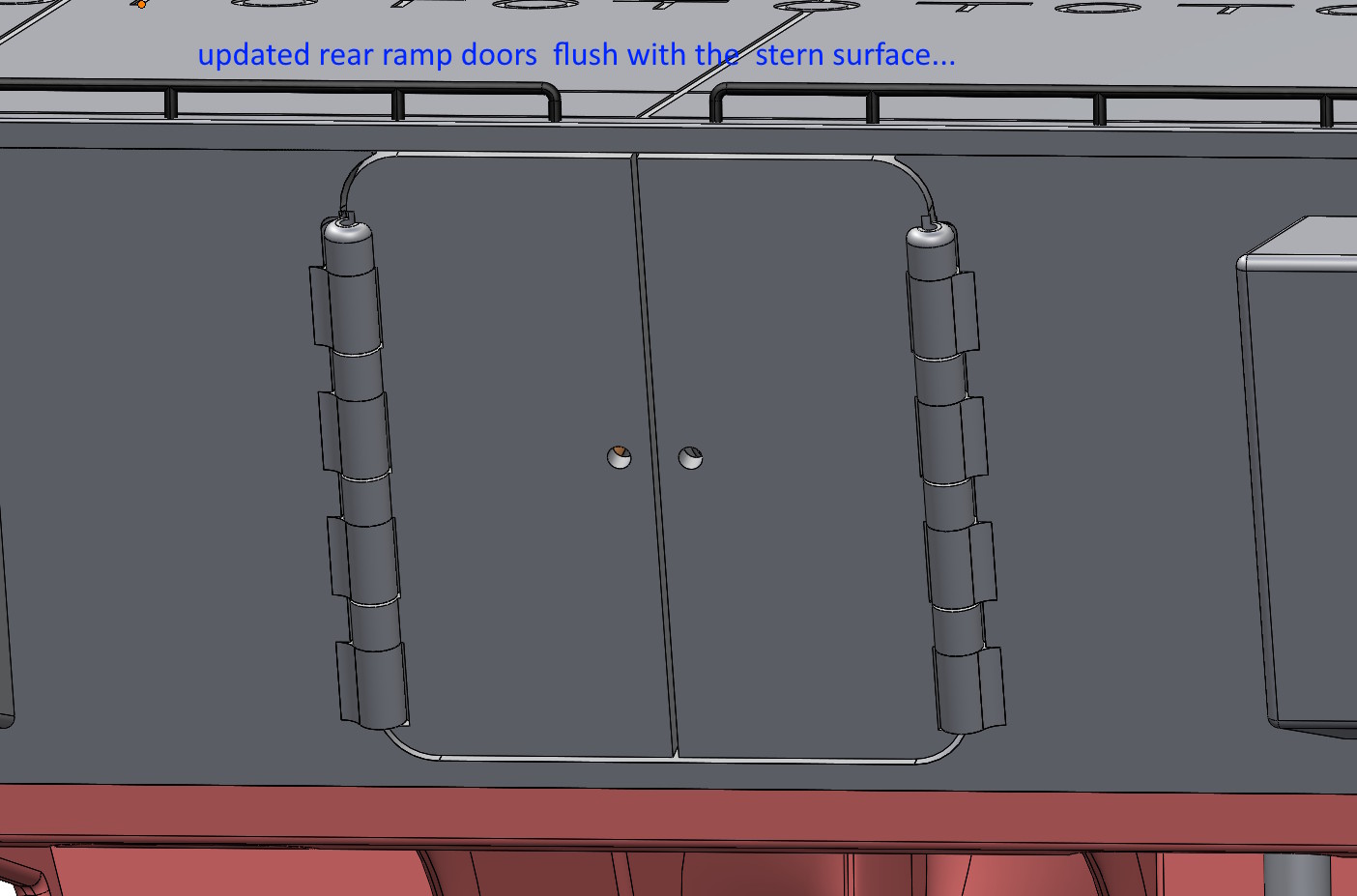
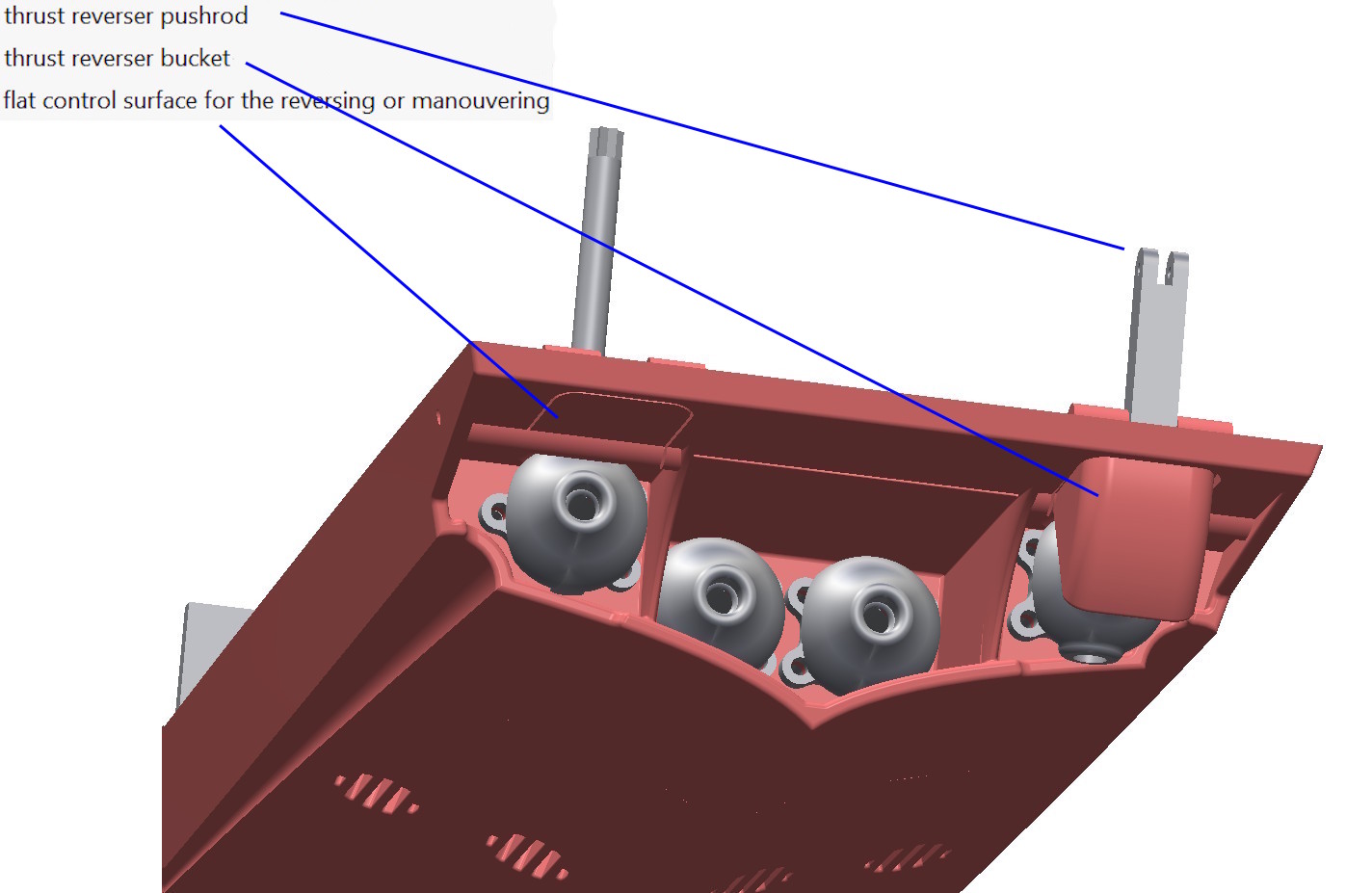
The result is a model that measures 120 cm from bow to stern at 1:96 scale — a genuinely impressive physical presence that commands attention on any display surface or waterway. The superstructure, mast arrangements, deck fittings, weapons systems, flight deck, hangar, and stern section have all been faithfully reproduced at scale. Particular care was taken with the stern section, which on the real ship houses a complex arrangement of waterjet outlets, control surfaces, and ramp structures that are among the most visually distinctive features of the Freedom Class. These are all represented in detail in our model, including fully operational sliding and hinged door mechanisms on the hangar and stern ramp.

The model has also been developed with colors and surface textures embedded throughout, making the files suitable not only for physical 3D printing but also for use in 3D game engines and virtual environments. Modelers, simulation developers, and digital artists working in Unreal Engine, Unity, or similar platforms will find the mesh quality and texture work well suited to real-time rendering at appropriate distances.


Two Versions — Choose the One That’s Right for You
We have made this model available in two distinct versions, each targeting a different type of builder. Both share the same hull, superstructure, accessories, and overall design quality — the difference lies entirely in the propulsion systems included, which affects both the complexity of the build and the price.


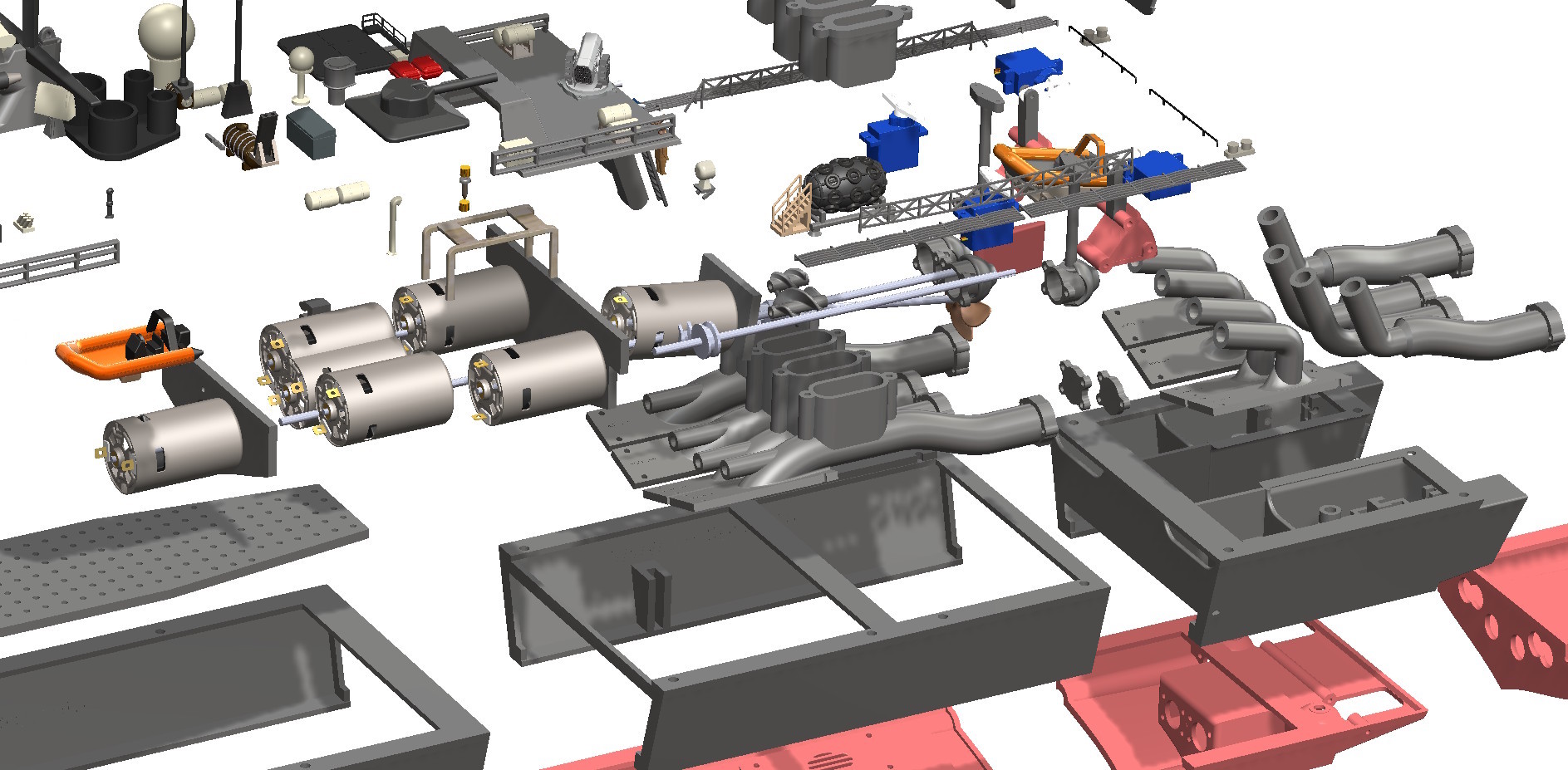
Version 1 — Full Model with All Propulsion Options
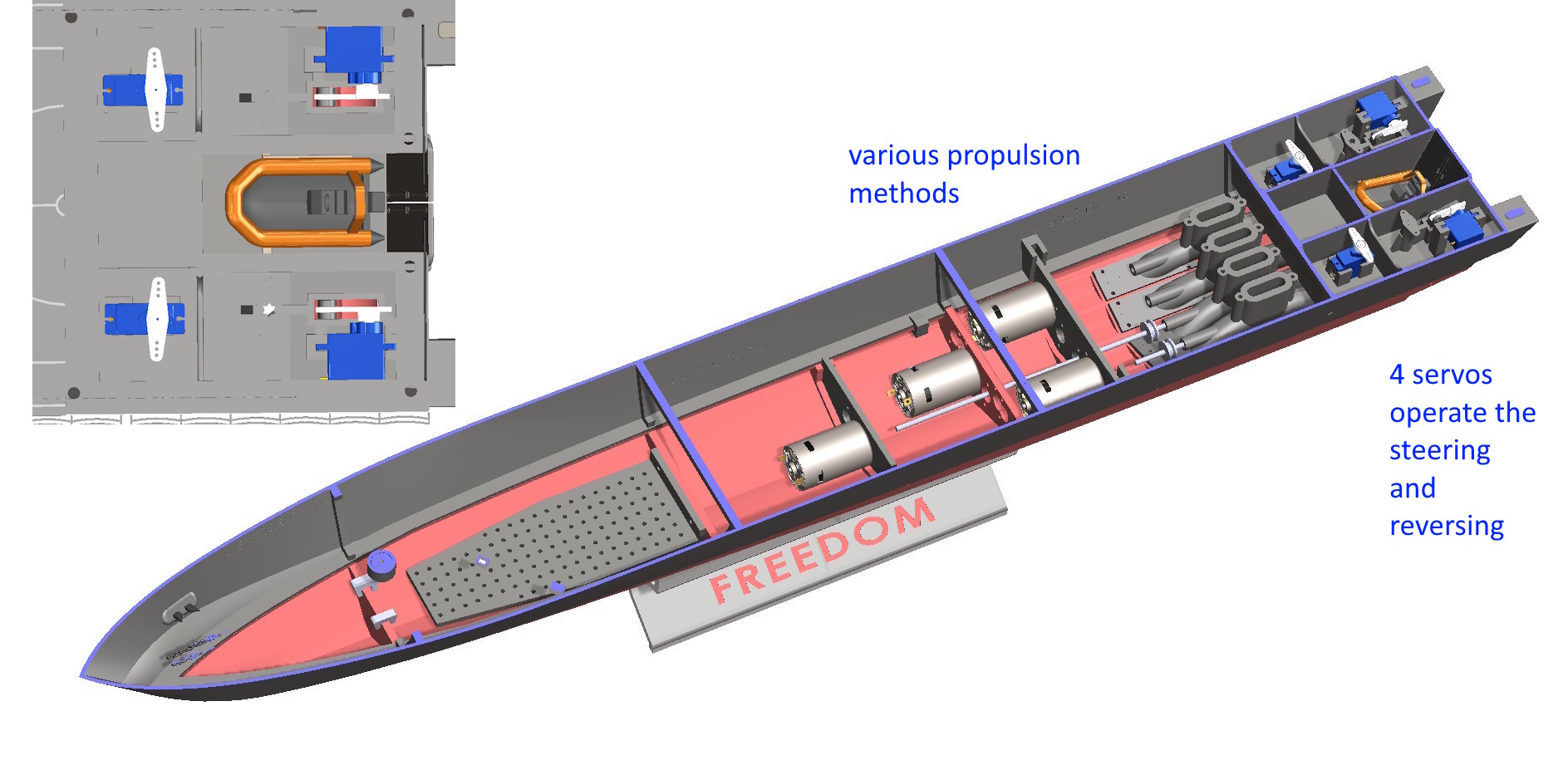
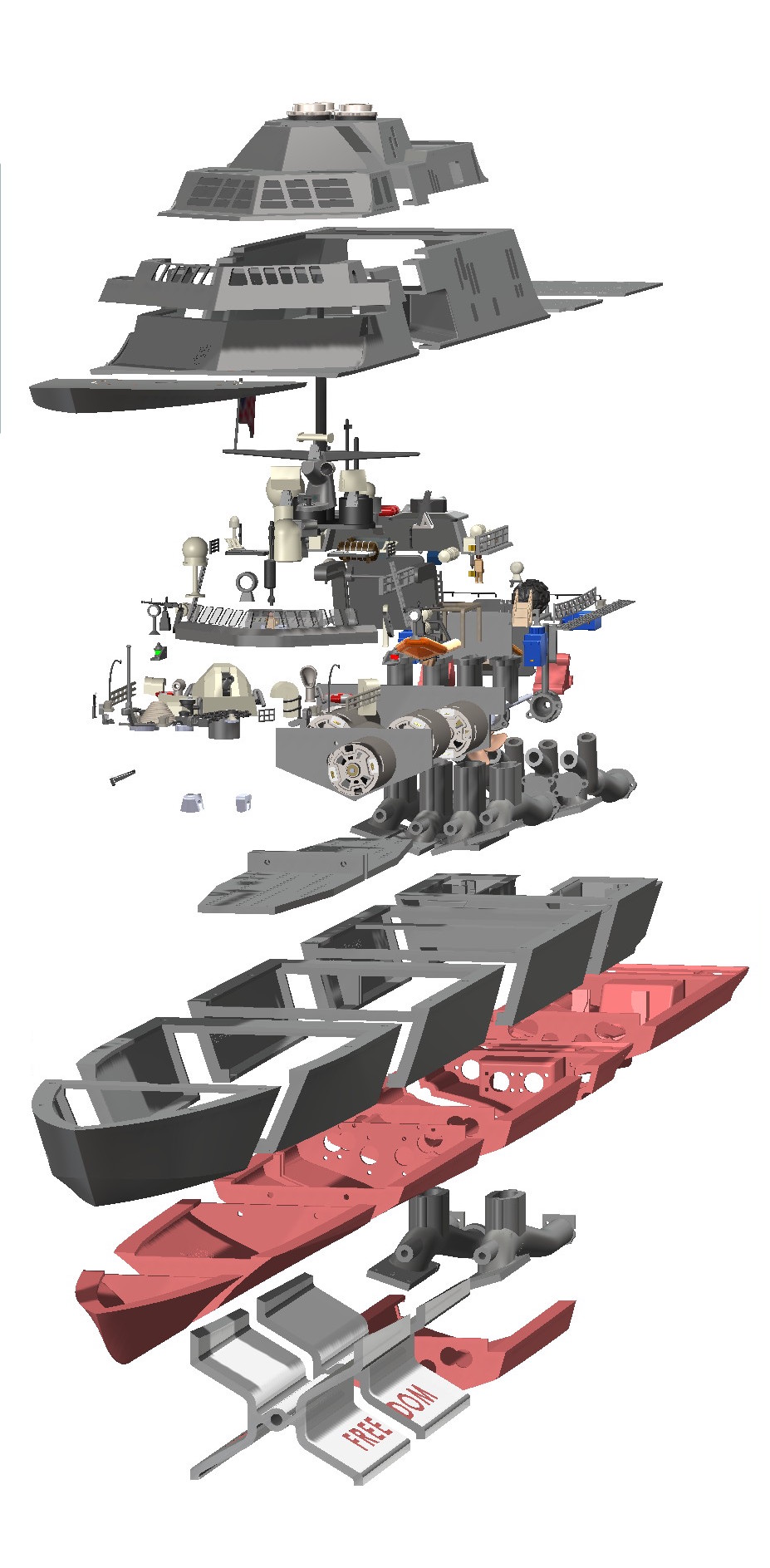
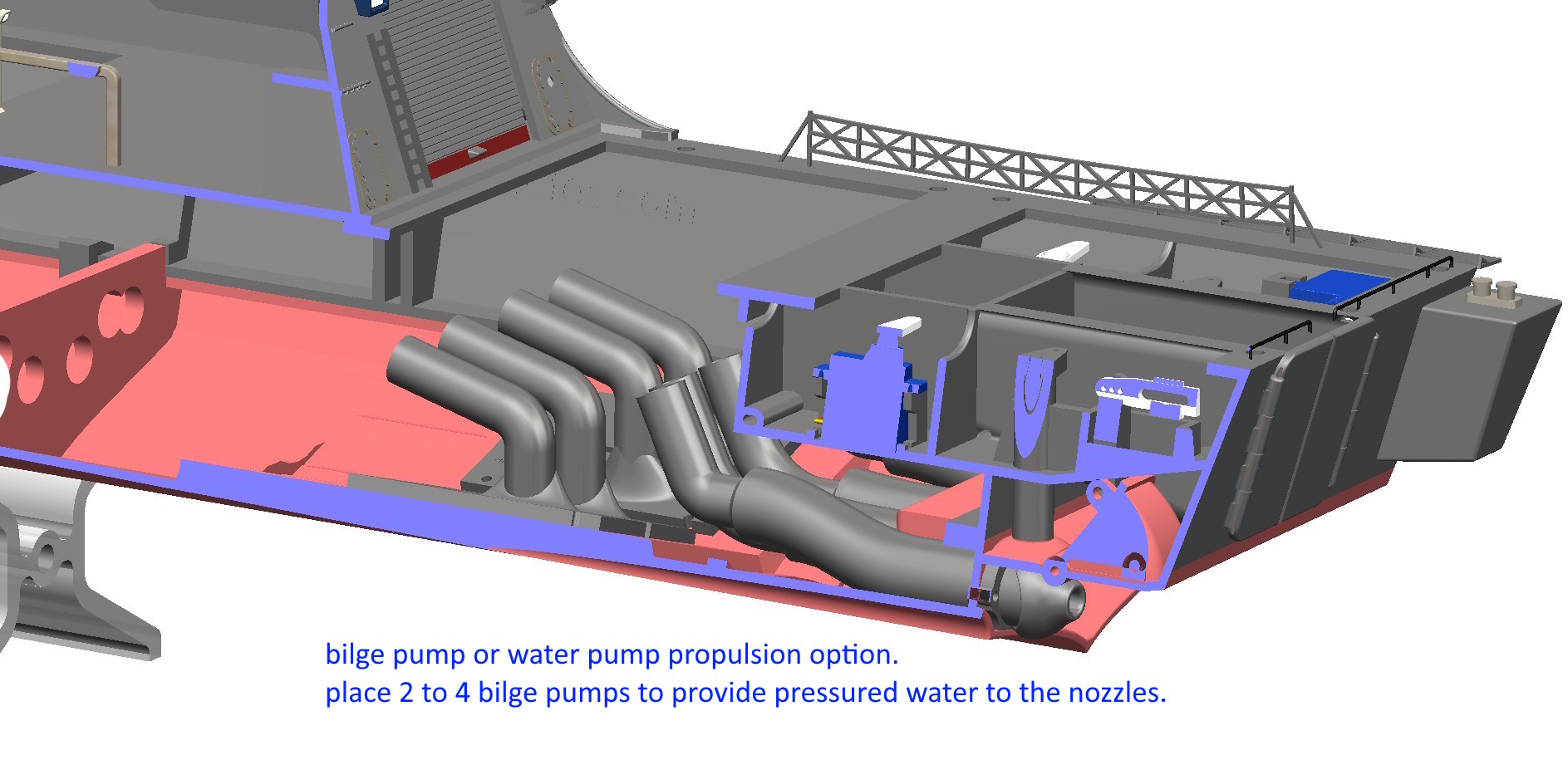
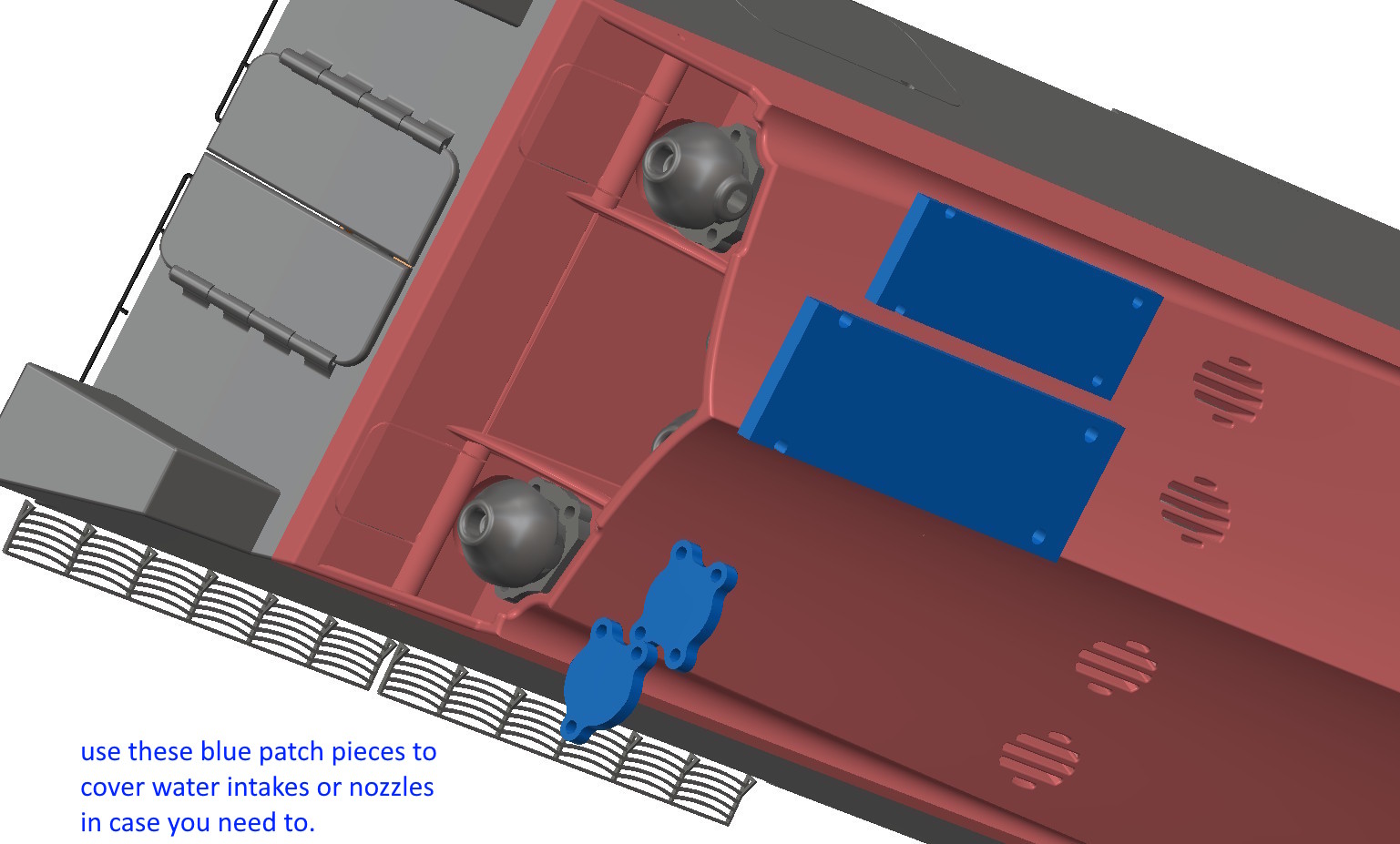
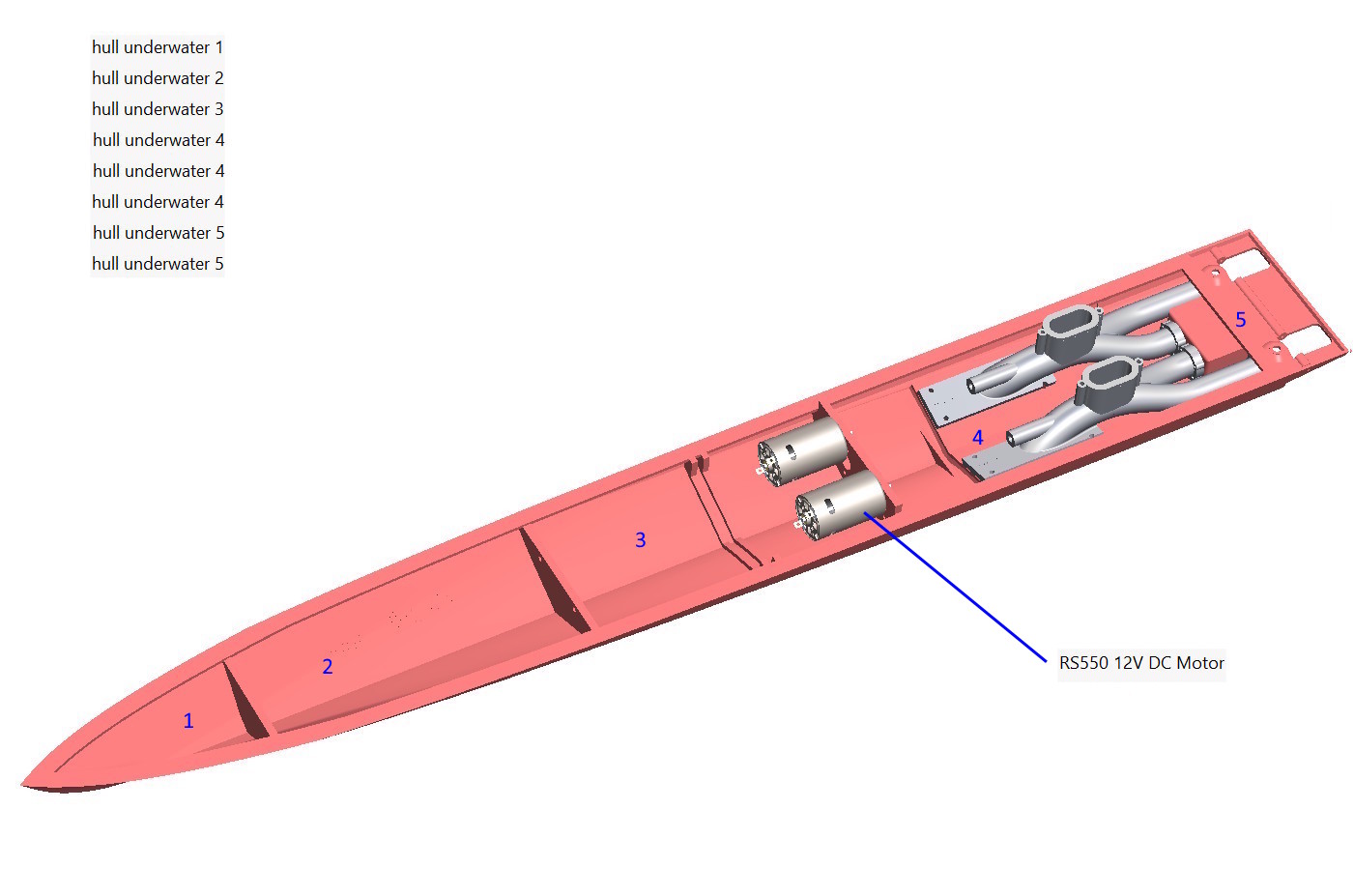
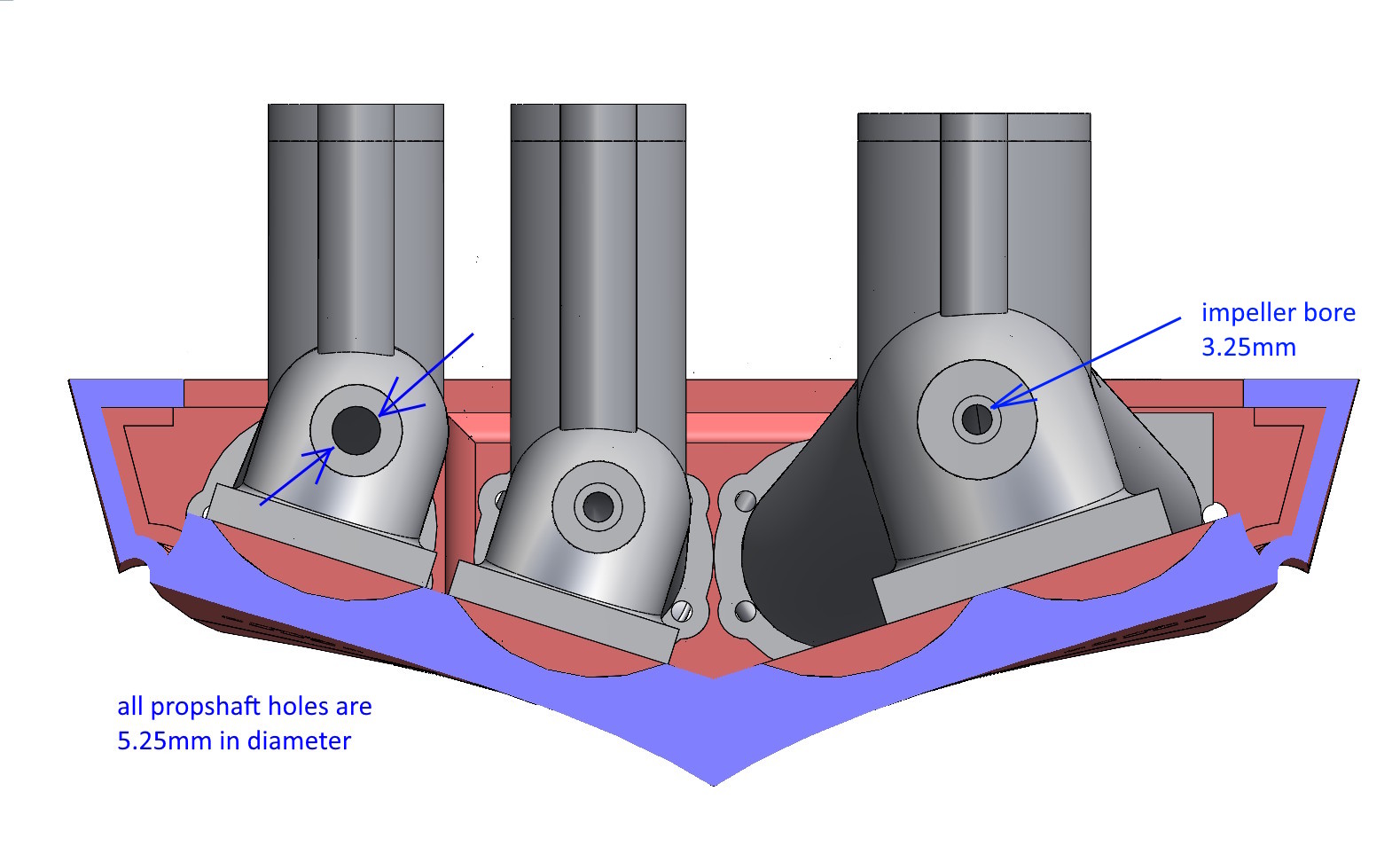
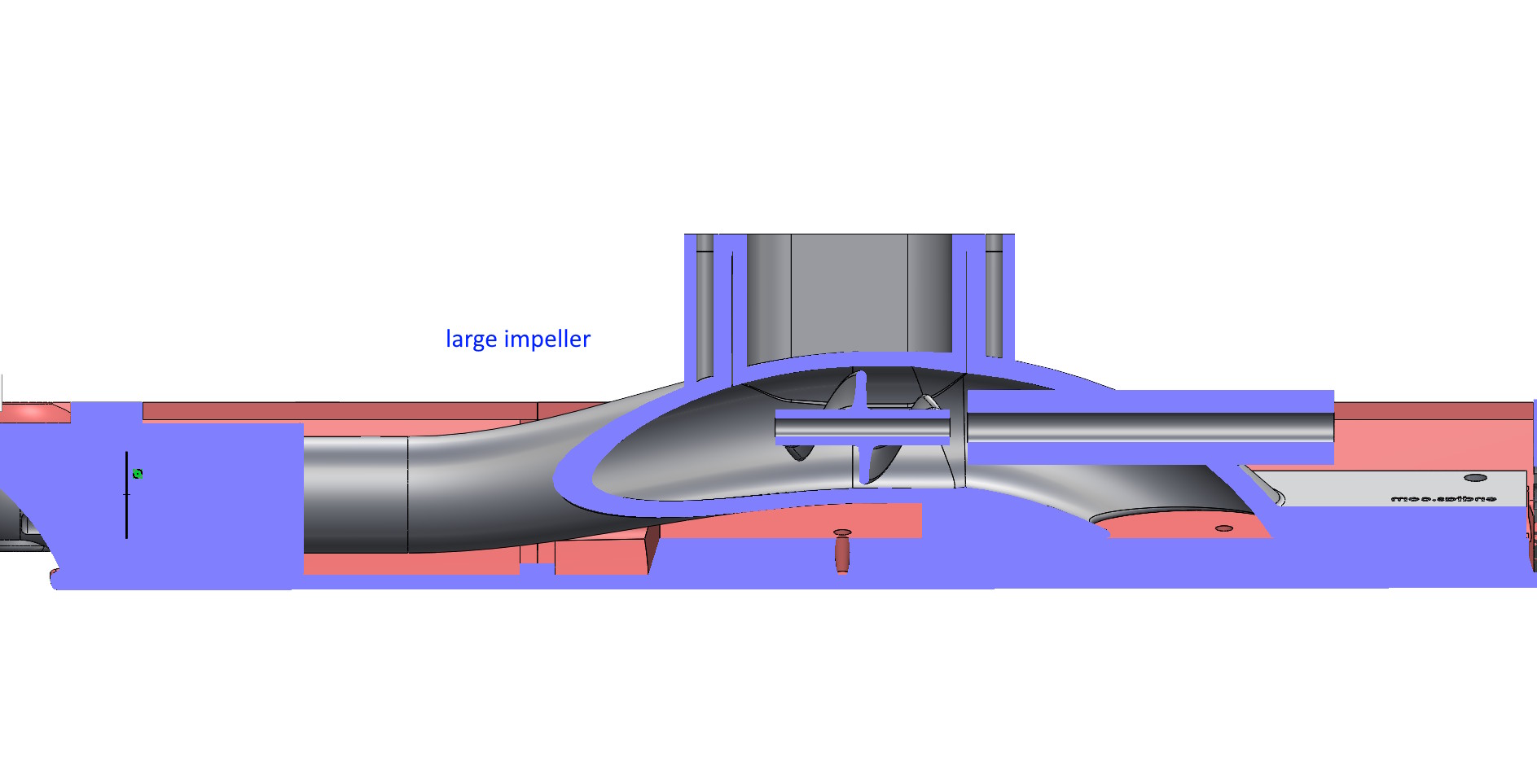
This is the complete, definitive version of our Freedom-Class model and includes every propulsion configuration we have developed for it. Builders can choose from single propeller drive, dual waterjet, or quadruple waterjet propulsion — each with its own dedicated hull underwater sections, motor mounting plates, impellers, shafts, and associated hardware parts. This multi-configuration approach gives experienced RC builders the flexibility to select the propulsion system that best suits their available hardware, skill level, and intended use on the water.


The waterjet configurations in particular are a highlight of this version. The Freedom-Class in real life is a waterjet-propelled vessel, and building the model with waterjet propulsion delivers not only scale accuracy but also a genuinely different and exciting RC experience compared to conventional propeller-driven boats. The quadruple waterjet option, with four independent jet units driven by 550-class brushless motors, is the most ambitious configuration and produces extraordinary performance potential for an RC model of this size.



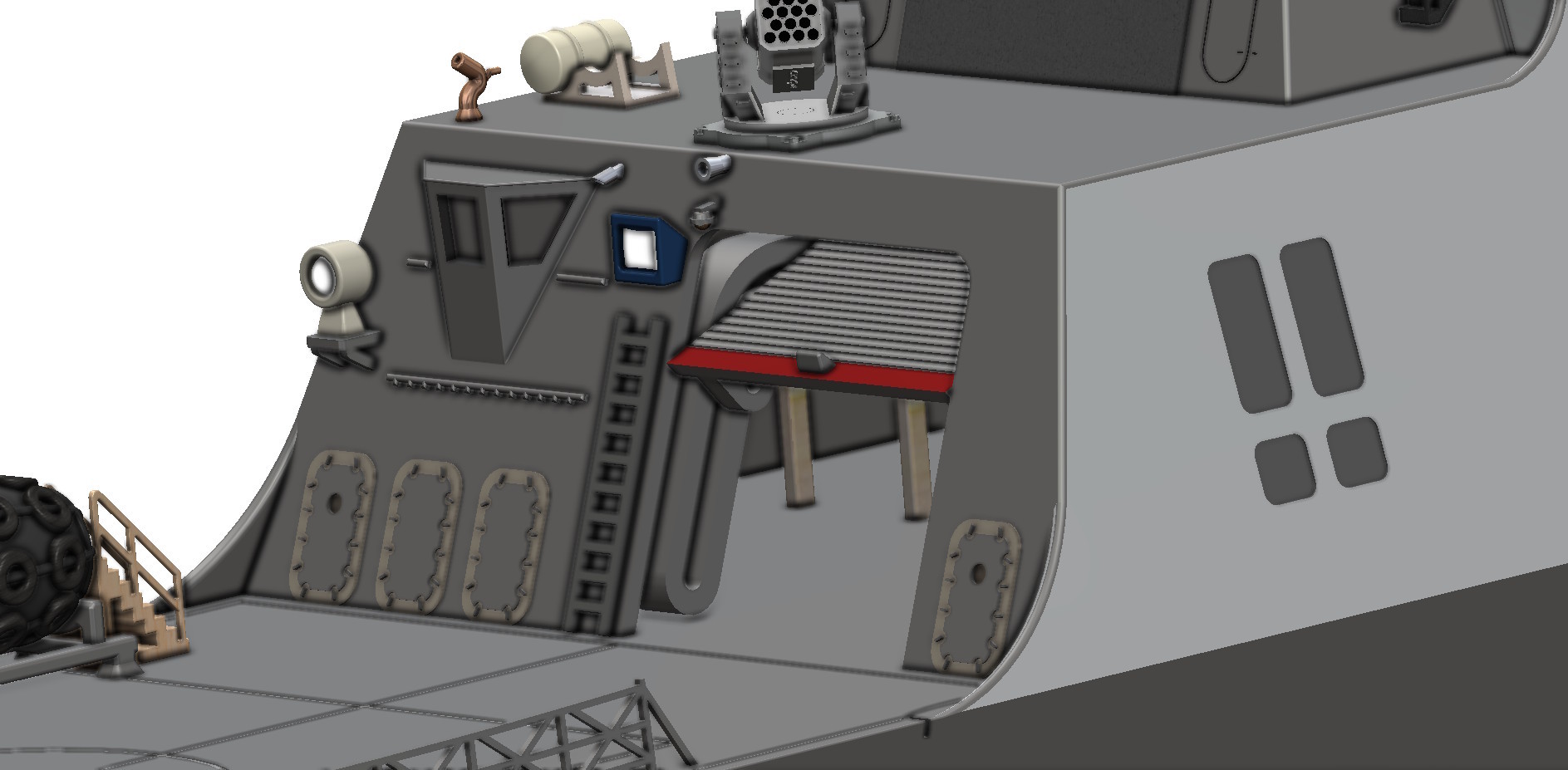
Beyond propulsion, this version includes the full accessory library — an extensive collection of over 150 individual detail parts covering everything from the captain’s bridge interior with consoles and chairs, to deck weapons including the 57mm front gun and associated turrets, machine guns, and close-in weapon systems, to masts, barriers, ladders, bollards, capstans, life rafts, inflatable dinghies, deck cranes, air intakes, exhaust vents, lighting fixtures, flags, display stands, and even a 1:96 scale crew figure. The hangar doors are available in multiple configurations — open, closed, or intermediate — and the stern ramp sliding doors are fully operational. All of this is included in a single comprehensive package.



Version 2 — Propeller Drive Edition

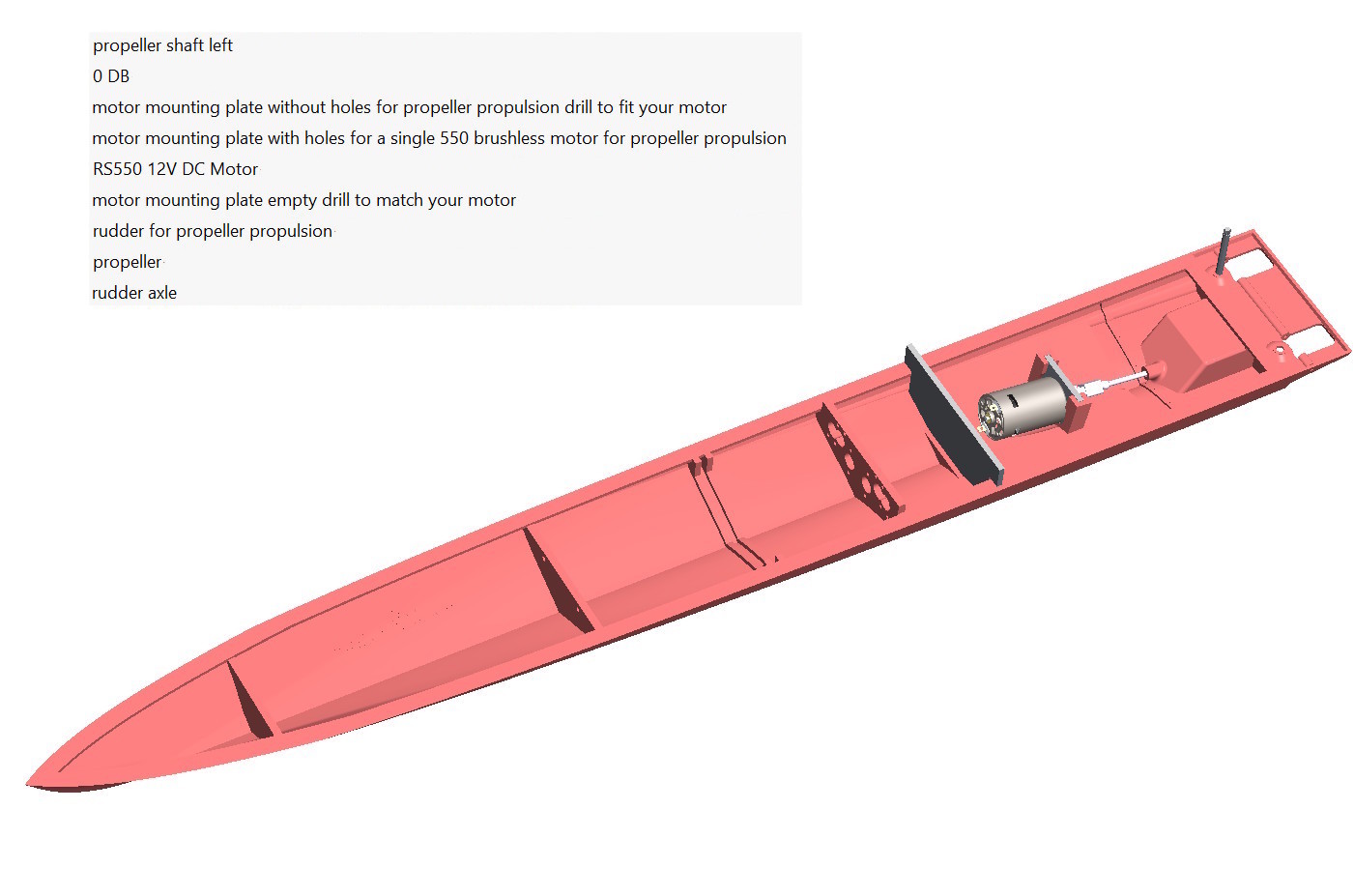
The Propeller Drive Edition was developed specifically for builders who want to get a superb RC model of the Freedom-Class LCS on the water as simply and cost-effectively as possible. By focusing on a single, straightforward propeller propulsion configuration, this version removes the complexity of waterjet systems and delivers a build that is more accessible for those newer to RC boat construction or those working with more modest electronics budgets.


Everything else about the model remains identical to the full version. The same hull, the same superstructure, the same accessory library, the same colors and textures, the same magnetic deck panel system, and the same overall build quality are all present and correct. The propeller motor mounts, shaft, and associated parts are all engineered to the same standard as the rest of the model. For many builders — particularly those building their first large RC warship — propeller drive is a perfectly practical and highly capable propulsion choice, and this version makes the Freedom-Class accessible to a wider range of builders without compromise on anything other than the additional propulsion options.


Shared Features — What Both Versions Include
Regardless of which version you choose, both models share the following features and capabilities:
RC Readiness — Both versions are designed from the ground up for radio control operation. Control surfaces are fully articulated, and motor mounts are integrated directly into the design. There is no need to adapt or modify the model to fit standard RC electronics — it is all built in.
Modular Deck System — All deck panels across the entire model are fully removable. Each panel can be configured as a functional access lid, secured in place using standard m3 or m4 screwsor or can be glued shut permanently for a clean display finish. The screw holes can be enlarged to install 5mm diameter, 2.5mm tall magnets for tool-free removal during RC operations on the water.
Filament Color Strategy — Underwater hull sections and topside superstructure parts are separated throughout the design, allowing builders to load different colored filaments for each section and achieve a two-tone finish — correct antifouling red-orange below the waterline and Navy grey above — without painting. This alone saves a significant amount of post-processing time and produces excellent results straight from the printer.
3MF Color File — A complete 3MF file with embedded colors and textures is included in both packages, allowing owners of color-capable FDM printers to produce a fully colored model in a single print workflow.

Print Accessibility — All parts are sliced to fit on print beds with a minimum footprint of 22×22 cm and a minimum print height of 25 cm, making the model compatible with the vast majority of standard FDM printers available today. No industrial or oversized machine is required to build this 120 cm warship.

Assembly Aids — Hull sections include precision alignment and mounting details, and multiple clip types are provided to hold pieces securely in position while adhesive cures, keeping the assembly process clean and accurate throughout. Standard binder clips will work even better if you have several lying around.

Game Engine Compatibility — The mesh quality and embedded texture work make both versions suitable for use in real-time 3D game engines such as Unreal Engine and Unity, as well as visualization and simulation platforms.
Which Version Should You Choose?
If you are an experienced RC builder comfortable with more complex propulsion systems, or if scale accuracy in propulsion matters to you, the full version with waterjet options is the clear choice. The quadruple waterjet configuration in particular delivers a build that is as close to the real ship’s propulsion philosophy as a 3D printed RC model can realistically achieve, and the performance potential is extraordinary. You can get it from our cults3d page here. <<– Click to open in new tab. This model also has higher poly-count and therefore larger files.
If you are newer to large RC boat building, working with a tighter budget, or simply want the most straightforward path to getting a stunning 120 cm Freedom-Class LCS on the water, the Propeller Drive Edition is an excellent choice that sacrifices nothing in terms of visual quality, detail, or build satisfaction. You will be building the same ship — although she has a bit less polycount to make printing easy on your PC — getting there a little more simply-economically. The Cults3d link for that model is here. << — Click to open in new tab.
Assembly Recommendations Album
Click the images to enlarge.





Either way, you will end up with one of the most detailed, feature-rich, and thoroughly engineered 3D printable warship models available anywhere. We are proud of both versions and confident that builders of every experience level will find the Freedom-Class LCS a deeply rewarding project from the first printed part to the finished waterline.


Below is a single-piece desktop display model of the Freedom Class, sailing on calm waters. Note that a high-poly version of this desktop model is also included in both our file packs sold on Cults. Print and enjoy.