
The Coast Guard’s Workhorse for Half a Century:
A New Kind of Cutter for a New Era
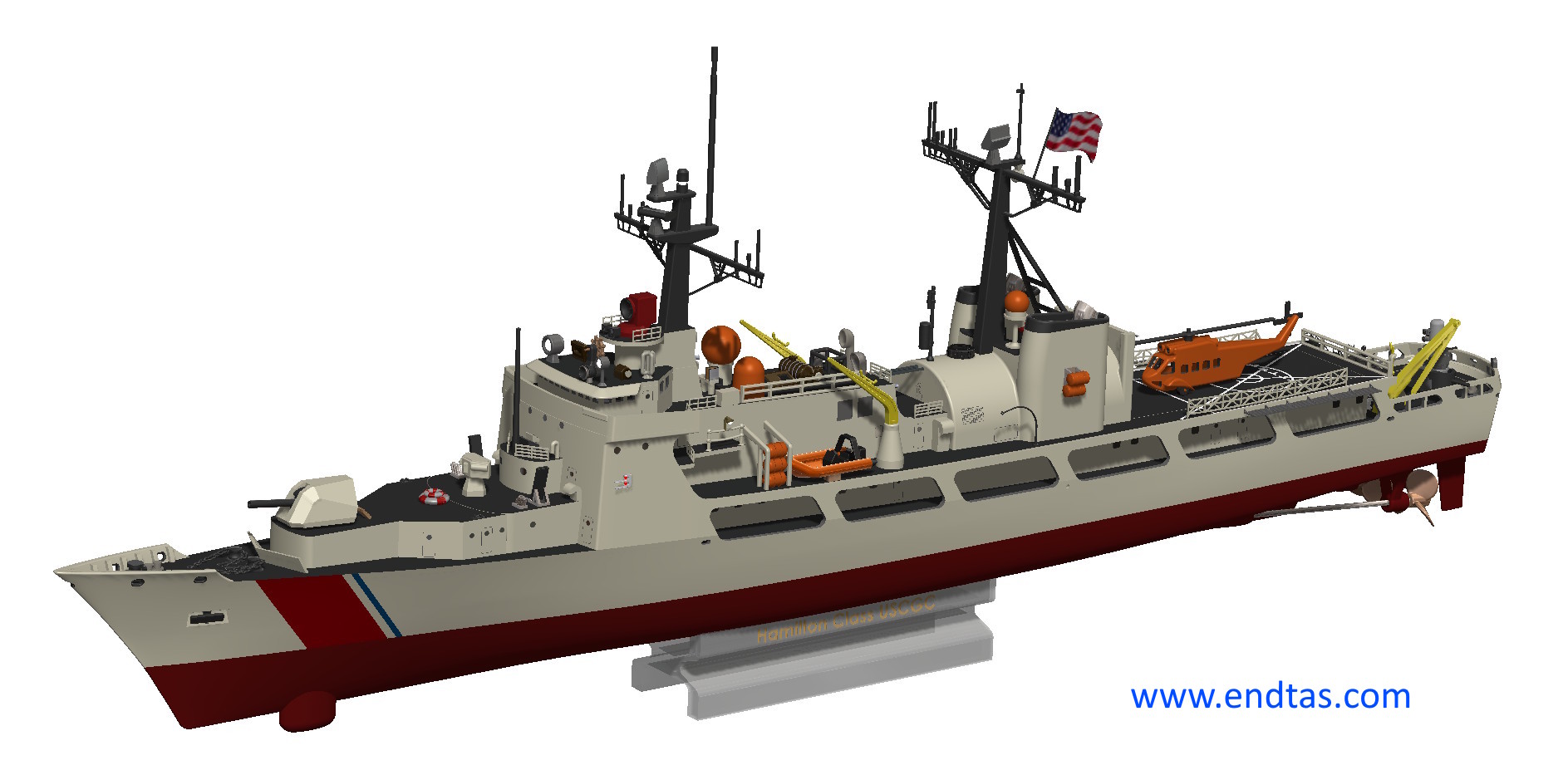
When the United States Coast Guard began planning its next generation of large ocean-going cutters in the early 1960s, the service had been operating converted World War II-era Navy vessels for nearly two decades. The ships were aging, increasingly difficult to maintain, and unable to fully meet the demanding operational requirements of a modern Coast Guard. What emerged from that planning process was one of the most successful and enduring cutter designs in the history of American maritime law enforcement — the Hamilton-class High Endurance Cutter, a vessel so capable and well-conceived that it would serve the Coast Guard for nearly half a century.
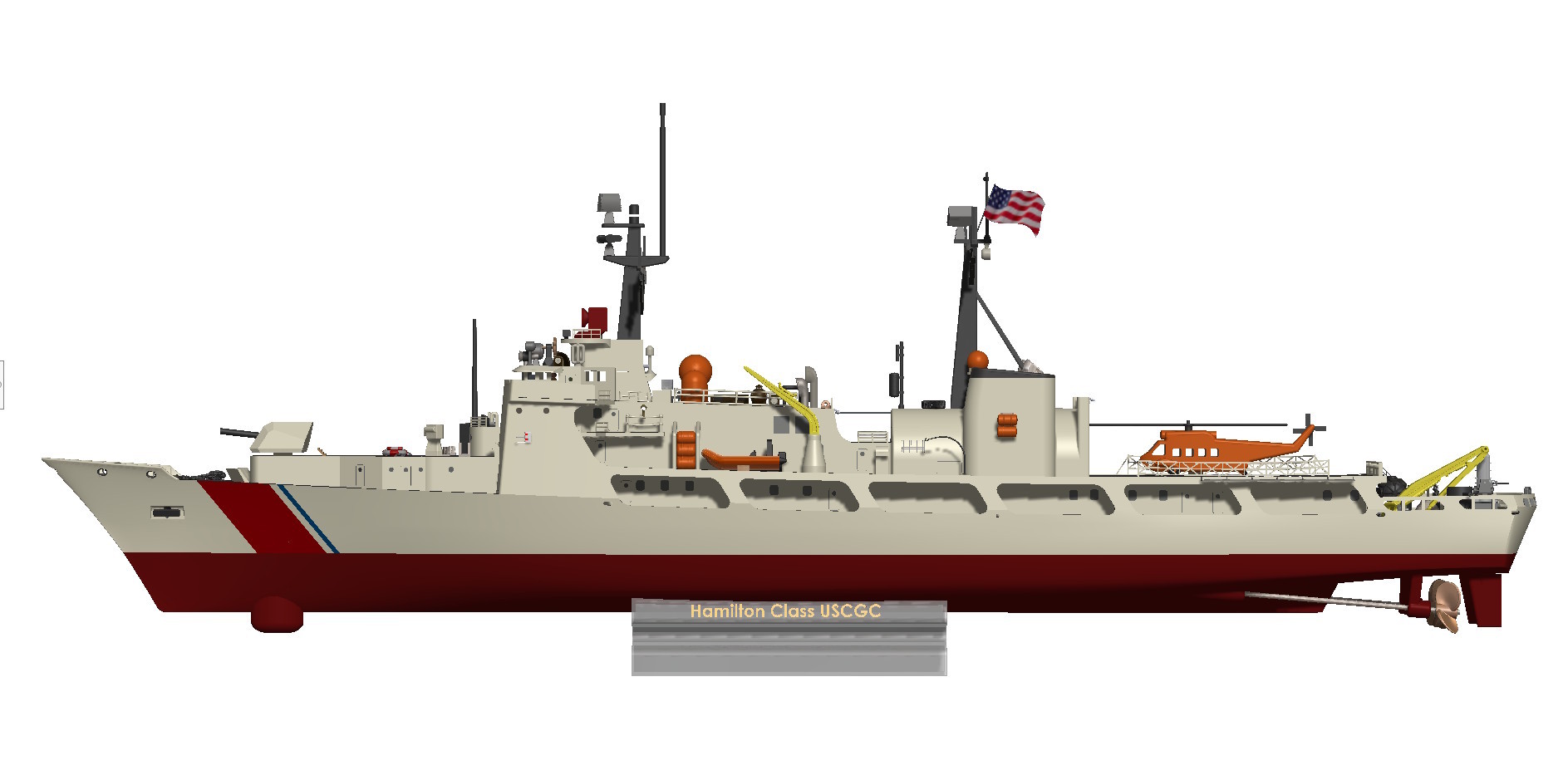
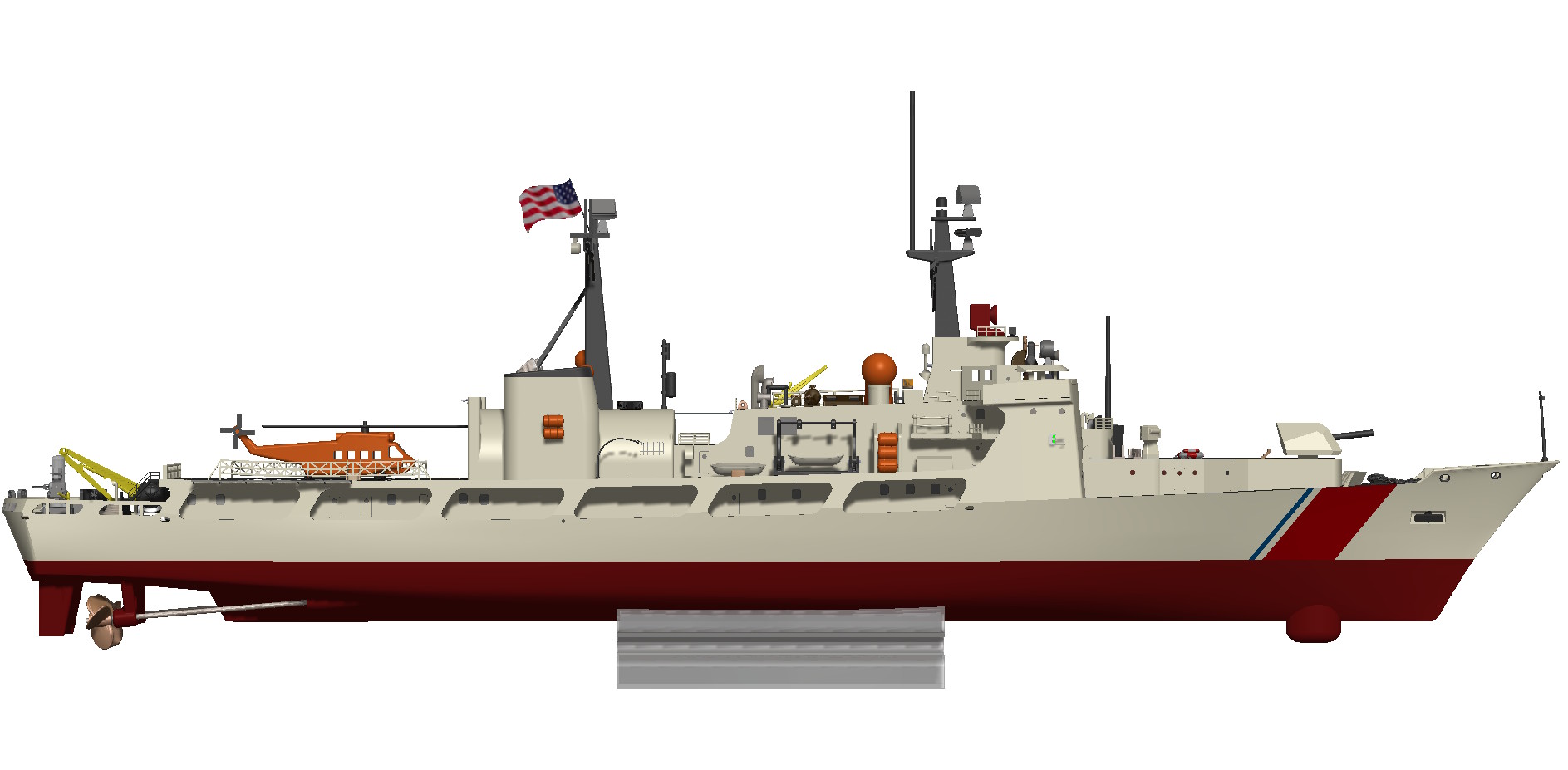
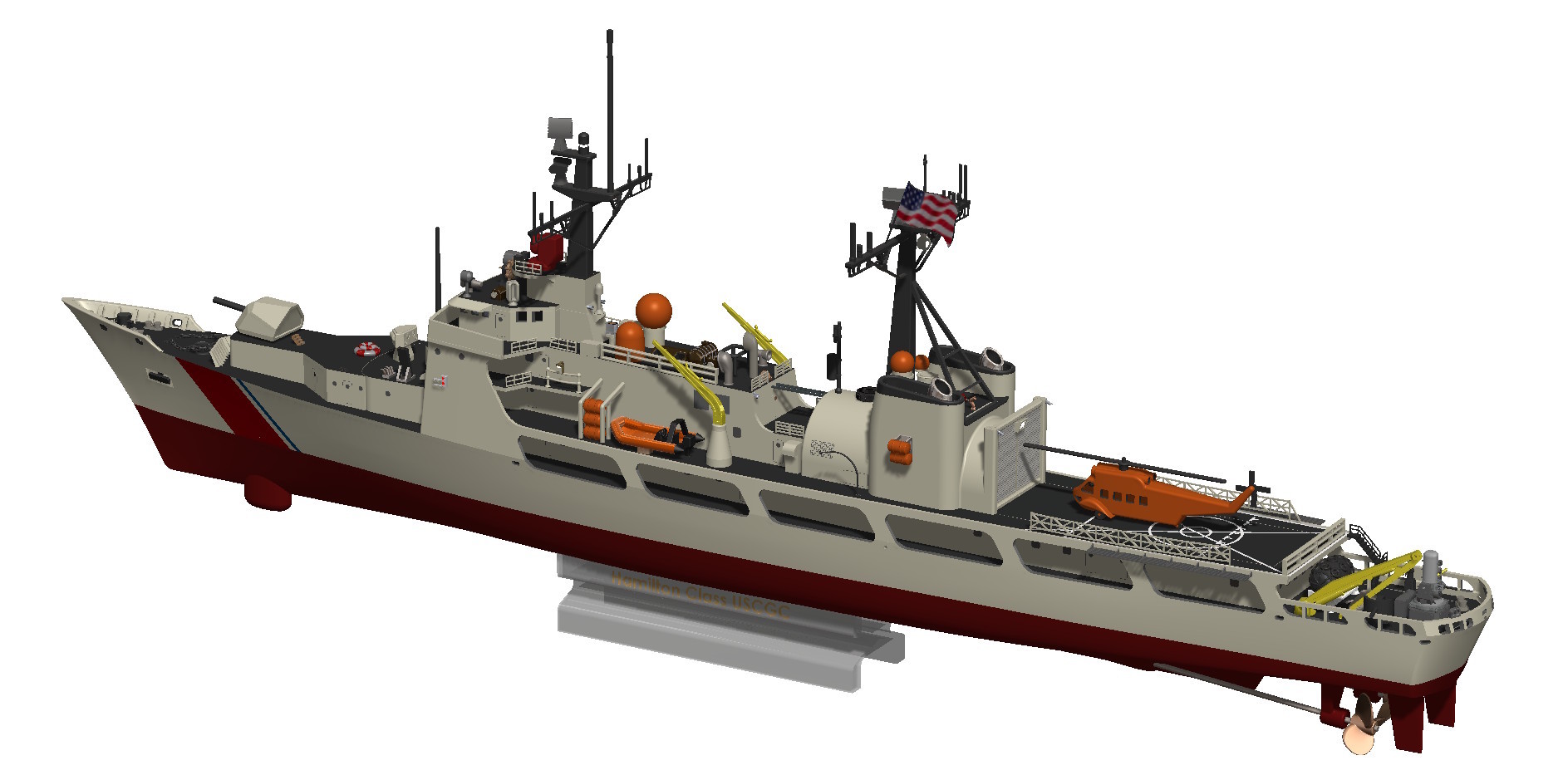
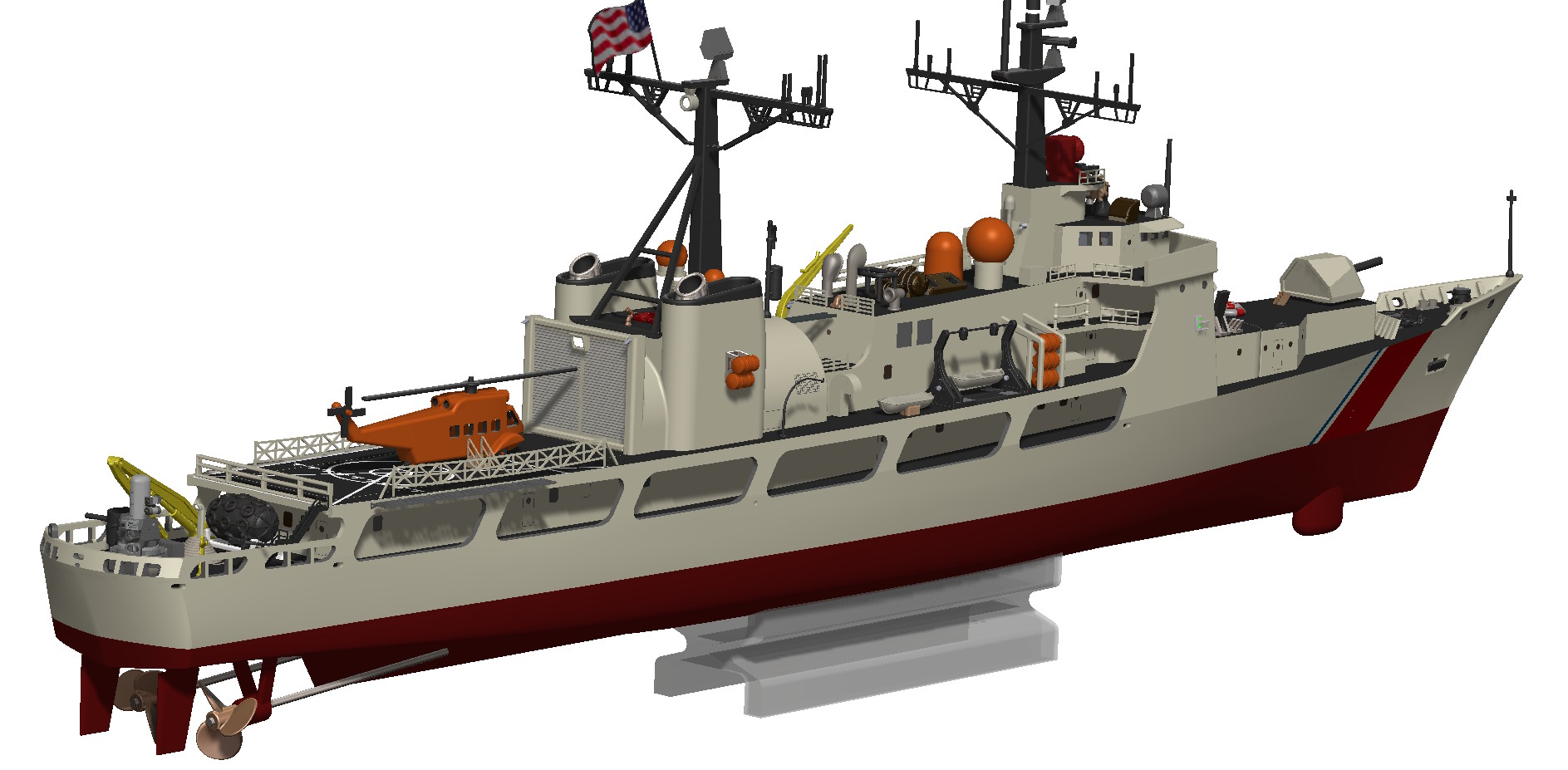
The initial contract for the lead ship, USCGC Hamilton (WHEC-715), was awarded to Avondale Shipyards in New Orleans, Louisiana in January 1964, with construction beginning shortly thereafter. Hamilton was launched on December 18, 1965 and commissioned on March 18, 1967, named for Founding Father Alexander Hamilton, the first United States Secretary of the Treasury and founder of the United States Revenue Cutter Service. She was the first genuinely new high-endurance cutter the Coast Guard had received in more than twenty years, and from the moment she entered service it was clear she represented a significant leap forward in capability. Originally envisioned as a large-scale procurement, long-range plans called for up to 38 cutters to be constructed over the following decade, but budget constraints and the wind-down of the international ocean stations program reduced the authorized number to just 12 ships, all built at Avondale between 1965 and 1972.
Continue reading for more information or go to our model’s purchase page on cults3d.
Design and Capabilities
Measuring 378 feet in length overall with a beam of 43 feet and displacing approximately 3,250 tons at full load, the Hamilton-class cutters were the largest non-icebreaking ships in the Coast Guard inventory for nearly 50 years. Their design was ambitious and forward-looking in almost every respect. They were the first US military vessels powered by a combined diesel or gas turbine system, comprising two diesel engines and two gas turbines with controllable-pitch propellers — a propulsion arrangement that gave them both economical long-range cruising capability on the diesels and an impressive sprint speed of up to 29 knots on the gas turbines, the same type of engines used in Boeing 707 airliners. Their cruising range of approximately 12,000 miles at 20 knots meant that a single Hamilton-class cutter could reach virtually any ocean in the world without refuelling.
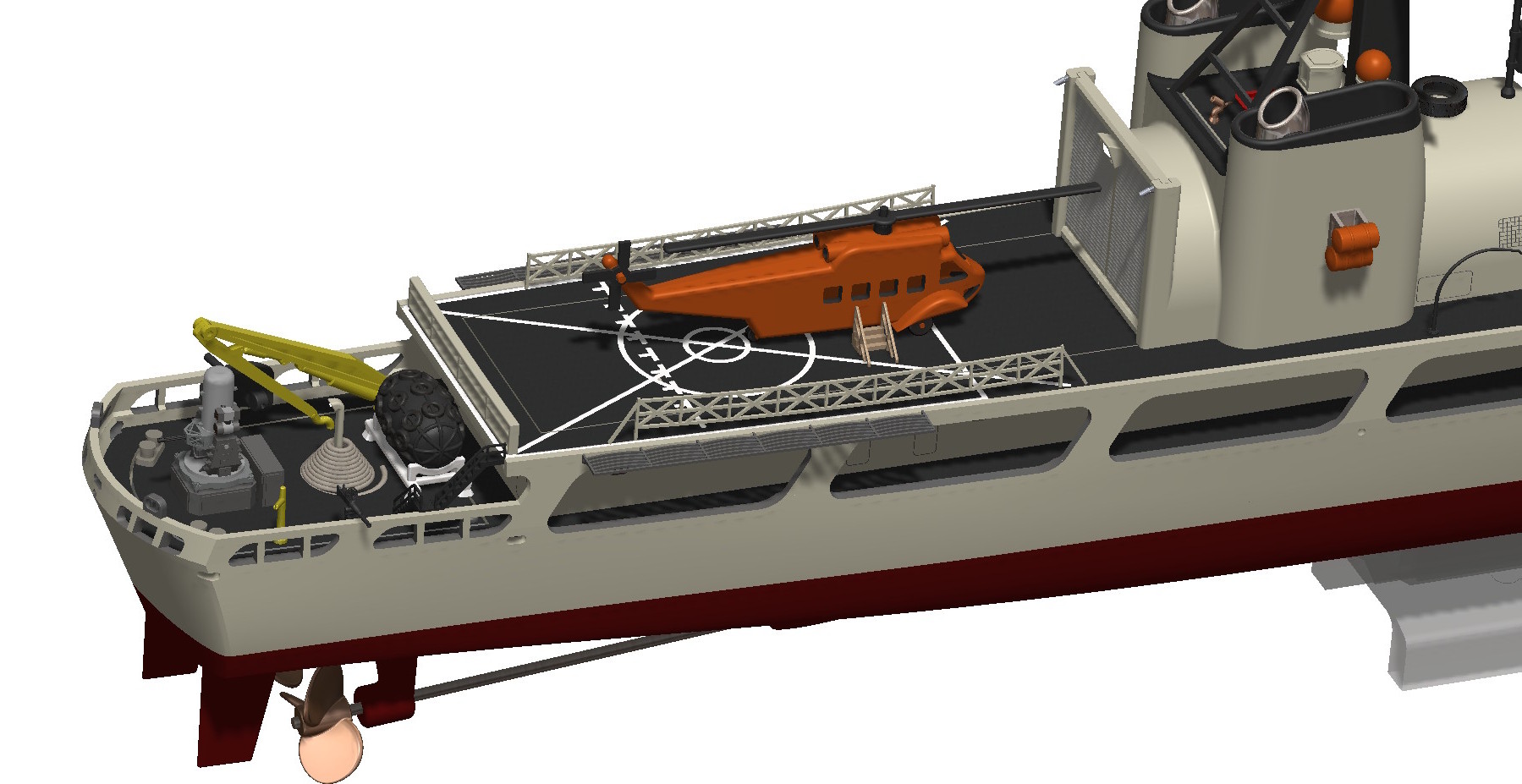
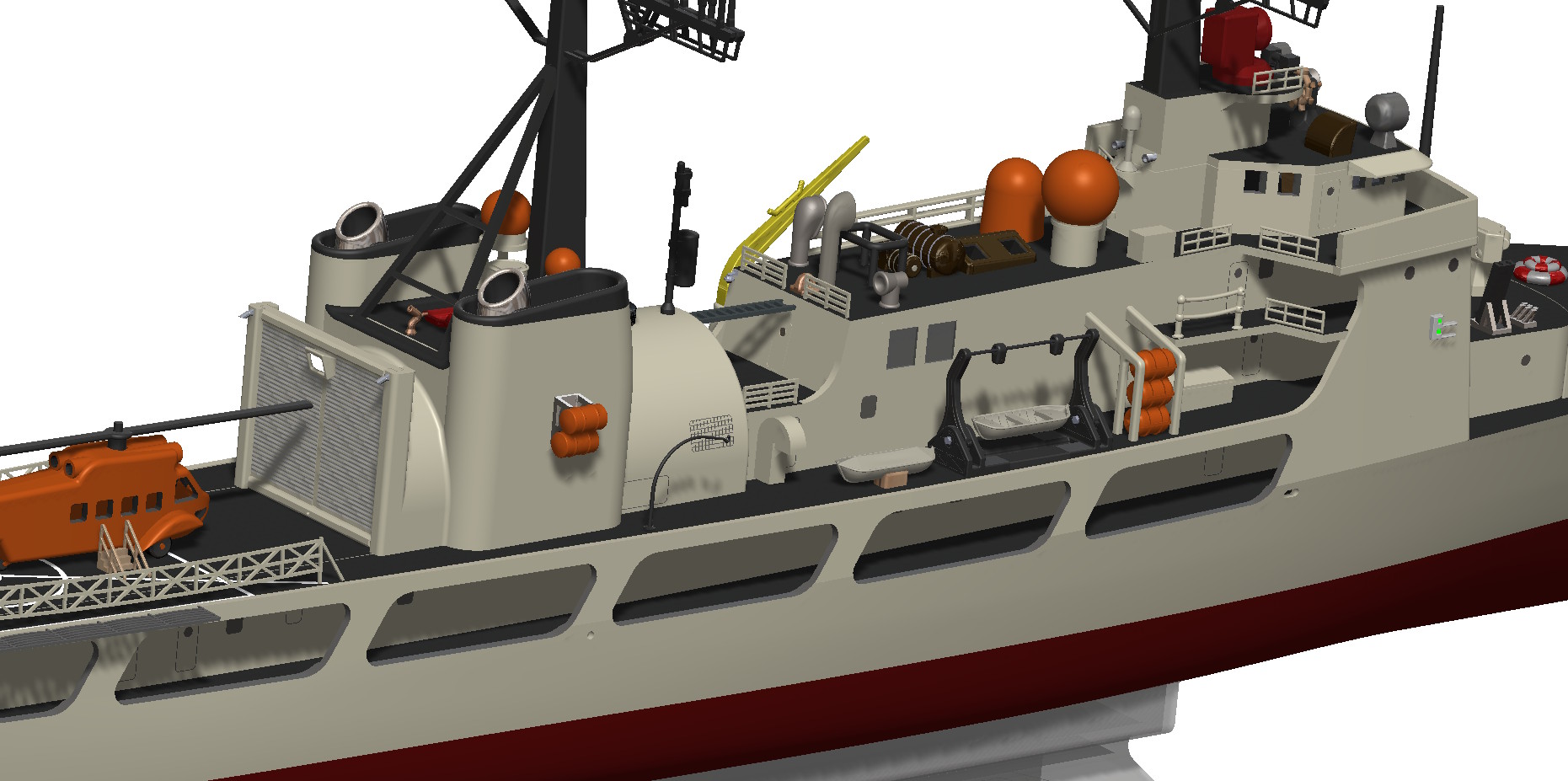
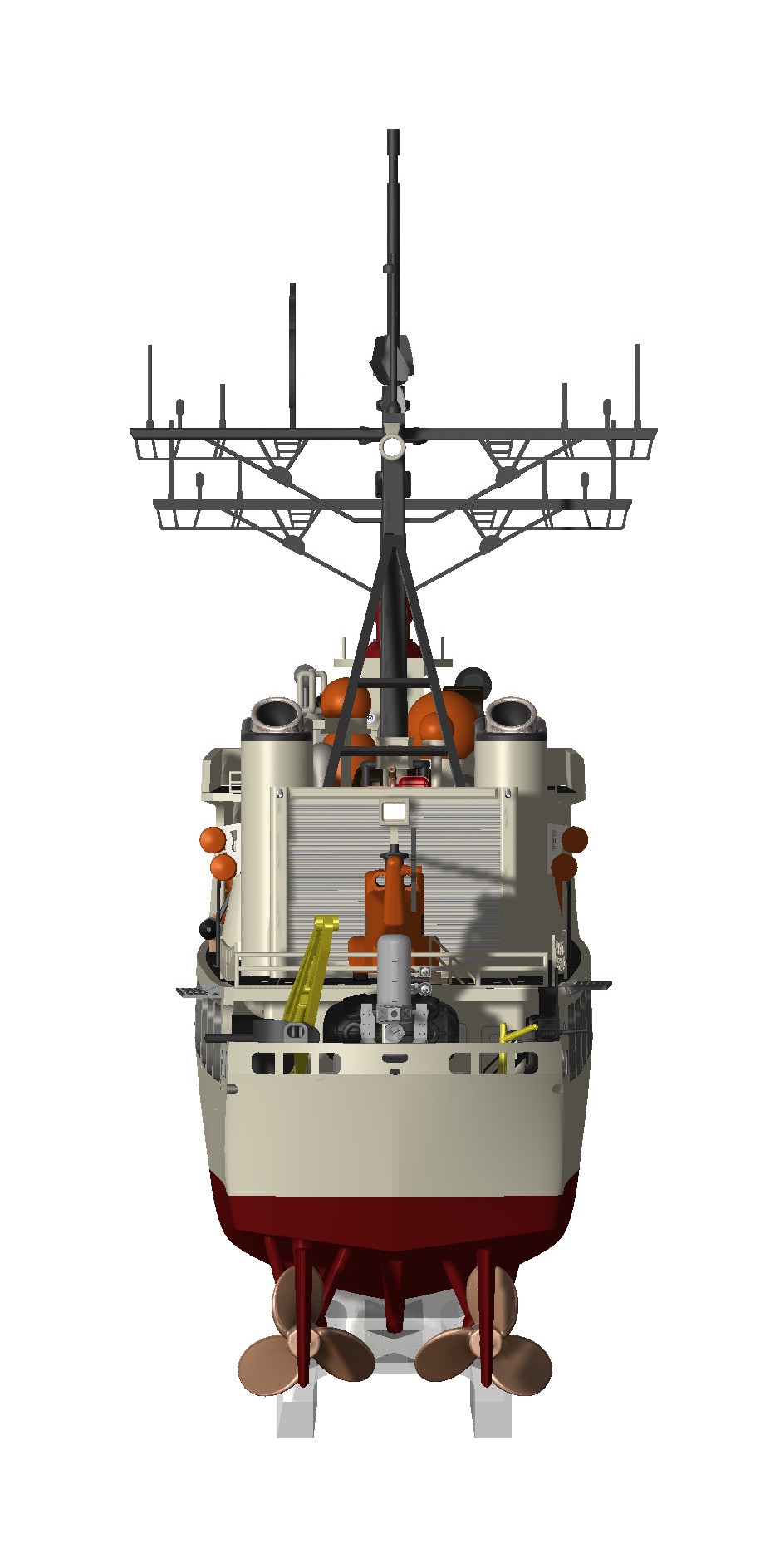
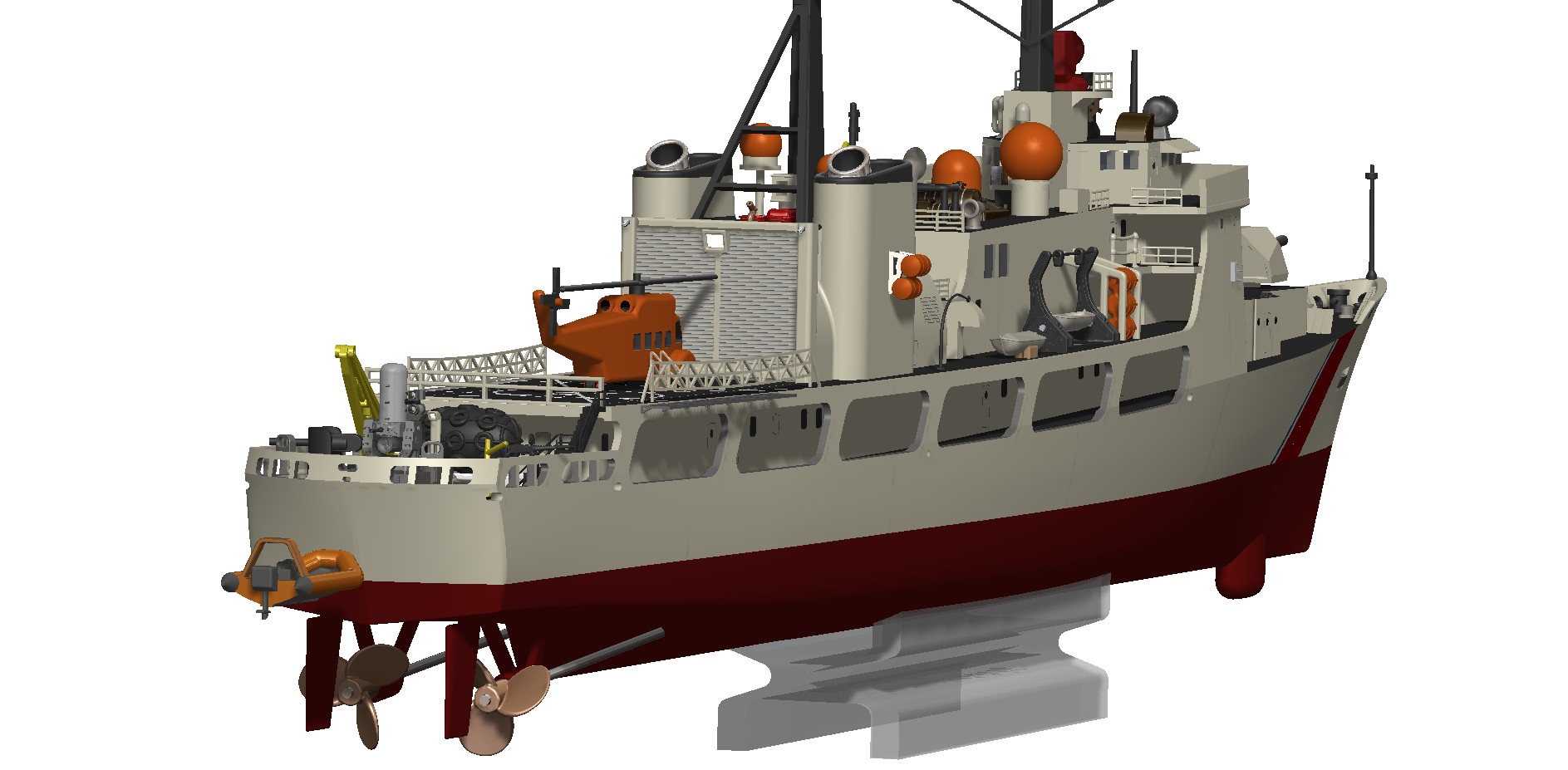
he Hamilton-class cutters were designed to be a highly versatile platform capable of performing maritime law enforcement, search and rescue, oceanographic research, and defense operations. Because of their endurance and capabilities, they commonly deployed with Carrier Battle Groups. They were equipped with a helicopter flight deck, retractable hangar, and facilities to support helicopter deployment — a capability that dramatically extended their effective reach and gave boarding teams and rescue swimmers the ability to respond far beyond the range of the ship itself. The retractable hangar was a particularly innovative feature, allowing the flight deck to be used for full helicopter operations while still protecting the embarked aircraft from the harsh maritime environment when not in use.
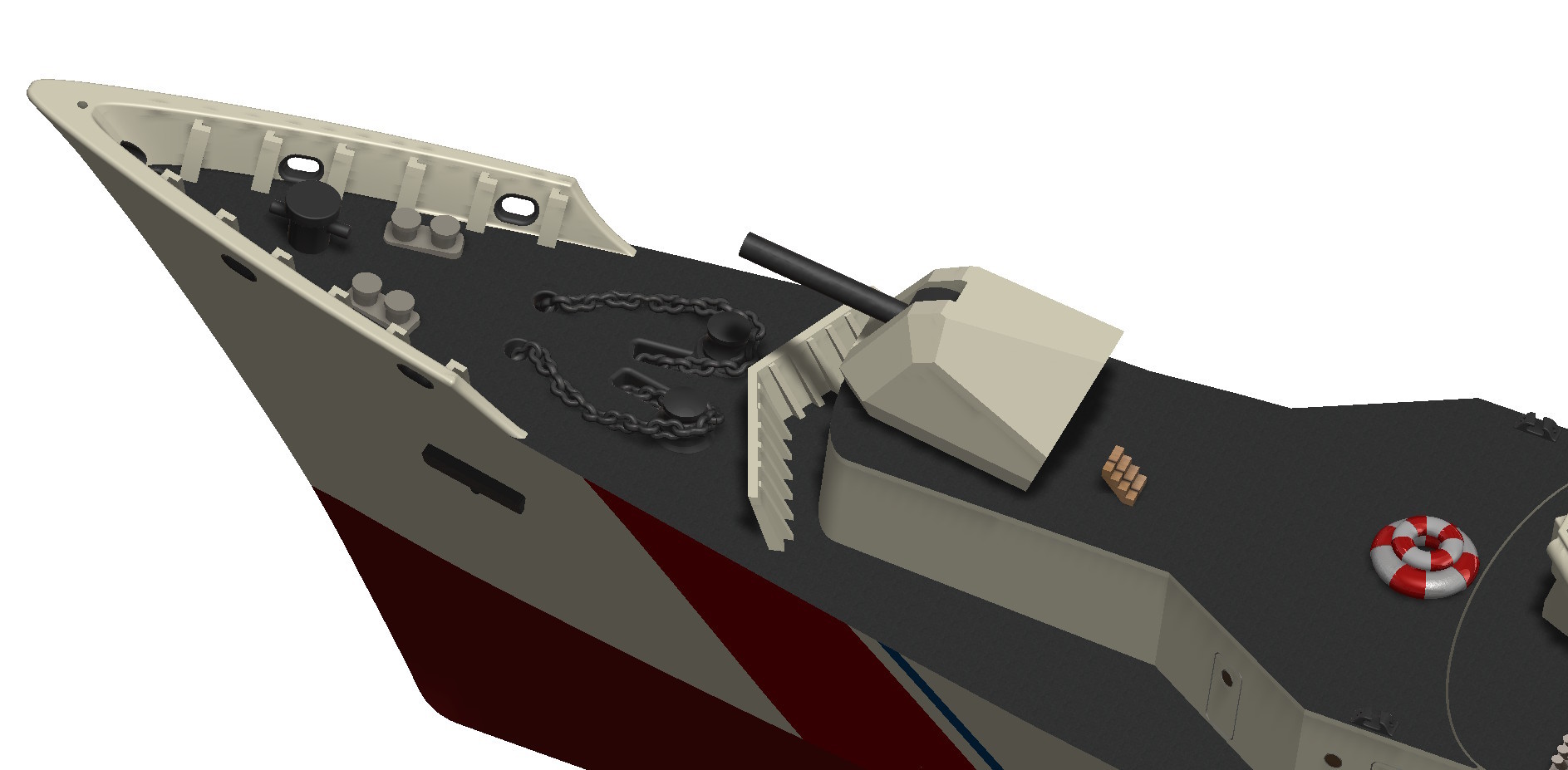
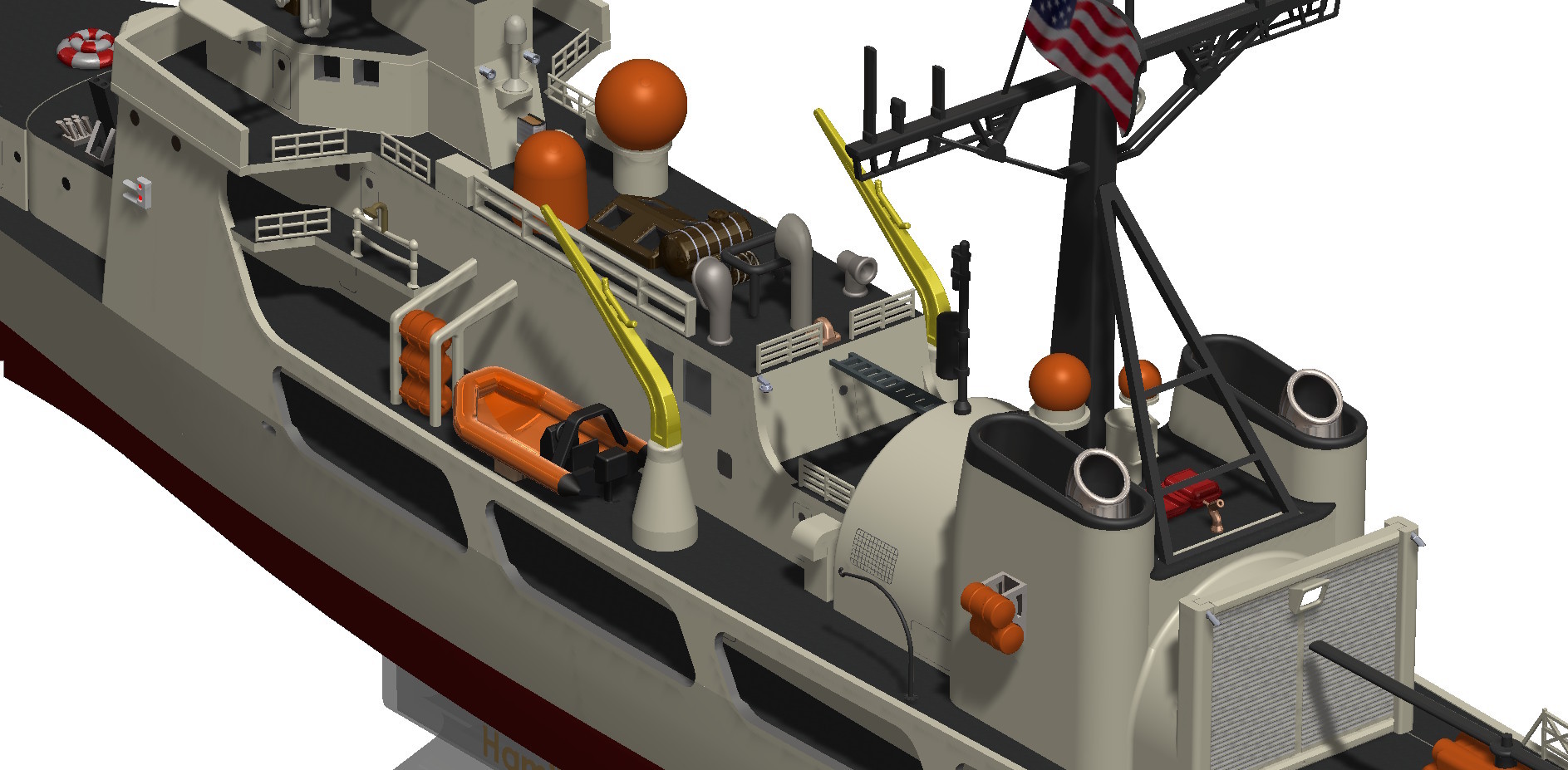
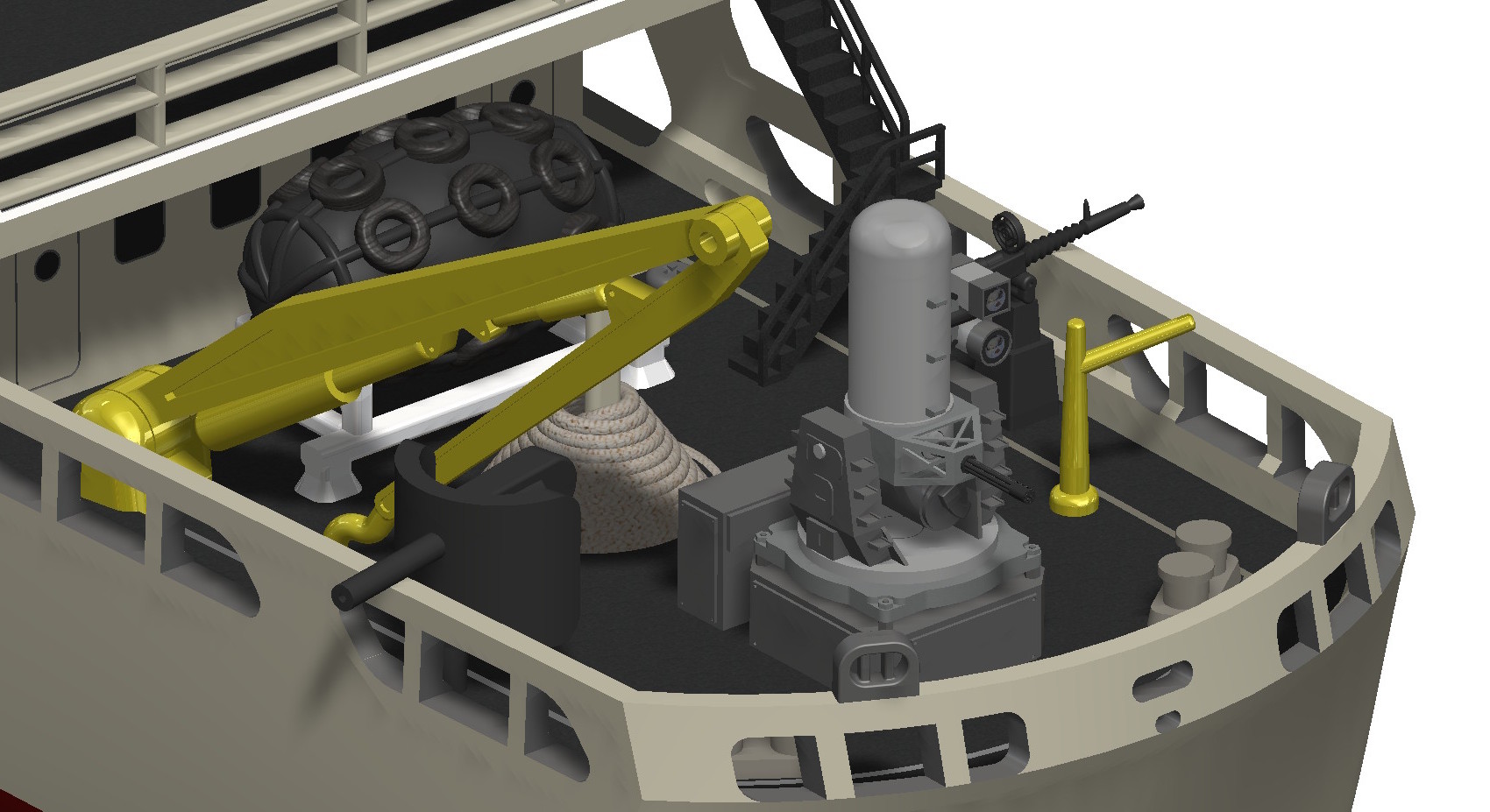
The original armament was built around a 5-inch naval gun forward and a comprehensive suite of anti-submarine warfare equipment, reflecting the Cold War naval environment in which these ships were designed. This made them genuine dual-purpose vessels — Coast Guard cutters in peacetime, naval combatants in war. They were built with a welded steel hull and aluminum superstructure, with a distinctive V-shaped hull cross-section designed through extensive tank testing to improve survivability after damage.
The FRAM Modernization Program
After roughly two decades of service, the entire Hamilton class underwent a comprehensive mid-life overhaul that transformed the ships from capable Cold War-era vessels into thoroughly modern cutters fit for service into the 21st century. Beginning in the 1980s and ending in 1992, the entire class was modernized through the Fleet Renovation and Modernization program at Bath Iron Works and Todd Shipyard in Seattle, at a cost of approximately $55 million per vessel. The overhaul was truly stem-to-stern in scope — structural members and hull plating were replaced, all propulsion machinery was removed and restored to factory-new condition, the HVAC systems were redesigned, and the entire weapons, electronics, and combat systems suite was comprehensively upgraded.
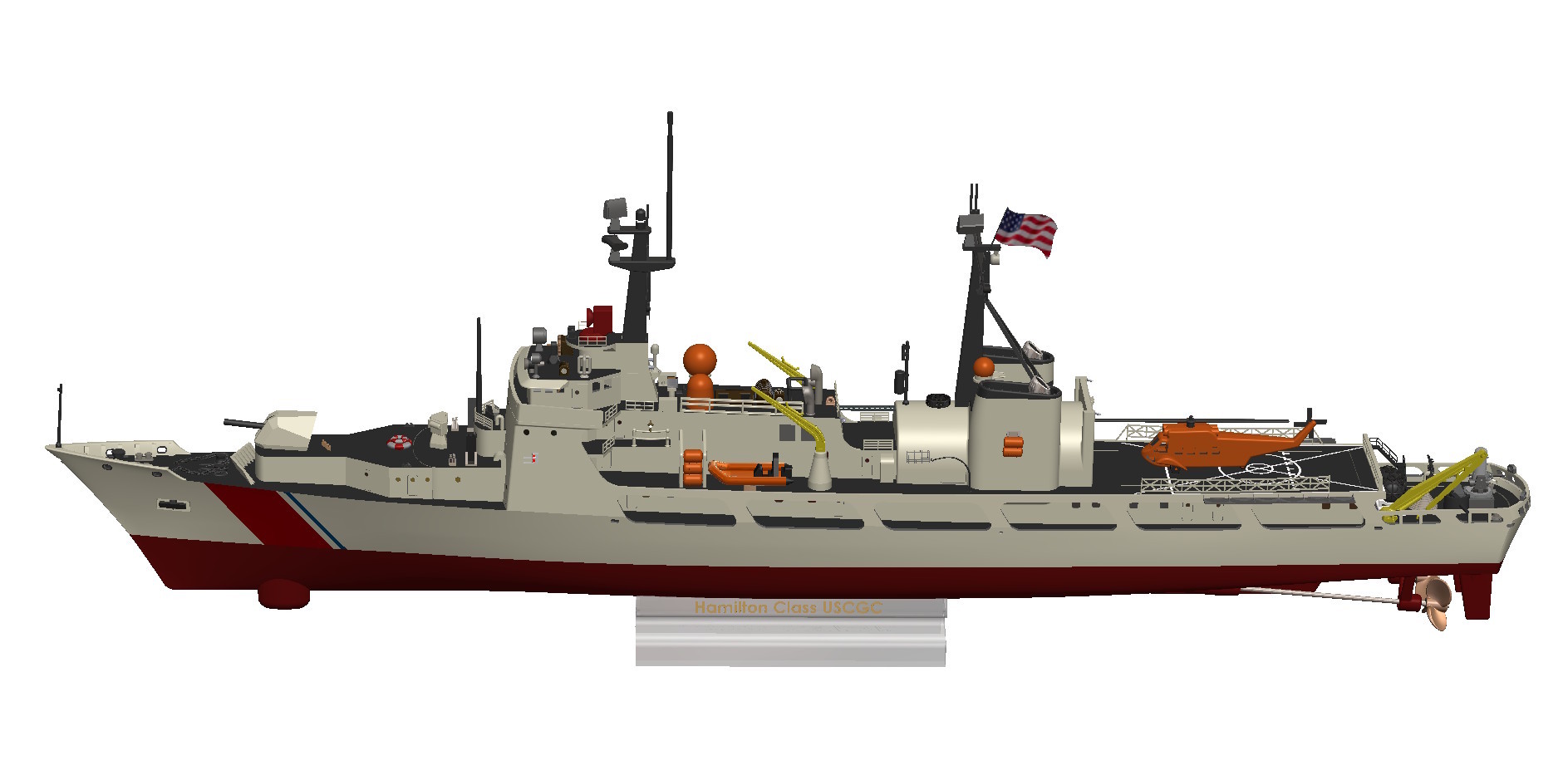
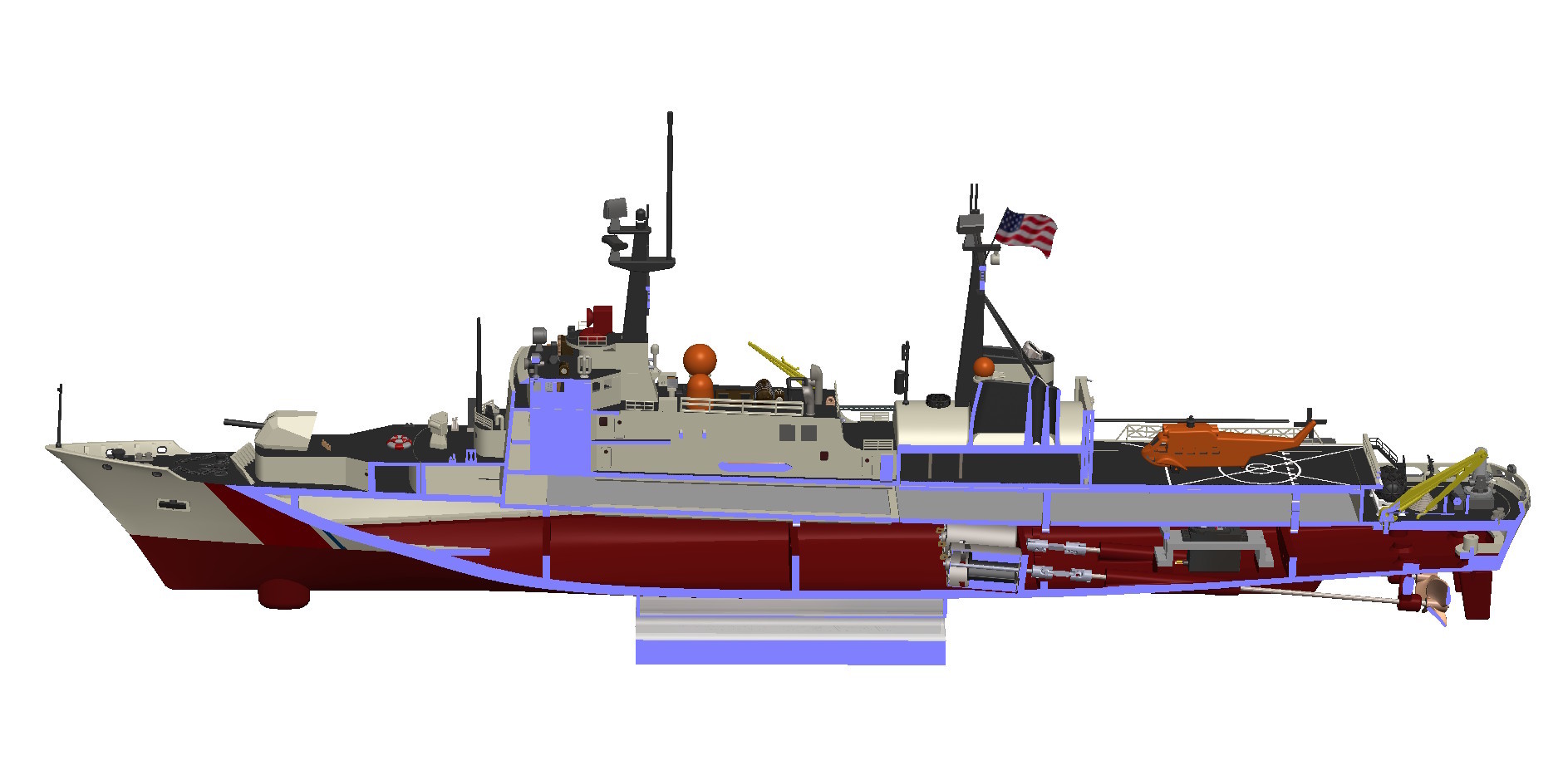
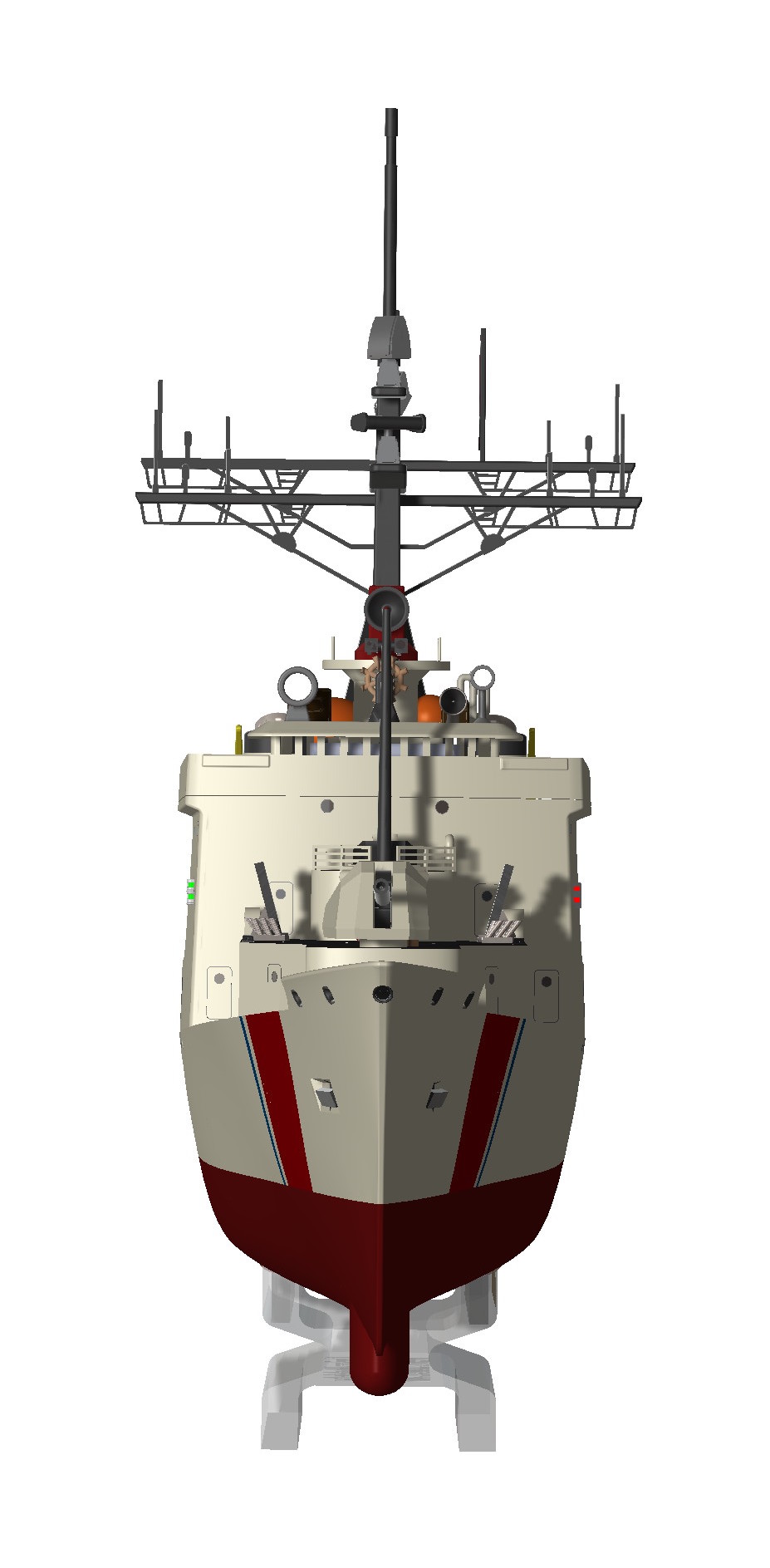
The most visible change was the replacement of the aging 5-inch gun with a sleeker OTO Melara 76mm automatic cannon forward, giving the ships significantly improved anti-surface and anti-air capability with a much higher rate of fire. After the completion of FRAM, a joint Navy and Coast Guard board decided further upgrades would be implemented, including the installation of Harpoon anti-ship missiles and a Phalanx CIWS, and missile defense was handled by MK 36 launchers alongside the Phalanx system. The Harpoon anti-ship missiles were fitted to multiple cutters, but only USCGC Mellon ever fired a Harpoon in anger, in January 1990. After the collapse of the Soviet Union, the joint board decided there was no longer sufficient military threat to justify retaining anti-ship missiles and anti-submarine weapons, and these were removed. MK 38 25mm chain guns were subsequently installed on both sides of each cutter. The FRAM overhaul effectively extended the service life of each ship by approximately 25 years — a remarkable return on investment that speaks to the fundamental soundness of the original design.
Operational Legacy
The Hamilton-class cutters accumulated an extraordinary operational record over their decades in service, spanning some of the most demanding and diverse missions in the history of the Coast Guard. They served on ocean weather stations across the North Atlantic and North Pacific, providing meteorological data and standing by as rescue platforms for trans-oceanic aircraft and ships in distress. They deployed to Vietnam with Coast Guard Squadron Three. They patrolled the Bering Sea along the Maritime Boundary Line, deterring foreign fishing vessels from encroaching on American waters. They conducted fisheries enforcement across the North Pacific, responded to oil spills and maritime disasters, and evacuated civilian populations during emergencies.
Counter-narcotics operations became one of their defining missions in their later years of service. In March 2007, Hamilton assisted Sherman in the largest recorded maritime drug seizure in history — two vessels working together to intercept a Panamanian-flagged fishing vessel and seize 20 metric tons of cocaine, with an estimated street value of $600 million. Operations like this were a regular feature of the class’s later service life, with Hamilton-class cutters collectively seizing hundreds of tons of narcotics across their operational careers.
The final Hamilton-class cutter, USCGC Douglas Munro (WHEC-724), was decommissioned on April 24, 2021 in a ceremony at Coast Guard Station Kodiak, Alaska, marking the end of nearly 50 years of service for the class. “Today we say thank you and goodbye to the end of an era,” said Commandant Admiral Karl Schultz at the ceremony. With more than 500 years of combined service across the twelve ships, the versatile Hamiltons took the Coast Guard’s racing stripe around the globe, modeling the maritime rules-based order.
The Ships of the Hamilton Class
All twelve Hamilton-class cutters were built at Avondale Shipyards in Louisiana and entered service between 1967 and 1972. Most were named after former Secretaries of the Treasury, earning the class its alternative designation as the Secretary class, while three were named after Coast Guard heroes and are sometimes referred to as the Hero class.
| Hull | Name | Commissioned | Transferred To |
|---|---|---|---|
| WHEC-715 | USCGC Hamilton | March 18, 1967 | Philippine Navy (BRP Gregorio del Pilar) |
| WHEC-716 | USCGC Dallas | March 11, 1968 | Vietnamese Coast Guard |
| WHEC-717 | USCGC Mellon | December 22, 1967 | Vietnamese Coast Guard |
| WHEC-718 | USCGC Chase | March 11, 1968 | Nigerian Navy |
| WHEC-719 | USCGC Boutwell | June 14, 1968 | Philippine Navy |
| WHEC-720 | USCGC Sherman | August 23, 1968 | Vietnamese Coast Guard |
| WHEC-721 | USCGC Gallatin | March 20, 1968 | Bangladesh Navy |
| WHEC-722 | USCGC Morgenthau | March 14, 1969 | Vietnamese Coast Guard |
| WHEC-723 | USCGC Rush | July 3, 1969 | Philippine Navy |
| WHEC-724 | USCGC Douglas Munro | September 10, 1971 | Sri Lanka Navy |
| WHEC-725 | USCGC Jarvis | December 30, 1971 | Bangladesh Navy |
| WHEC-726 | USCGC Midgett | March 17, 1972 | Nigerian Navy |
In total, all 12 Hamilton-class cutters were transferred to five partner nations between 2011 and 2025 — three to the Philippines, three to Vietnam, two to Bangladesh, two to Nigeria, and two to Sri Lanka — where they continue their operational lives under new flags, a testament to the fundamental durability and capability of the original design.
Our 3D Printable Model — Hamilton-Class WHEC at 1:96 Scale
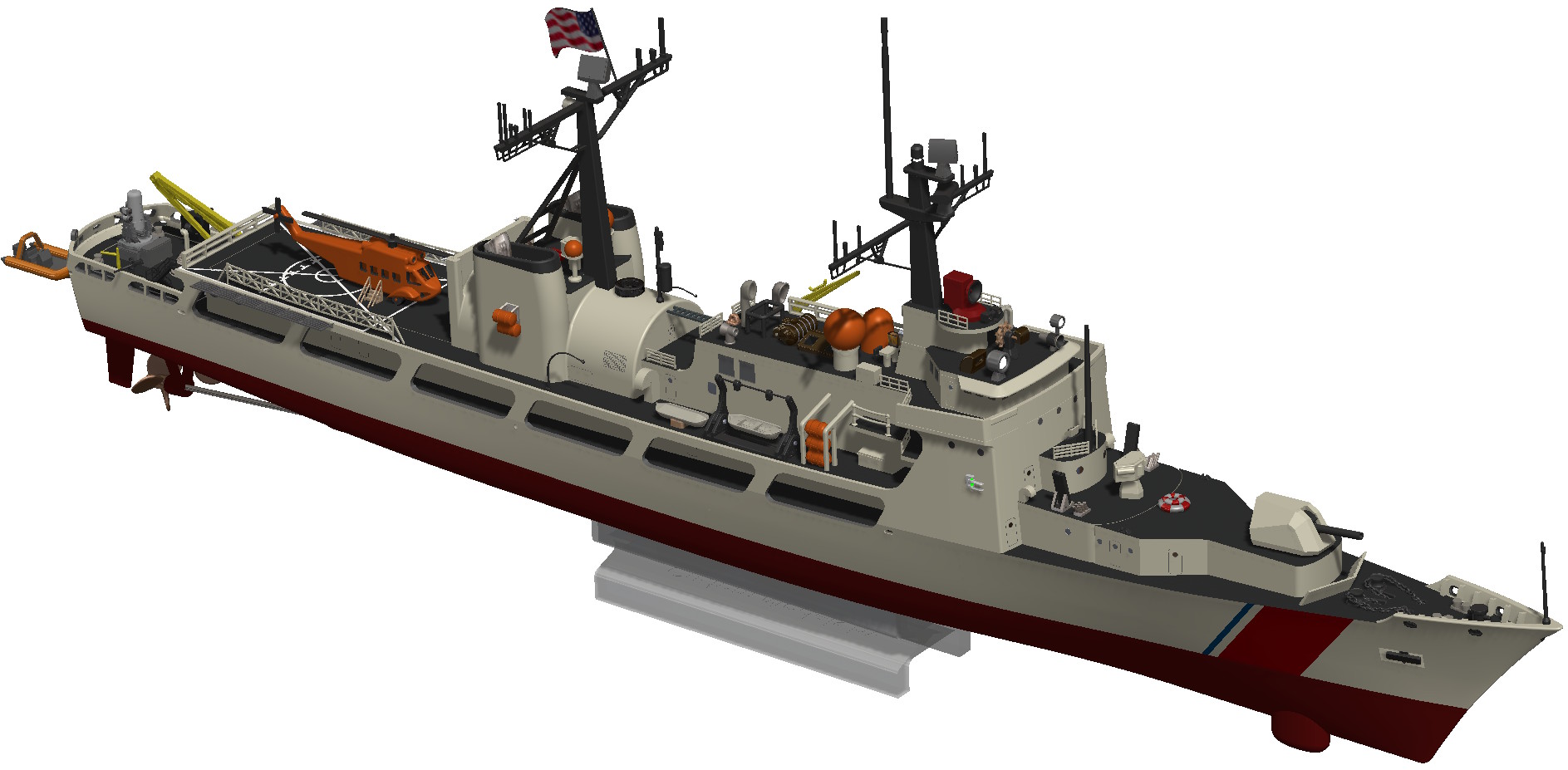
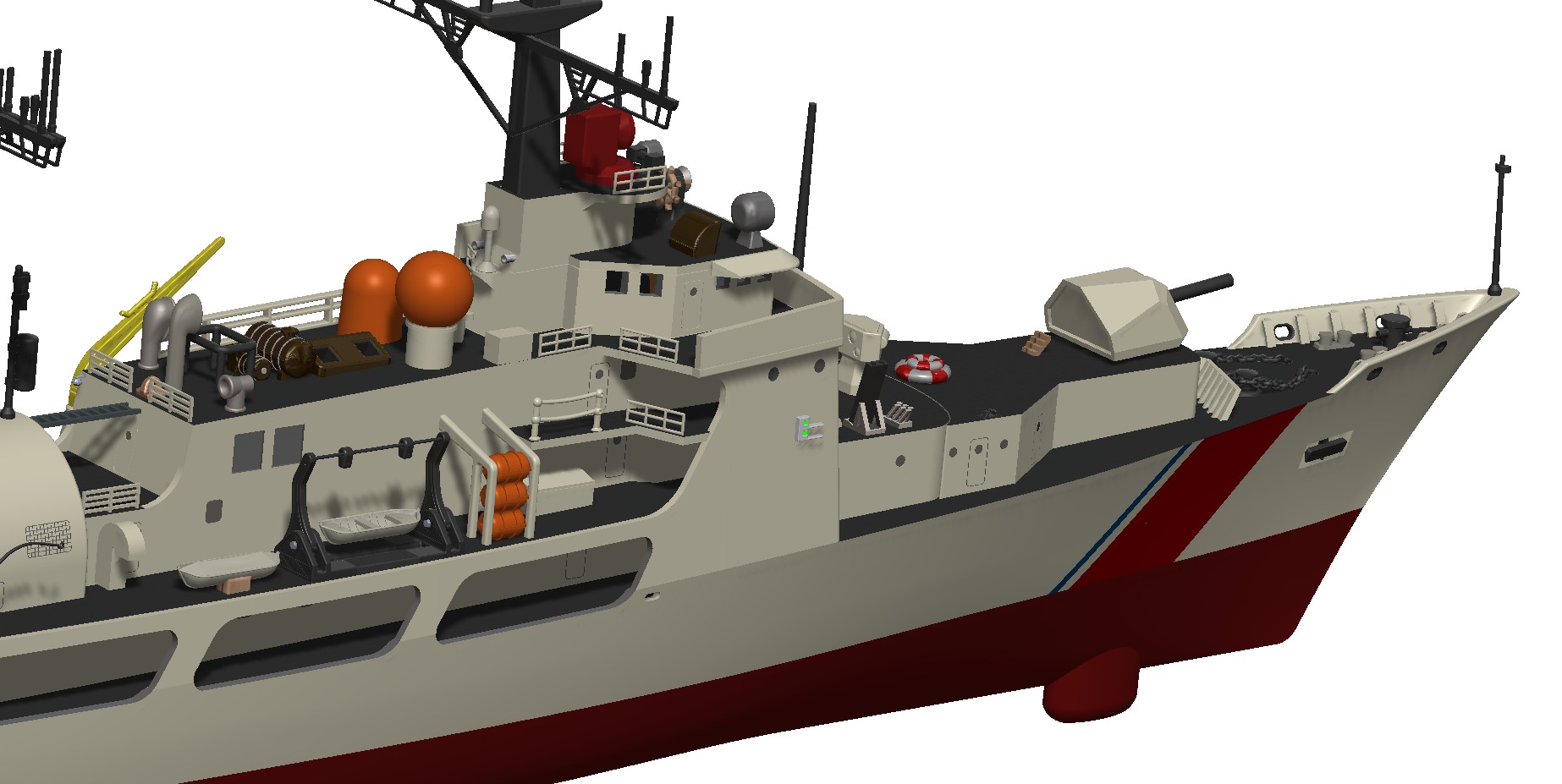
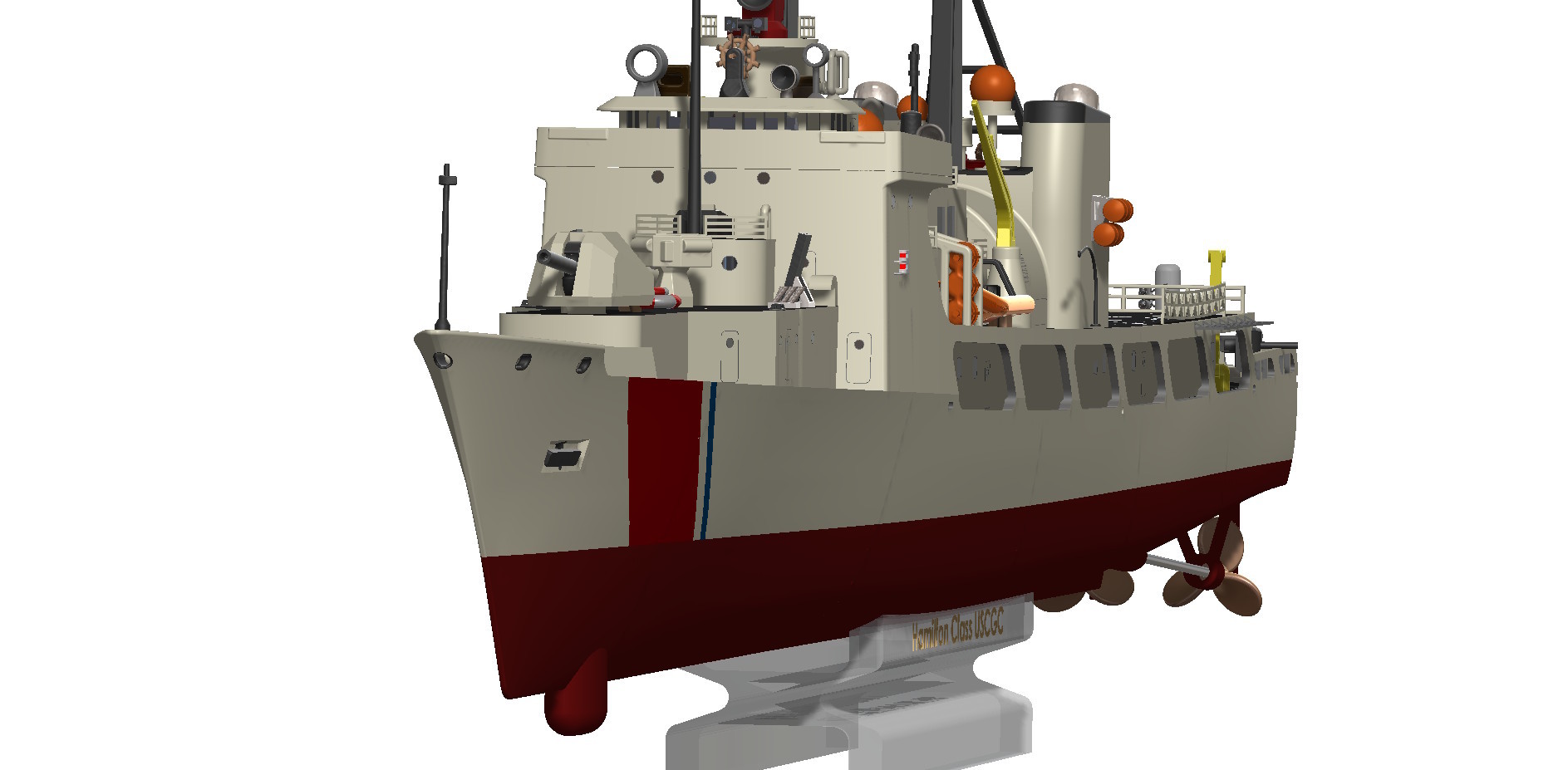
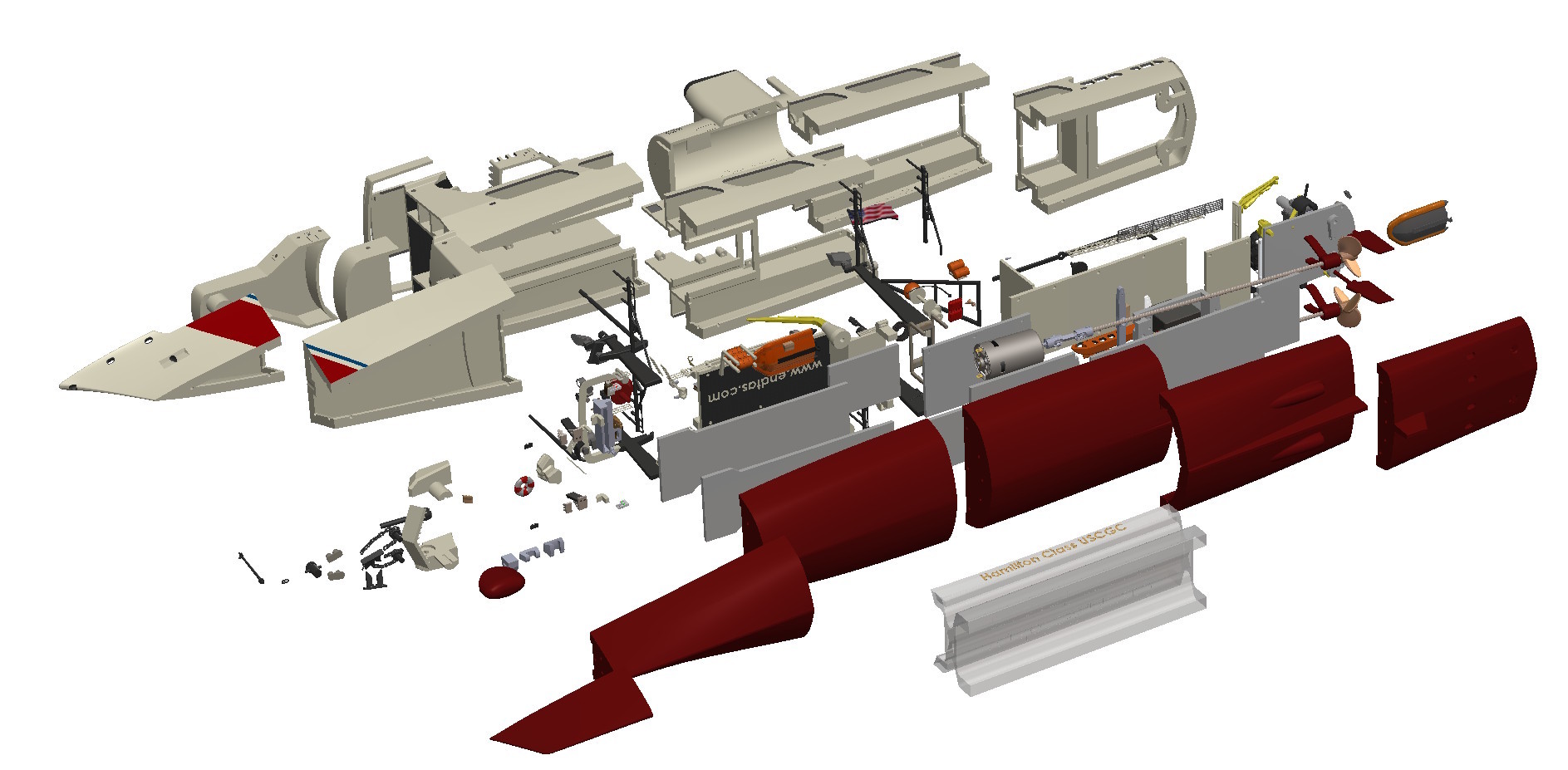
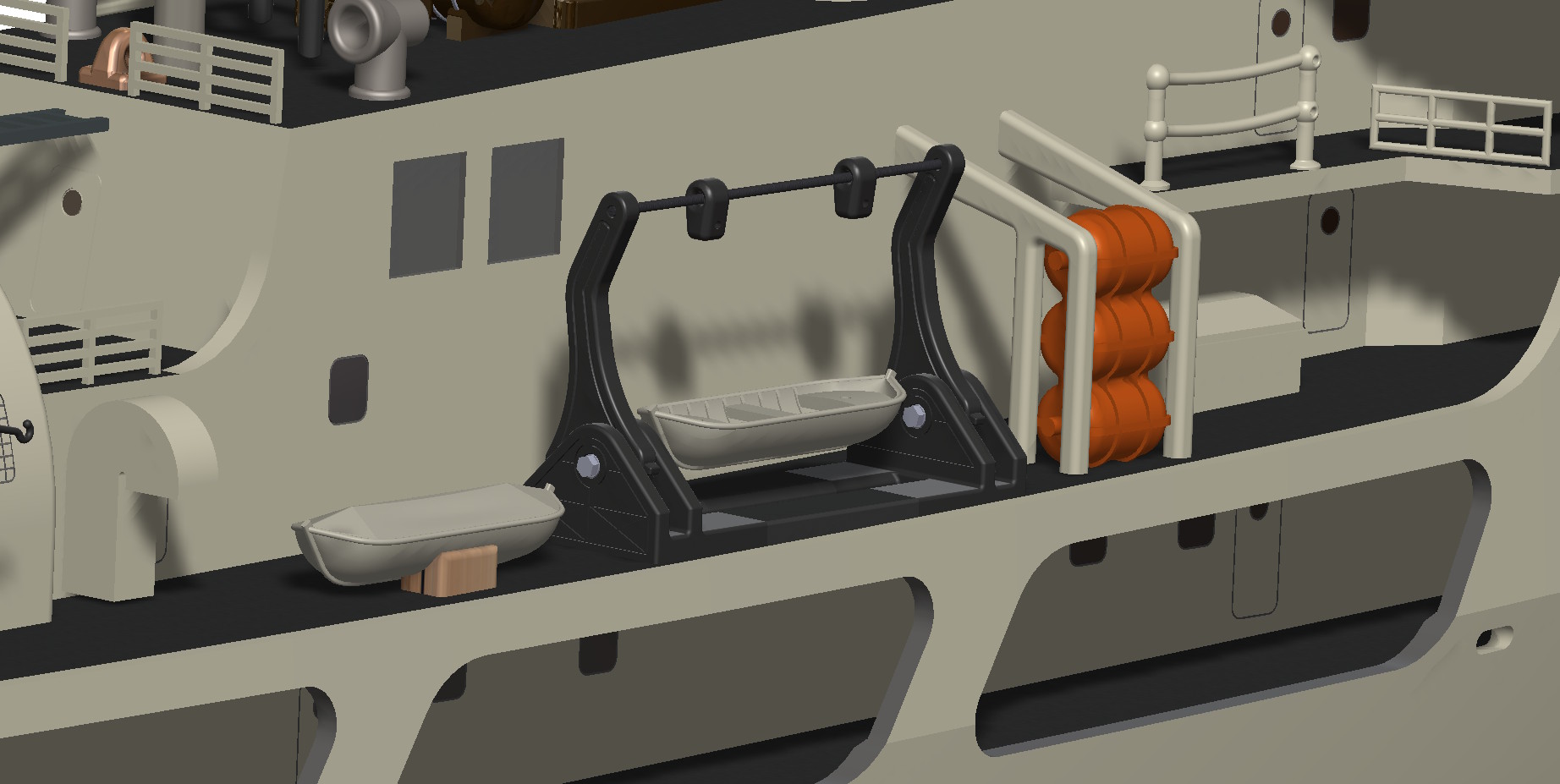
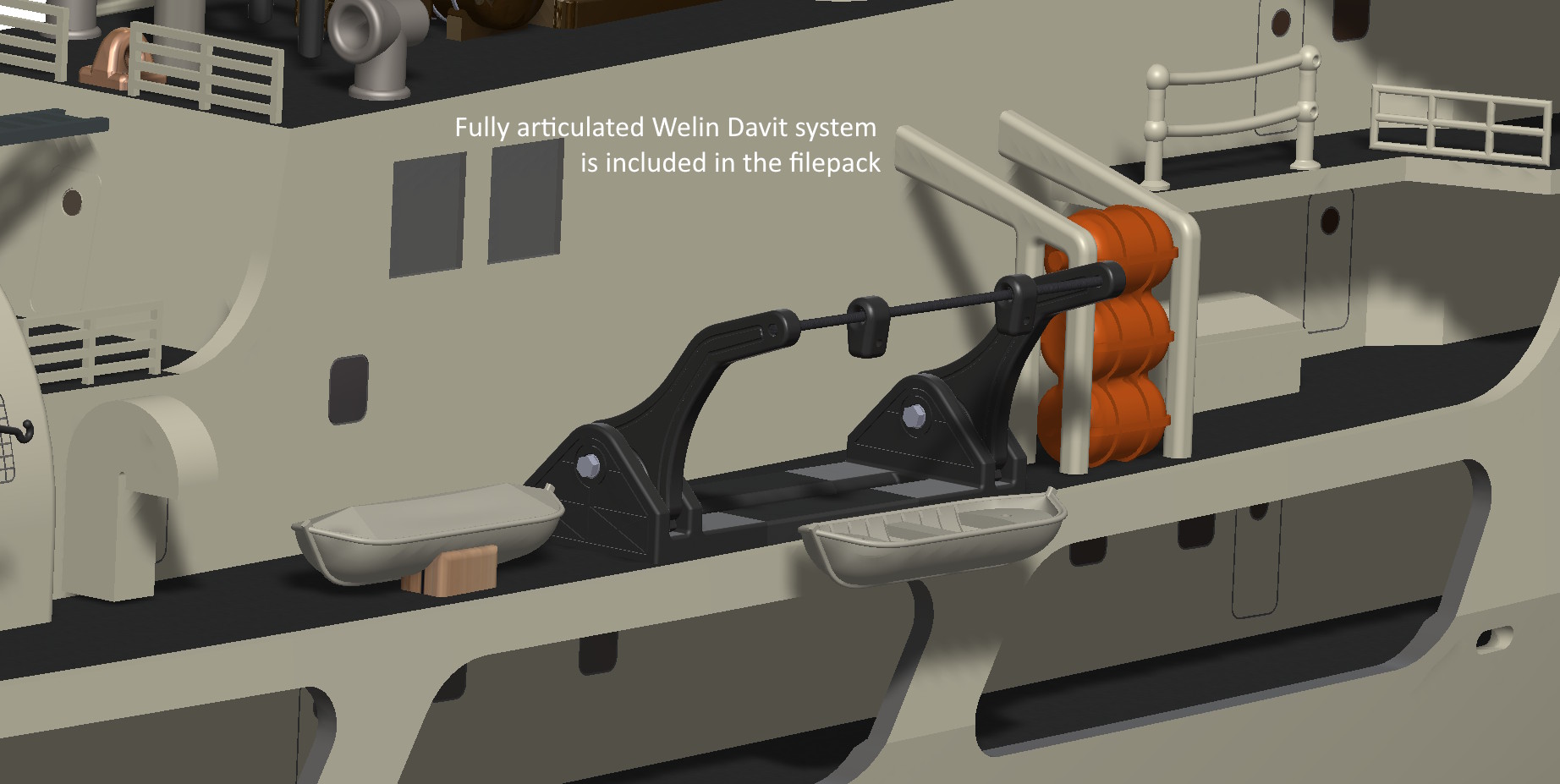
At Endtas Design we have always been drawn to the ships that defined an era, and the Hamilton-class High Endurance Cutter is one of the most significant and beloved American Coast Guard vessels of the twentieth century. Our 1:96 scale 3D printable model represents the ships in their post-FRAM modernized configuration — the definitive form in which most people remember them, with the OTO Melara 76mm gun forward, Phalanx CIWS, 25mm chain guns, fully articulated Welin davits, retractable helicopter hangar, and the comprehensive radar and sensor suite that characterized these ships during the peak of their operational careers.
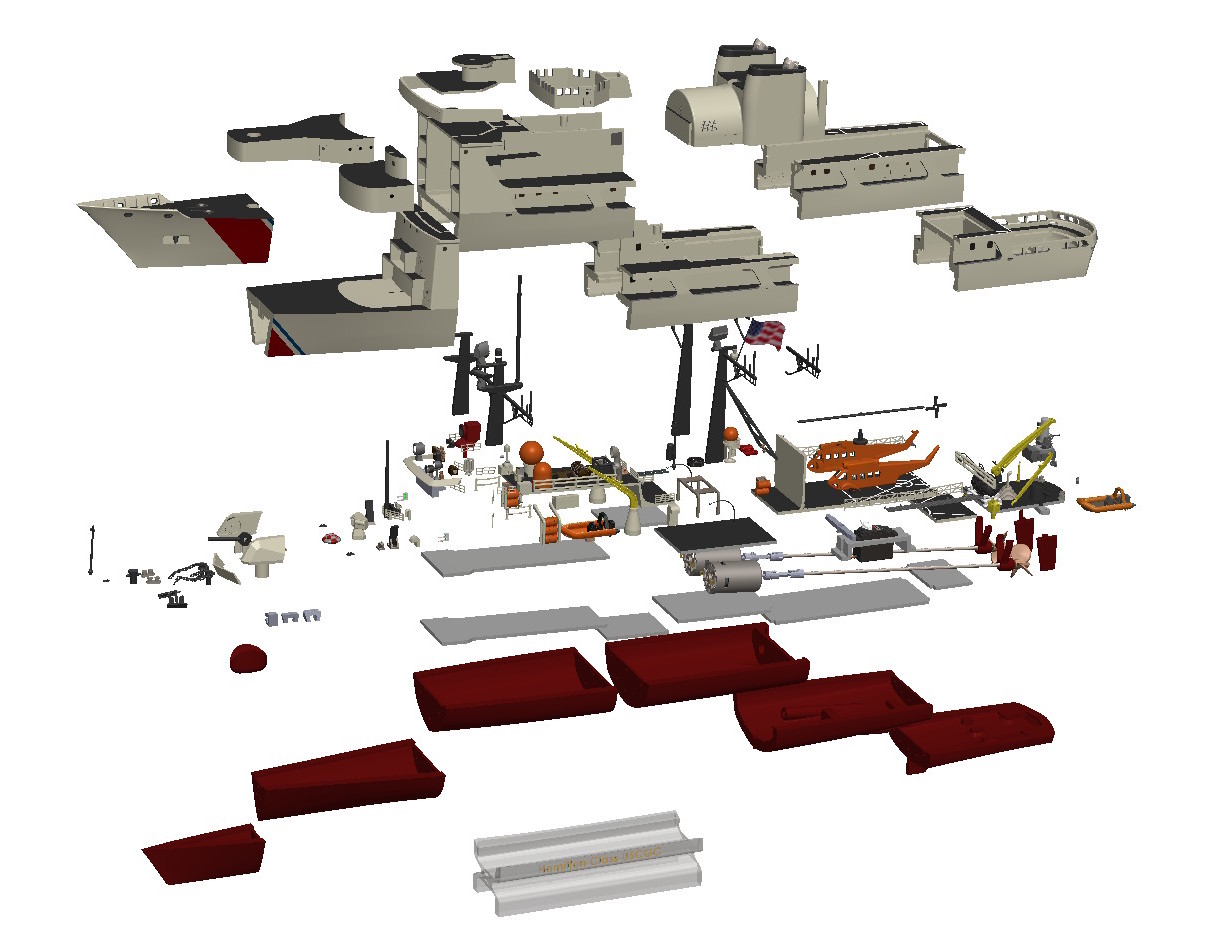
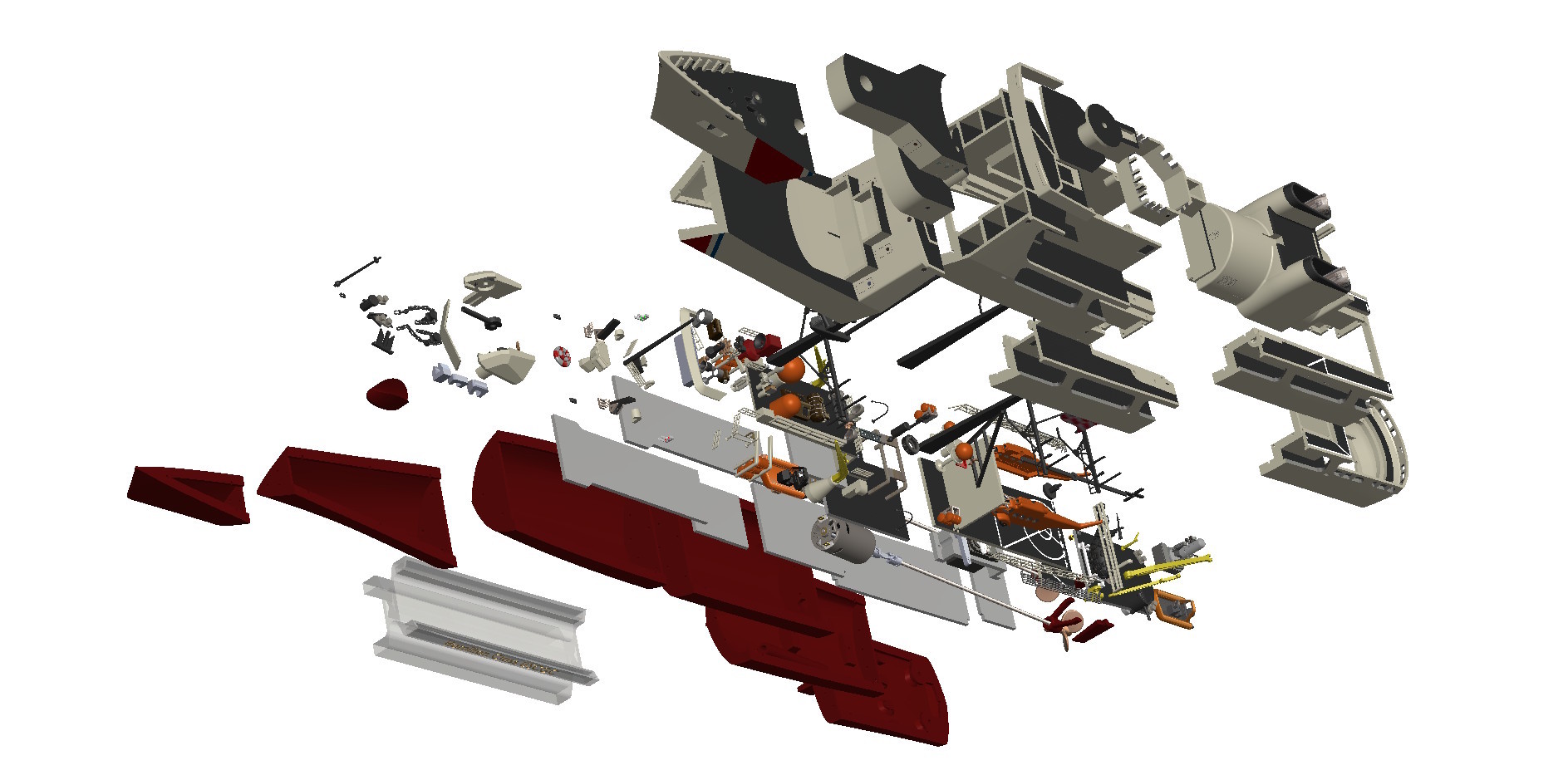
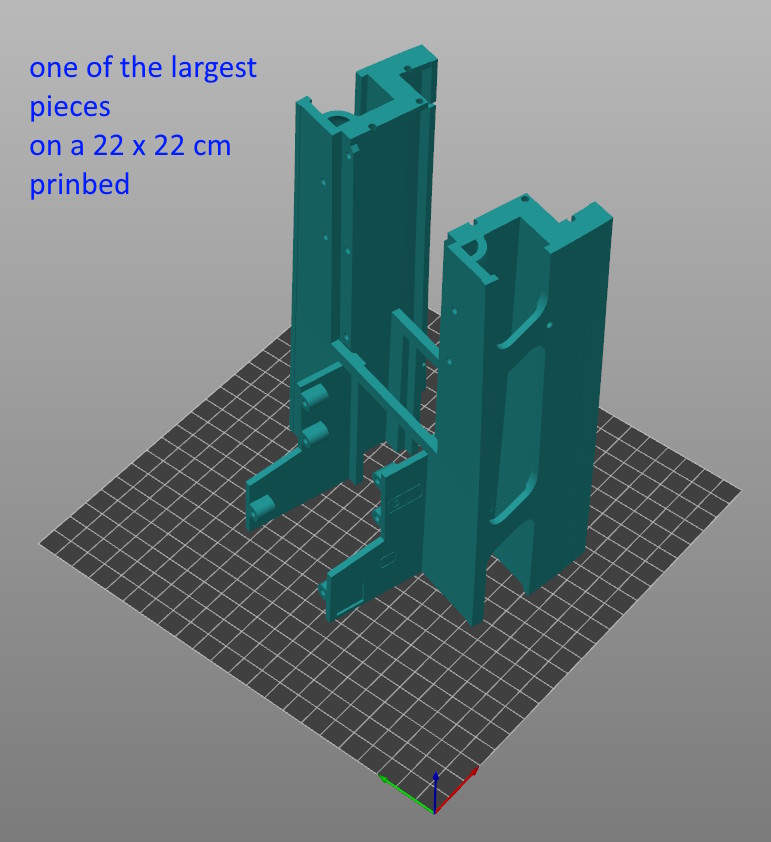
The finished model measures 1.2 meters from bow to stern — a genuinely impressive display piece that captures the long, lean, purposeful profile that earned these cutters the affectionate nickname “378s.” The core hull assembles from 59 modular sections, all sliced to fit print beds as small as 22×22 cm with a minimum 25 cm print height, making it accessible on most standard FDM printers without any specialist equipment. A comprehensive library of over 140 additional optional detail parts gives builders the flexibility to build the model to whatever level of completion and detail they choose.
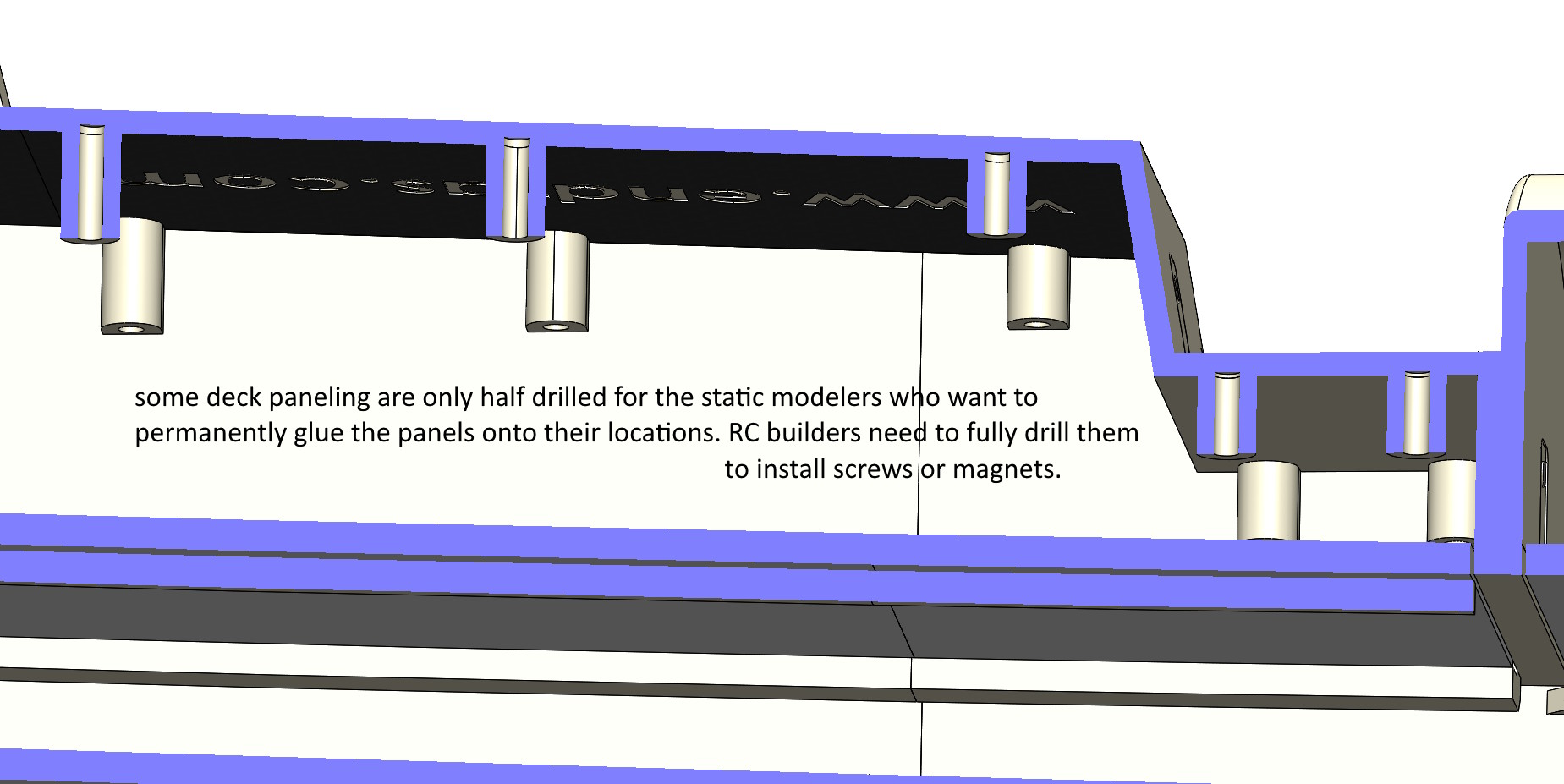
Because deck pieces and accessories are optionally installed and can be mixed and matched freely, builders can recreate different versions and configurations of the ships from a single file pack — representing different periods of service, different armament fits, or even the second-life variants now serving under foreign flags around the world. Interior access for RC electronics is provided through the walls of the superstructure rather than the deck, a deliberate design decision that significantly improves hull waterproofing for on-water operation. Selected deck panels are removable and can be secured with screws or 5mm diameter, 2.5mm tall magnets for convenient tool-free access when operating on the water.
Underwater hull and superstructure sections are separated throughout the design, allowing builders to use different filament colors for the antifouling hull below the waterline and the classic white and grey above it — avoiding a complete painting step straight from the printer. A full 3MF color file with embedded textures is also included for owners of color-capable printers. The model is fully RC-ready with articulated control surfaces and integrated motor mounts, and the high-polygon mesh quality and embedded texture maps make the files equally suitable for use in 3D game engines and real-time visualization platforms.
The Hamilton-class cutters served the United States Coast Guard with distinction for nearly fifty years and continue to serve under five foreign flags today. This model is our tribute to their legacy — and an invitation to bring one of the most capable and admired cutters in American history to life on your workbench.