Toys

SMS Sachsen Ironclad

A Coastal Defender from the Early German Empire

The SMS Sachsen was the lead ship of the Sachsen-class ironclads, a group of four armored vessels built for the Imperial German Navy in the 1870s. Alongside her sister ships—Bayern, Württemberg, and Baden—she represented a distinctly different approach to naval warfare compared to the ocean-going ironclads of Britain and France. Rather than projecting power across distant seas, these ships were designed with a more focused mission: defending Germany’s coastline and controlling the confined waters of the North Sea and Baltic.

This role shaped every aspect of their design. The Sachsen-class ships were relatively compact but heavily armored, with a low freeboard and a strong emphasis on protection and firepower over range. Their layout reflected the transitional nature of naval engineering at the time—positioned between earlier broadside ironclads and the more advanced turret ships that would follow. Central battery arrangements, thick armor belts, and powerful main guns gave them serious defensive capability, even if their seaworthiness in rough open water was limited.

Although not as famous as later battleships, the Sachsen-class played an important role in the early development of the Imperial German Navy. They embodied a strategic mindset focused on coastal defense, deterrence, and controlled engagement, rather than global reach. Over time, as naval doctrine evolved and larger, more capable ships entered service, the Sachsen-class became less central—but they remain a fascinating example of a navy defining its identity during a period of rapid technological change.

Continue reading for more info about our 3d printable Sachsen model,

or you can directly proceed to our purchase page on Cults3D.

Read More

Freedom-Class Littoral Combat Ship

A New Kind of Warship

When the United States Navy introduced the Littoral Combat Ship concept in the early 2000s, it represented a fundamental rethinking of what a modern surface combatant could and should be. Traditional warships were large, heavily armed, and designed for blue-water operations far out at sea. The LCS was conceived for an entirely different environment — the littoral zone, the shallow coastal and near-shore waters where conventional warships struggle to operate effectively, yet where a growing number of real-world threats were emerging. Fast, nimble, and built around a modular mission system architecture, the LCS was envisioned as a vessel that could be rapidly reconfigured for entirely different combat roles depending on the threat — surface warfare one week, mine countermeasures the next, anti-submarine operations the week after.

The Freedom Class is one of two LCS variants developed for the US Navy, built by Lockheed Martin and Fincantieri Marinette Marine at their Wisconsin shipyard. Where its sister variant, the Independence Class, adopted a radical trimaran hull form, the Freedom Class took a more conventional semi-planing monohull approach — sleek, fast, and remarkably capable for its size. Displacing around 3,900 tons at full load and stretching just under 116 meters in length, Freedom-Class ships are powered by a combined diesel and gas turbine propulsion system driving quadruple waterjets, allowing them to reach speeds well in excess of 40 knots — making them among the fastest warships of their displacement in any navy in the world.

Continue reading for more info or here are the purchase links of the model.
Version with multiple water jet and propeller propulsion options.

Version with propeller propulsion option only, no water jets.

Read More

Thornycroft Coastal Motor Boat 55ft

Britain’s Secret Weapon of the Seas

From World War I Torpedo Raider to Modern 3D-Printed RC Model


Origins: A Bold Idea from Junior Officers

Few naval weapons have such an unlikely origin story as the Coastal Motor Boat (CMB). In the summer of 1915, three junior officers of the Harwich Striking Force — Lieutenants Hampden, Bremner, and Anson — hatched an audacious proposal: could a small, fast motor boat, armed with a torpedo, travel over enemy minefields and attack Imperial German Navy ships at anchor in their heavily defended bases?

The Admiralty gave tentative approval, and a Staff Requirement was issued for a new type of vessel to serve in the North Sea. The specifications were demanding. The boat had to be capable of at least 30 knots when fully loaded, carry enough fuel for a meaningful radius of action, and be armed with torpedoes, depth charges, or mines, supplemented by light machine guns. Several established shipbuilders were approached, but only one company believed the requirement could actually be met: John I. Thornycroft & Company.

Continue reading or quickly proceed to model’s purchase page on our Cults3D account.

Read More

Tupolev G-5 Torpedo Boat

History, Design, and Our 1:24 Scale 3D Printable Model

The Tupolev G-5 occupies a unique place in naval history as one of the most distinctive fast attack craft of the interwar and early Second World War period. Designed in the early 1930s by the Tupolev Design Bureau, the G-5 was the Soviet Union’s answer to the growing demand for high-speed torpedo boats capable of striking larger surface vessels and withdrawing before retaliation. Built primarily from duralumin, the same lightweight alloy used in aircraft construction, the G-5 reflected its aviation heritage in both material choice and overall design philosophy.

Compact, aggressively streamlined, and extraordinarily fast for its time, the G-5 was capable of speeds exceeding 50 knots under ideal conditions, making it one of the fastest military vessels of its era. It carried its torpedoes externally, launched rearward from open cradles—a bold and unconventional solution that allowed the hull to remain slim and hydrodynamically efficient. Over its service life, the G-5 appeared in numerous configurations, with variations in armament, deck equipment, crew layout, and superstructure, adapting to changing combat requirements throughout the 1930s and into World War II.

Continue reading for more information and renderings

or proceed directly to our purchase page on Cults3D.

Read More

Dingyuan-Class Chinese Ironclad Battleship

A 1-Meter Articulated Mega Model: Pride of Imperial China Reborn in 3D

The late 19th century was an era of iron, steam, and unprecedented naval ambition. As European powers carved their empires across the globe with steam-powered fleets, the Qing Dynasty faced a stark choice: modernize or perish. The result was one of the most remarkable warships ever to sail under the Chinese flag—the Dingyuan-class ironclad battleship. Now, through the precision of modern 3D printing technology, this engineering marvel has been reborn as a meticulously detailed, fully articulated one-meter model that captures both the grandeur and the tragedy of Imperial China’s greatest naval endeavor.

Continue reading for more information, renderings and historic photos

or proceed directly to purchase page on our Cults3D.

Read More

CSS Neuse

Ironclad History Reimagined in 3D

The CSS Neuse remains one of the most compelling vessels of the American Civil War—an ambitious Confederate ironclad that, despite never fulfilling her intended combat role, gives modern historians an extraordinary window into 19th-century naval engineering under extreme resource constraints. Built on the Neuse River in North Carolina, the vessel featured a shallow-draft hull, a heavily armored sloped casemate, and twin Brooke rifles meant to challenge Union naval dominance.

Continue reading for more information and renderings.

Or you can proceed to our purchase page on Cults3D to get this model.
Read More

AH-12 Class Offshore Tug

High-Detail 3D Printable Model Inspired by KL Saltfjord

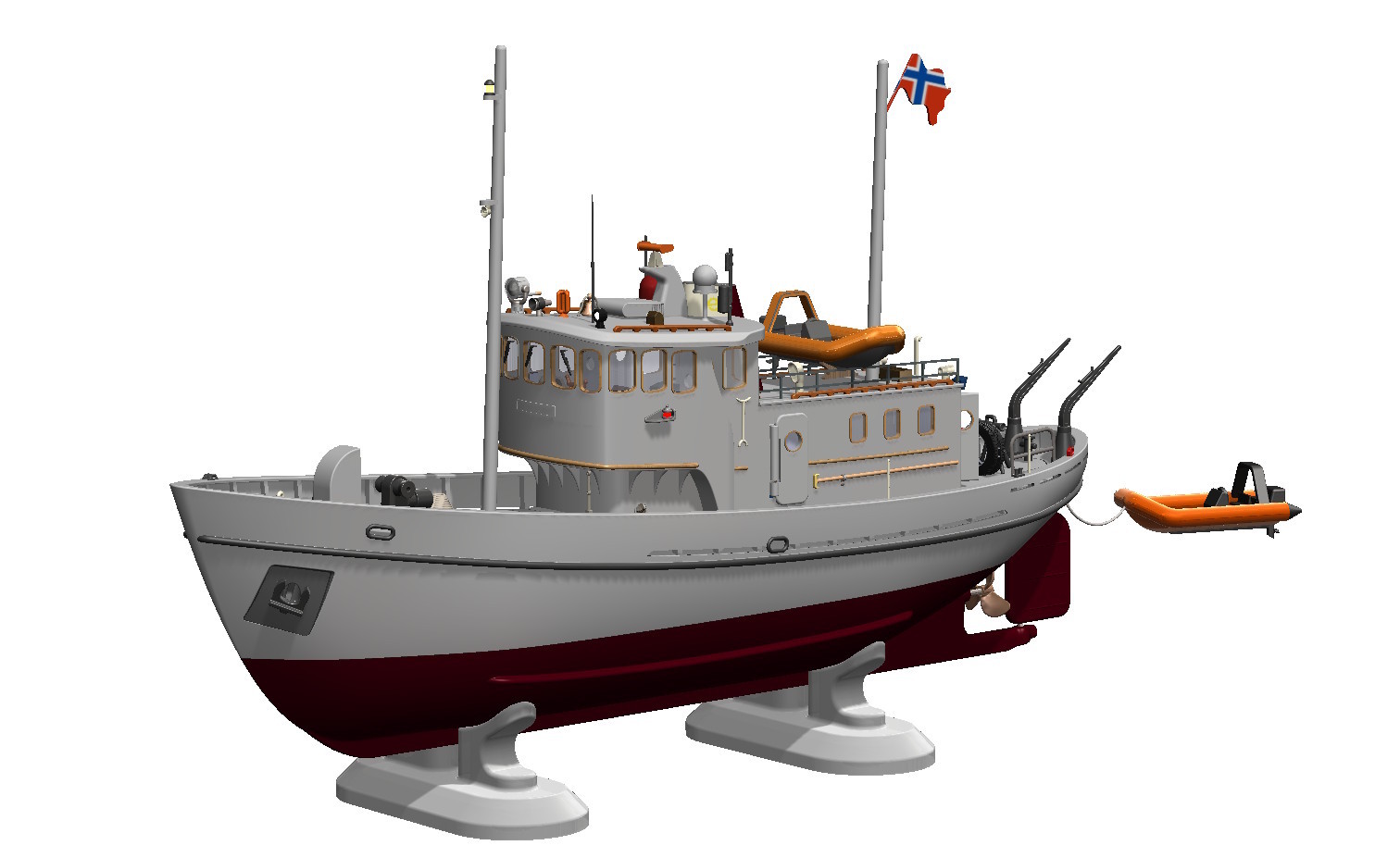
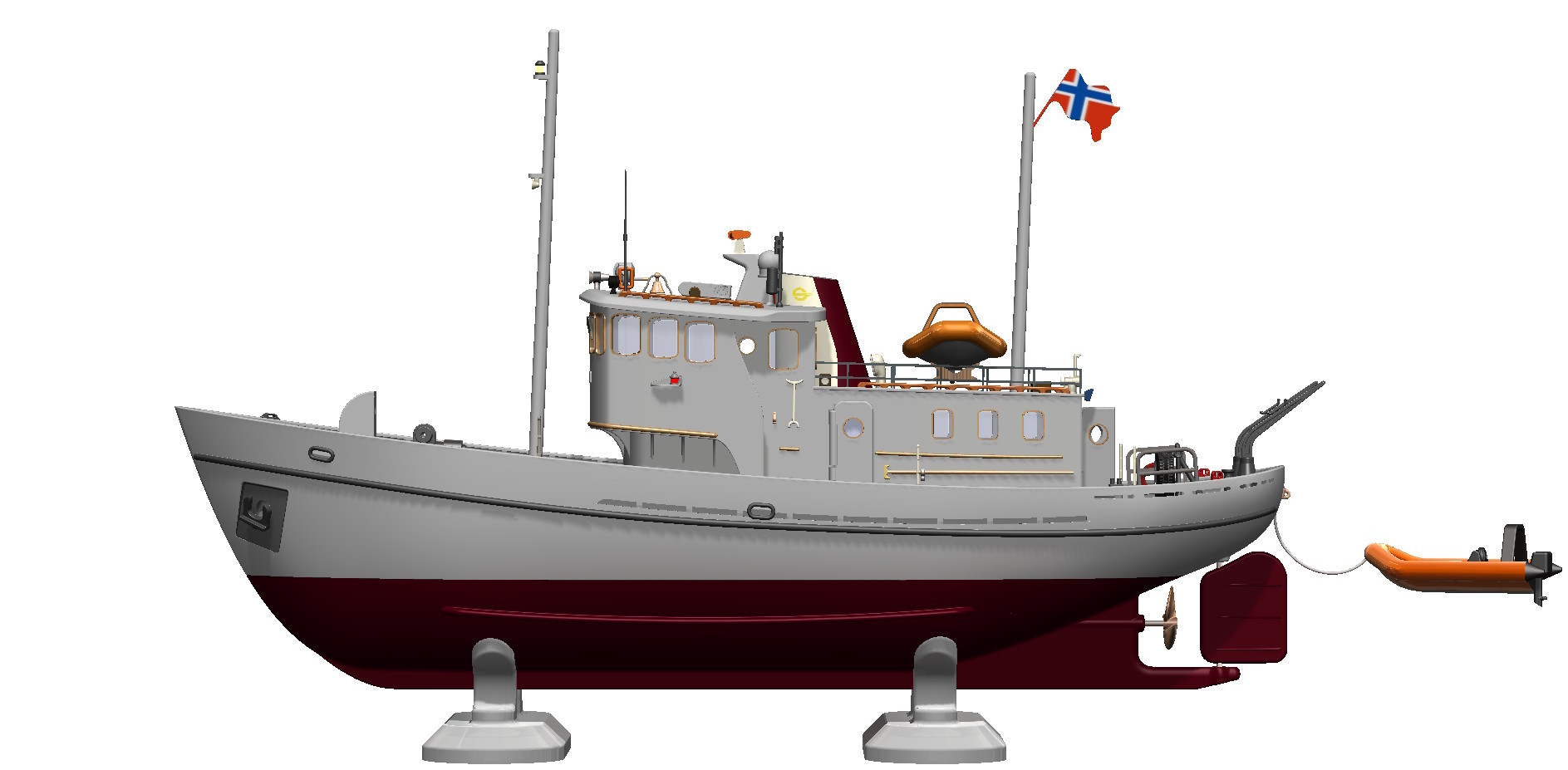
Powerful, compact, and built for some of the toughest maritime tasks, the AH-12 class offshore tugs have become a recognizable form in the world of ocean-handling operations. Our model draws direct inspiration from the KL Saltfjord, a capable and modern anchor-handling tug that features a strong working profile, high maneuverability, and the rugged equipment sets expected from vessels that routinely operate in harsh seas. The KL Saltfjord’s broad beam, elevated superstructure, reinforced bow, and heavy-duty winch deck all serve as distinctive hallmarks of this class of vessels—ideal shapes for a detailed and technically satisfying 3D model. Our AH-12 interpretation blends the recognizable lines of these real-world workhorses with optimizations tailored specifically for 3D printing, resulting in a model that honors the industrial design while remaining practical for makers.
Continue reading for your free display model or proceed to our purchase page on Cults3D to get the full model consisting of 170+ separate parts.

Read More

Scorpène-Class Submarine

1:87 Scale, 763mm 3D Printable Model

The French Scorpène-class submarines represent one of the most successful and widely adopted modern submarine designs in the world. Developed by Naval Group (formerly DCNS), the Scorpène class combines compact dimensions with advanced stealth, long endurance, and multi-role flexibility. These diesel-electric attack submarines have been built for and operated by several nations — including India, Brazil, Chile, and Malaysia — each version tailored to local operational requirements. With their quiet propulsion systems, advanced combat management, and modular construction, the Scorpène-class has become a global standard for next-generation conventional submarines.

To bring this modern masterpiece into digital form, we created a 1:87 scale, 3D printable model of the Scorpène-class submarine, designed to capture both the beauty and engineering precision of the original vessel. Measuring 763 mm in length, this version consists of 35 separate high-poly STL files, optimized for easy printing with most FDM and resin printers. The hull interior is mostly empty, with a 5–7 mm wall thickness, reinforced by three internal bulkheads that ensure alignment and add rigidity during assembly. These features make the model both durable and straightforward to build, even for large-format prints.

—-> Click this link to go to the model purchase page <—-

Continue reading for more information, renderings, and a free STL file for a desktop model of the Scorpène-Class.

Read More

Triomphant-Class Submarine

1-Meter 3D Printable Model

The Triomphant-class represents the pinnacle of French naval engineering — a fleet of four nuclear-powered ballistic missile submarines that form the backbone of France’s sea-based strategic deterrent. Commissioned between the late 1990s and early 2010s, these vessels — Le Triomphant, Le Téméraire, Le Vigilant, and Le Terrible — embody decades of design evolution in stealth, endurance, and acoustic refinement. Their quiet hydrodynamic profiles and robust reactor systems enable long, independent patrols beneath the ocean surface, ensuring both national defense and strategic balance.

This 3D modeling project translates that formidable maritime presence into a detailed, buildable digital form. At 1 meter in length, the model captures the Triomphant-class’s refined geometry — its continuous curved hull, distinctive missile deck, and smoothly blended sail structure. The digital design emphasizes proportion, hull accuracy, and printability, resulting in a form that is both visually authentic and structurally reliable when printed. The streamlined shape of the Triomphant-class lends itself naturally to 3D fabrication, and this model takes full advantage of that efficiency, balancing elegance with mechanical integrity.

Continue reading for more info, renderings and a free STL file for 3d printing your own Triomphant.

Or proceed to the purchase page of our full model.

Read More

Lun-Class Ekranoplan 1m model

The Soviet Sea During the final decade of the Cold War, the Soviet Union unveiled one of the strangest and most ambitious machines ever to touch water: the Lun-class ekranoplan. Neither ship nor aircraft, it belonged to an unusual category known as ground-effect vehicles, designed to skim just a few meters above the surface of the sea. Now you can build your own Lun-Class as 1meter long model.

Continue reading for more information and your free STL file.

Read More