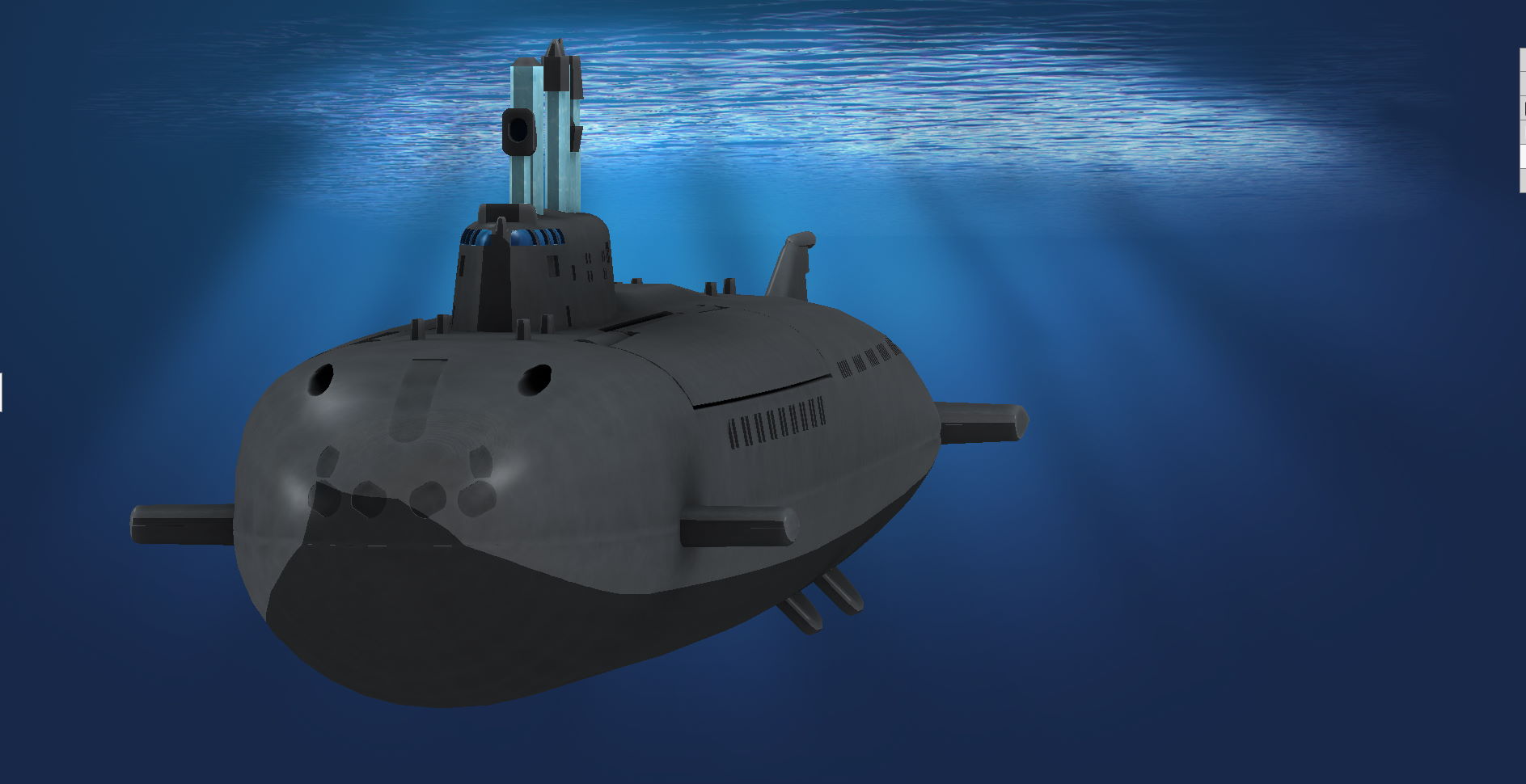
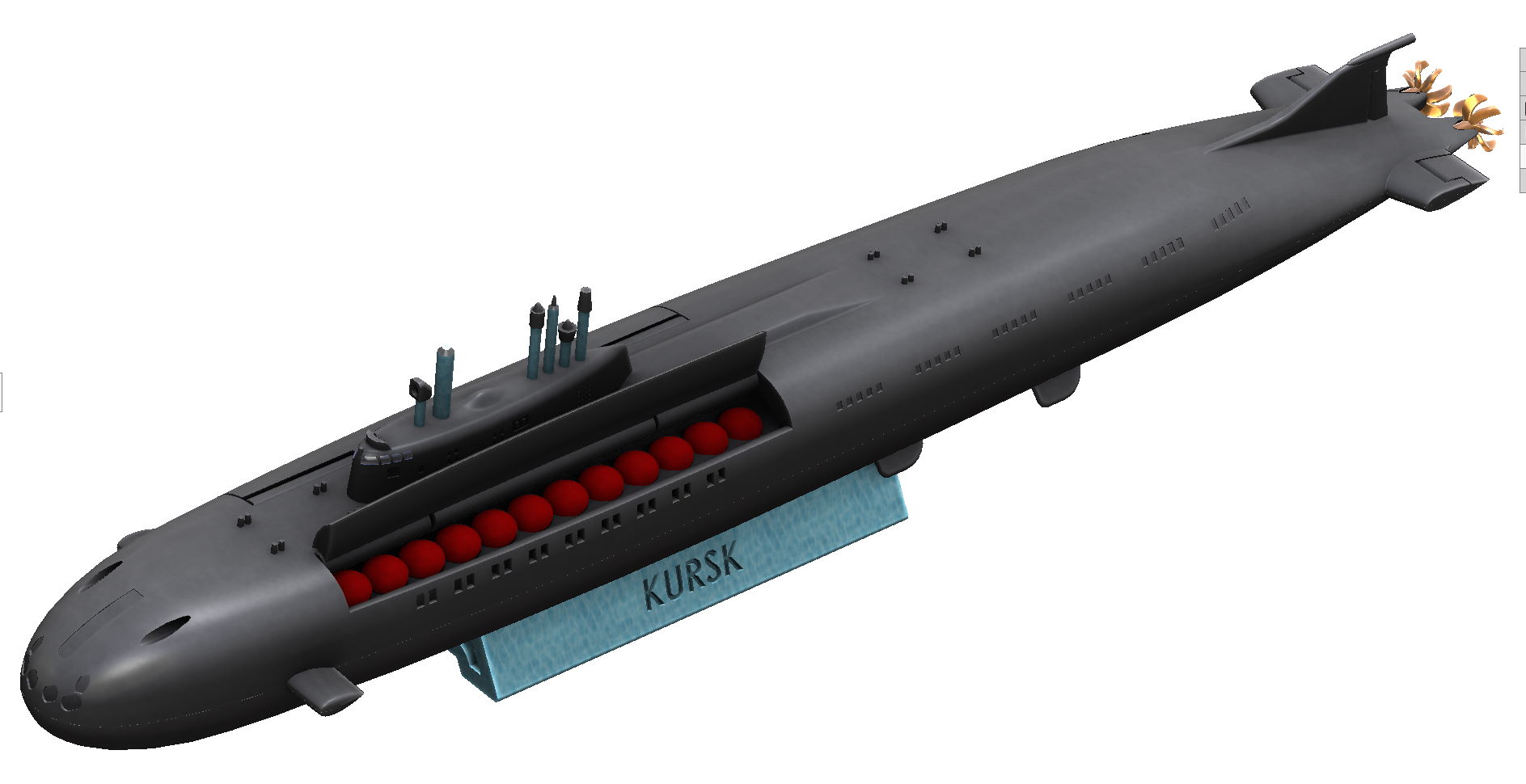
K-141 Kursk (Russian: Атомная Подводная Лодка «Курск» (АПЛ «Курск»), transl. Atomnaya Podvodnaya Lodka “Kursk” (APL “Kursk”), meaning “Atomic-powered submarine Kursk“) was an Oscar II-class nuclear-powered cruise missile submarine of the Russian Navy.
Here is a 3d model of the Kursk. It is specificly optimized for 3d printing.
the missile silo doors open & close, the propellers turn. Read more for more images and the STL files.
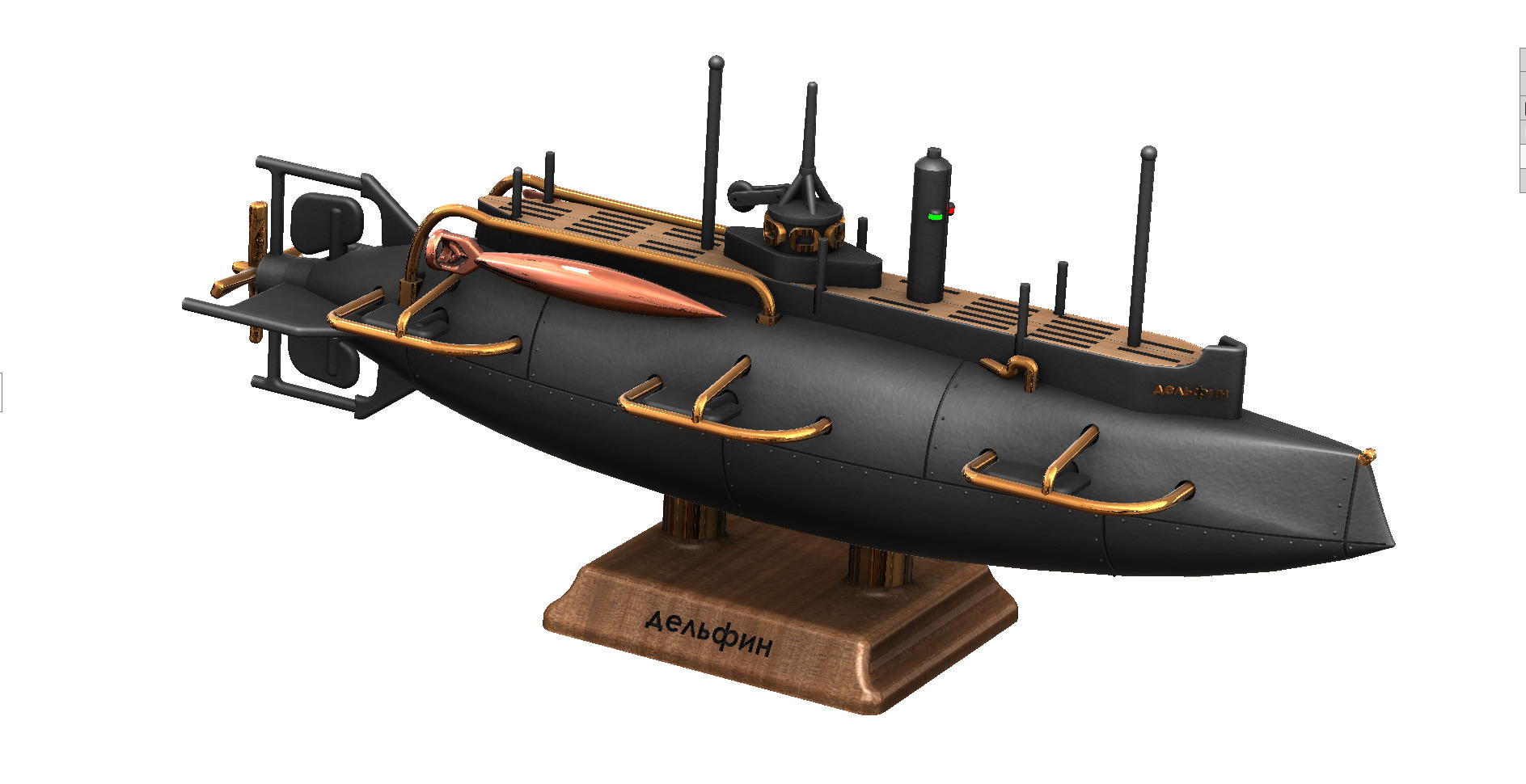
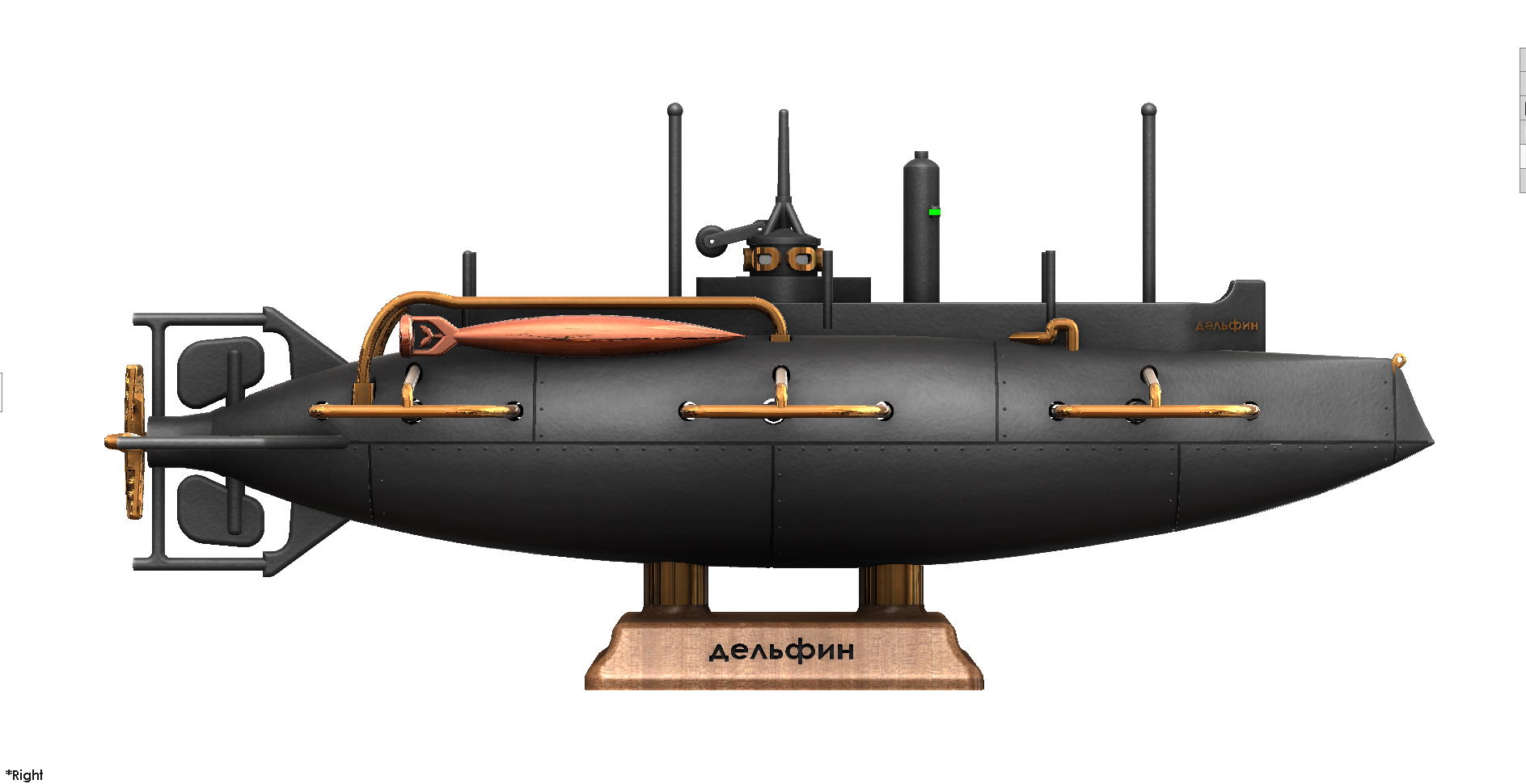
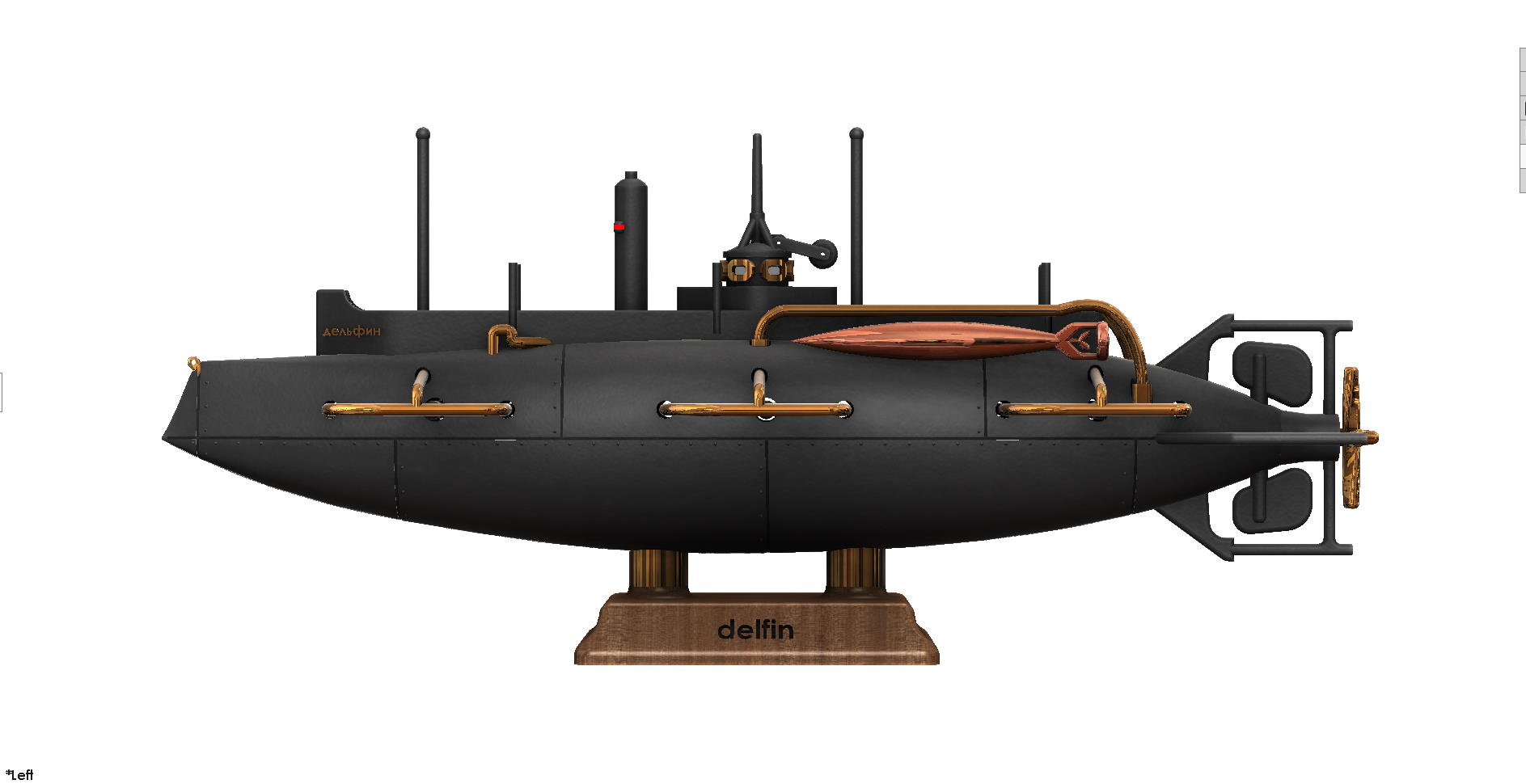
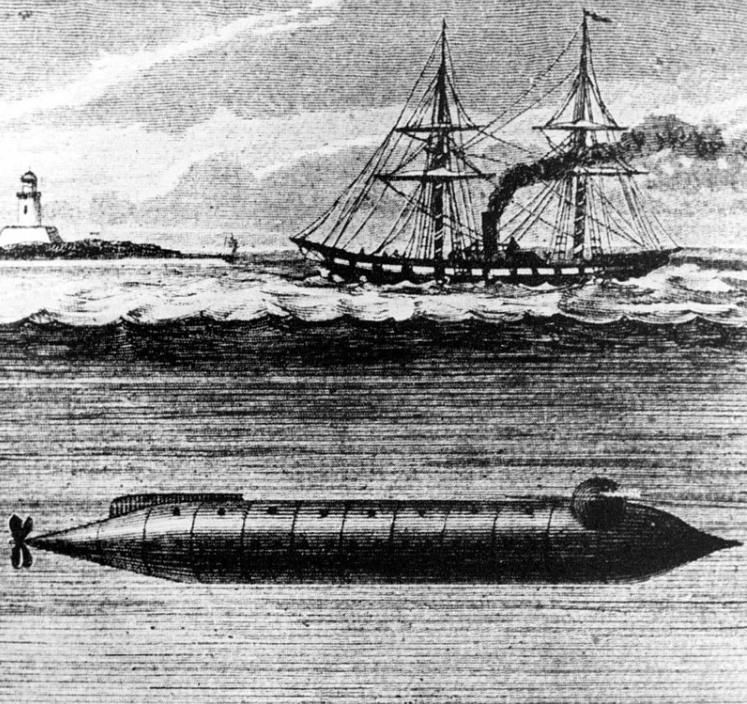
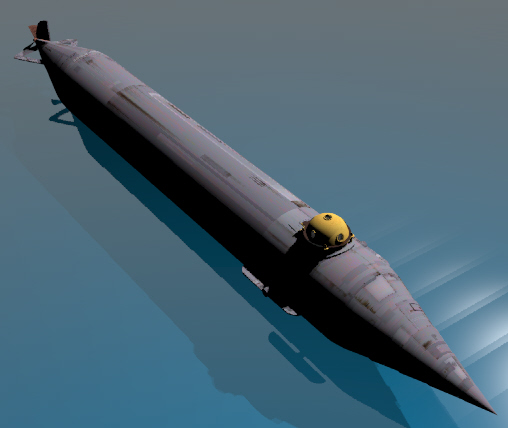
Delfin (Дельфин, lit. ’Dolphin’) was one of the first combat-capable submarines in history. She was commissioned in 1903 and decommissioned in 1917, having served during World War I.
I’ve modeled this funny looking submarine, trying to make 3d printing possible and as easy as possible with minimal supports. Some thin details are enlarged and strengthened.
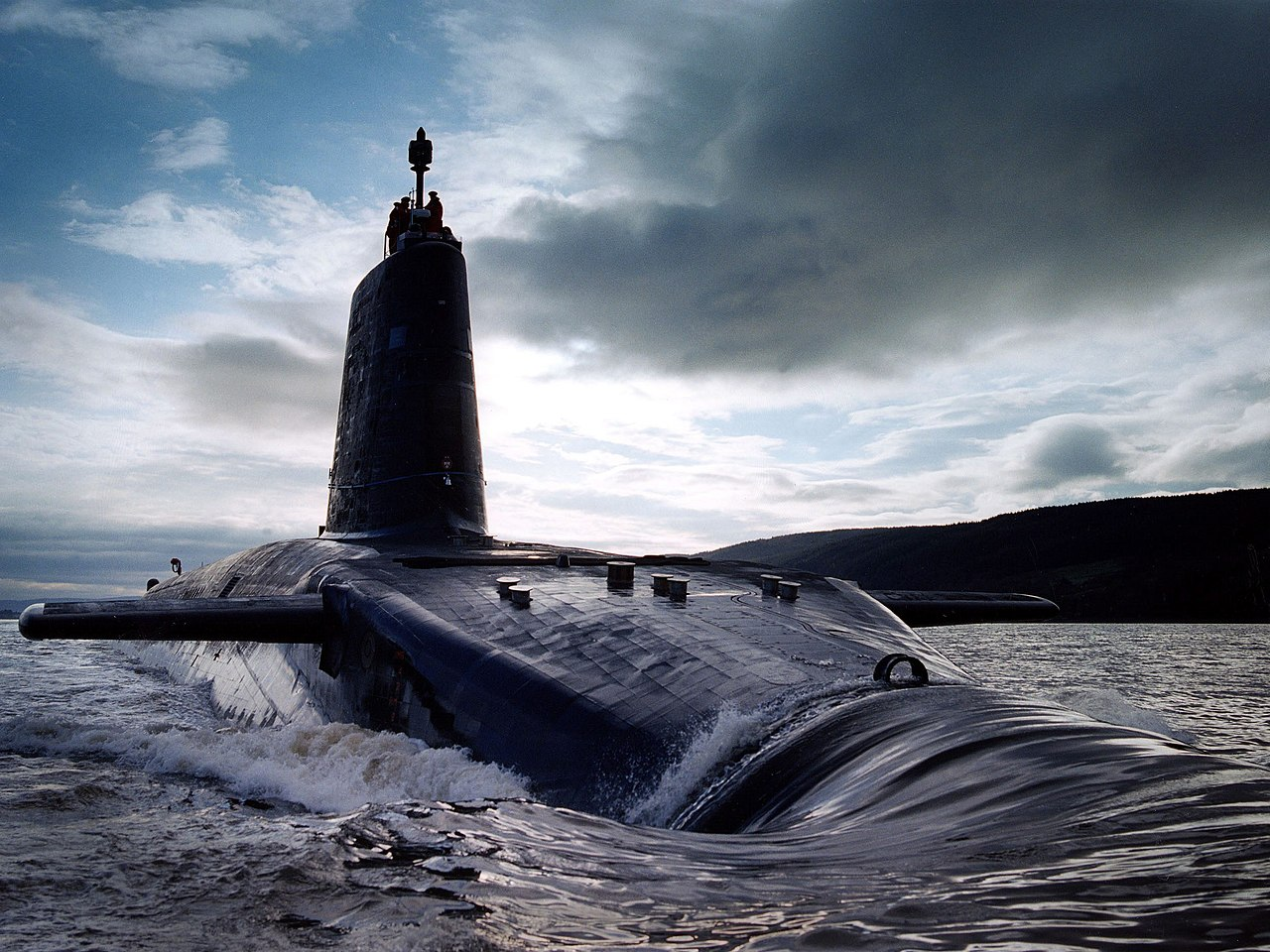
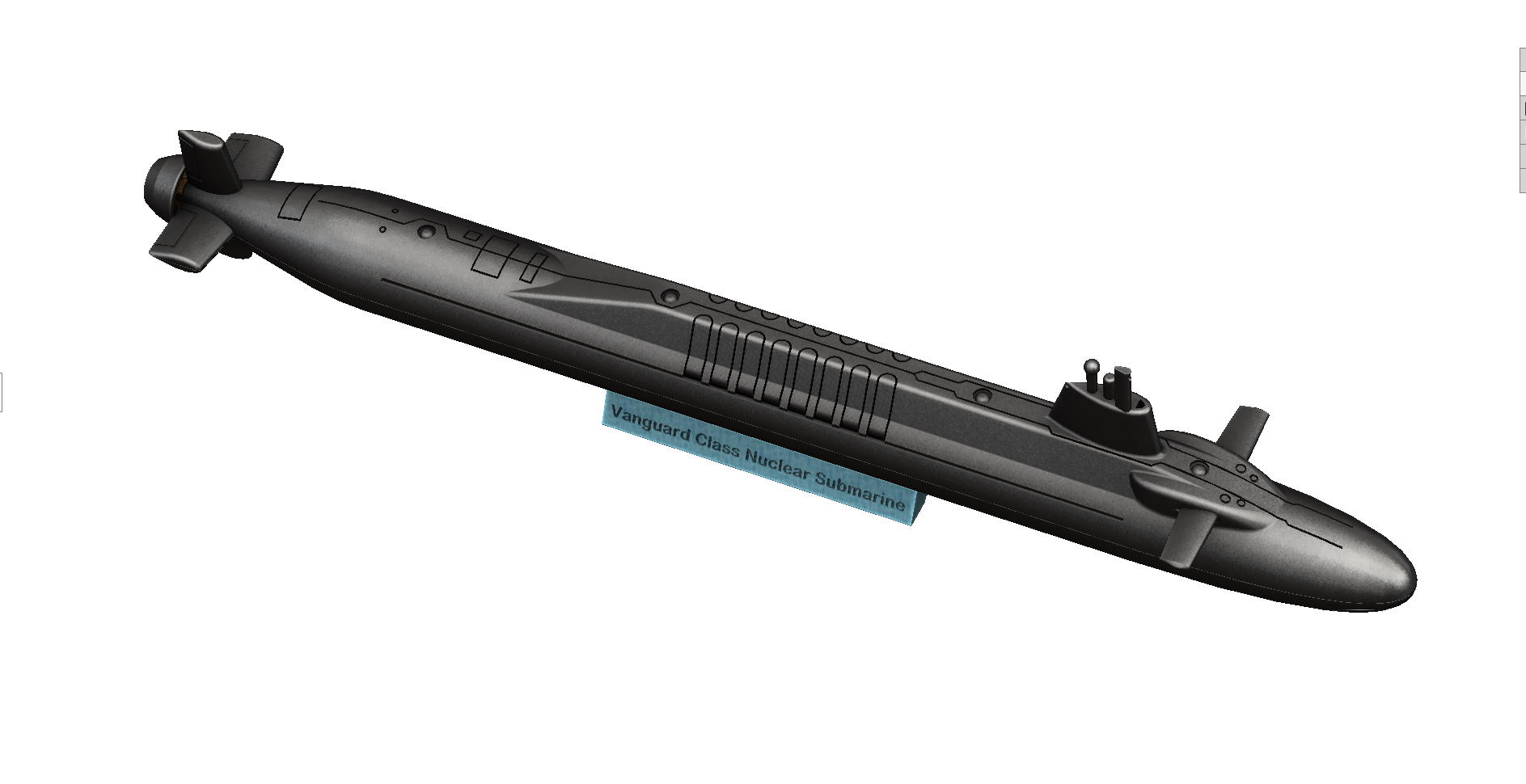
The Vanguard class is a class of nuclear-powered ballistic missile submarines (SSBNs) in service with the Royal Navy. The class was introduced in 1994 as part of the Trident nuclear programme, and comprises four vessels: Vanguard, Victorious, Vigilant and Vengeance, built between 1986 and 1999 at Barrow-in-Furness by Vickers Shipbuilding and Engineering, now owned by BAE Systems. All four boats are based at HM Naval Base Clyde (HMS Neptune), 40 km (25 mi) west of Glasgow, Scotland.
Since the decommissioning of the Royal Air Force WE.177 free-fall thermonuclear weapons during March 1998, the four Vanguard submarines are the sole platforms for the United Kingdom’s nuclear weapons. Each submarine is armed with up to 16 UGM-133 Trident II missiles.
Well, let’s dive into some fun facts about these fascinating underwater behemoths.
Silent Giants: Vanguard class submarines are often referred to as “silent giants” because of their remarkable stealth capabilities. These submarines are designed to be incredibly quiet, allowing them to navigate through the depths of the ocean without being detected easily. They move so quietly that some marine creatures might mistake them for the “James Pond” of the sea!
Underwater Hide and Seek: Vanguard submarines play an epic game of underwater hide and seek with other naval vessels. Equipped with advanced detection systems, they can sneak up on unsuspecting ships without being noticed until they want to reveal their presence. It’s like a real-life game of “Where’s Waldo?” but with submarines!
Deep Sea Party: While Vanguard submarines are primarily used for strategic defense, they’re not all business. These submarines have crew members who spend months underwater, and they find creative ways to keep themselves entertained during their downtime. Rumor has it that they’ve perfected the art of deep-sea karaoke, with renditions of “Under the Sea” that would make even Ariel jealous!
“Sea-nanigans”: Being submerged for long periods can sometimes lead to a touch of cabin fever. So, to keep things light-hearted, the crew of Vanguard submarines often engage in friendly “sea-nanigans” (sea shenanigans). These may include pranks, impromptu talent shows, or even the occasional underwater dance party. It’s all about maintaining morale and having a good laugh while sailing the deep blue.
Submarine-Speak: Life aboard a Vanguard submarine comes with its own unique jargon. Crew members have developed a distinctive lingo to communicate in their tight-knit environment. They’ve come up with creative terms like “depth charges” for snacks, “sonar serenades” for singing in the shower, and “submarine shuffle” for dancing in the limited space. It’s like having a secret language that only submariners can truly understand.
Submerged Sightseeing: While most people associate submarines with battles and secrecy, Vanguard submarines also get to explore the stunning underwater landscapes. Their crews often have the opportunity to observe mesmerizing marine life, underwater canyons, and even shipwrecks during their patrols. It’s like having a front-row seat to nature’s own aquatic ballet.
So, there you have it! The Vanguard class submarines, not only masters of stealth and defense but also hosts to a world of underwater entertainment and adventures. It’s a unique blend of serious business and fun-filled moments beneath the waves.
Continue reading for more renderings and STL file for 3d printing.
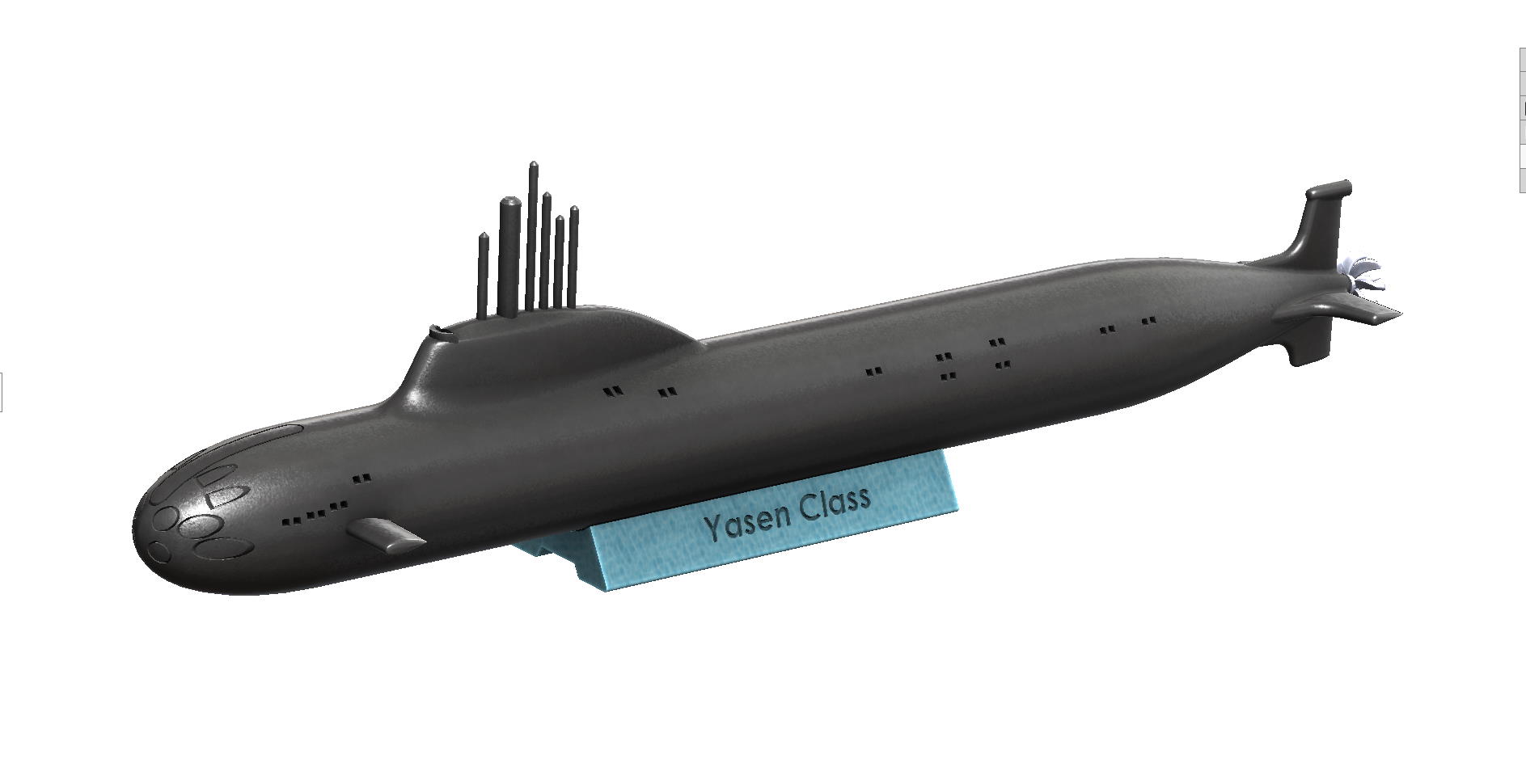
The Yasen class, Russian designations Project 885 Yasen and Project 885M Yasen-M (Russian: Ясень, lit. ’ash tree’, NATO reporting name: Severodvinsk), also referred to as the Graney class, are a series of the newest nuclear-powered cruise missile submarines designed by the Malakhit Marine Engineering Bureau and built by Sevmash for the Russian Navy. Based on the Akula class and Alfa class designs, the Yasen class is projected to replace the Russian Navy’s current Soviet-era nuclear attack submarines.
And this is a 3d printable model of the submarine. Continue reading for more information and STL files for printing.
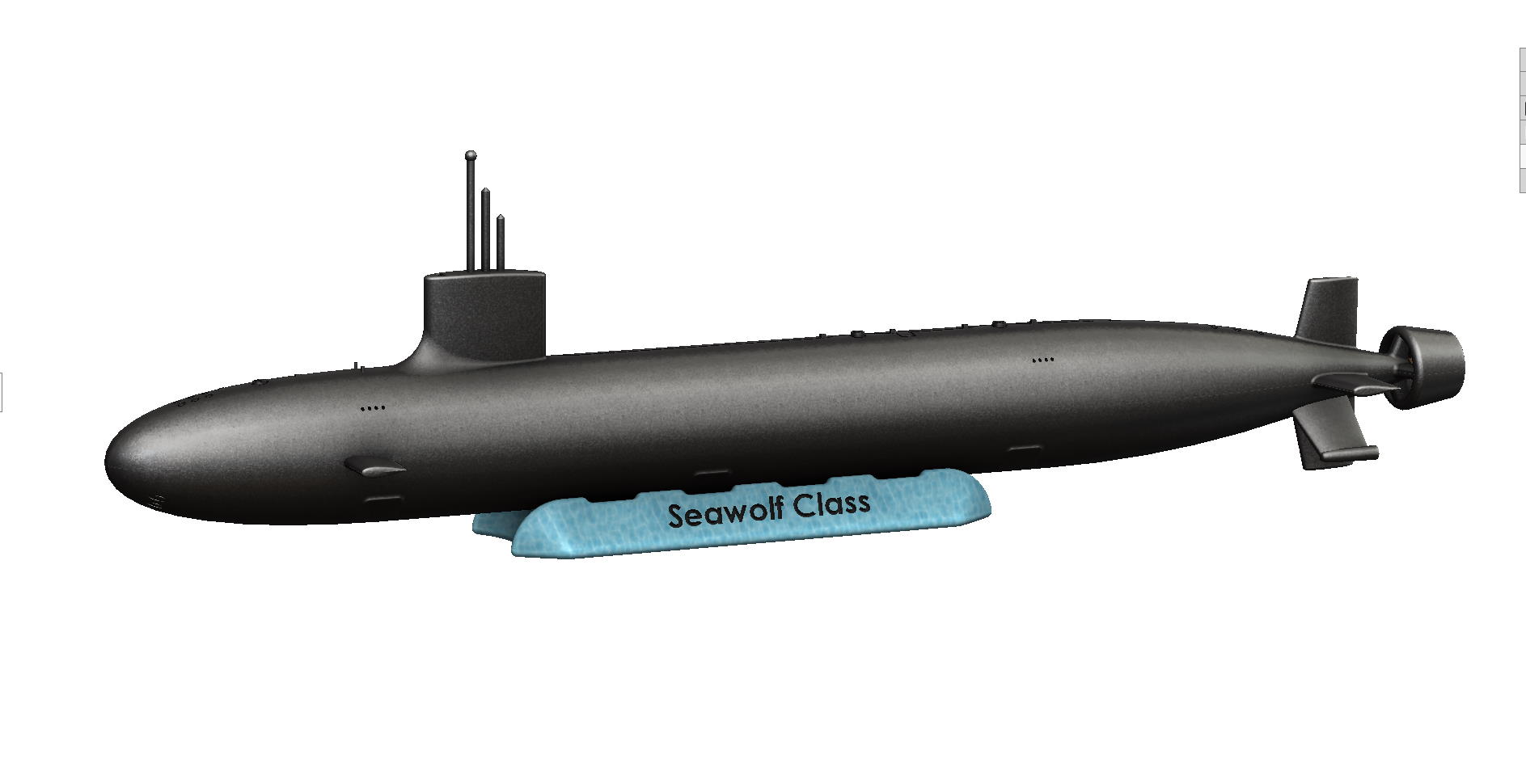
The Seawolf class is a class of nuclear-powered fast attack submarines (SSN) in service with the United States Navy. The class was the intended successor to the Los Angeles class, and design work began in 1983. A fleet of 29 submarines was to be built over a ten-year period, but that was reduced to 12 submarines. The end of the Cold War and budget constraints led to the cancellation of any further additions to the fleet in 1995, leaving the Seawolf class limited to just three boats. This, in turn, led to the design of the smaller Virginia class. The Seawolf class cost about $3 billion per unit ($3.5 billion for USS Jimmy Carter), making it the most expensive SSN submarine and second most expensive submarine ever, after the French SSBN Triomphant class.
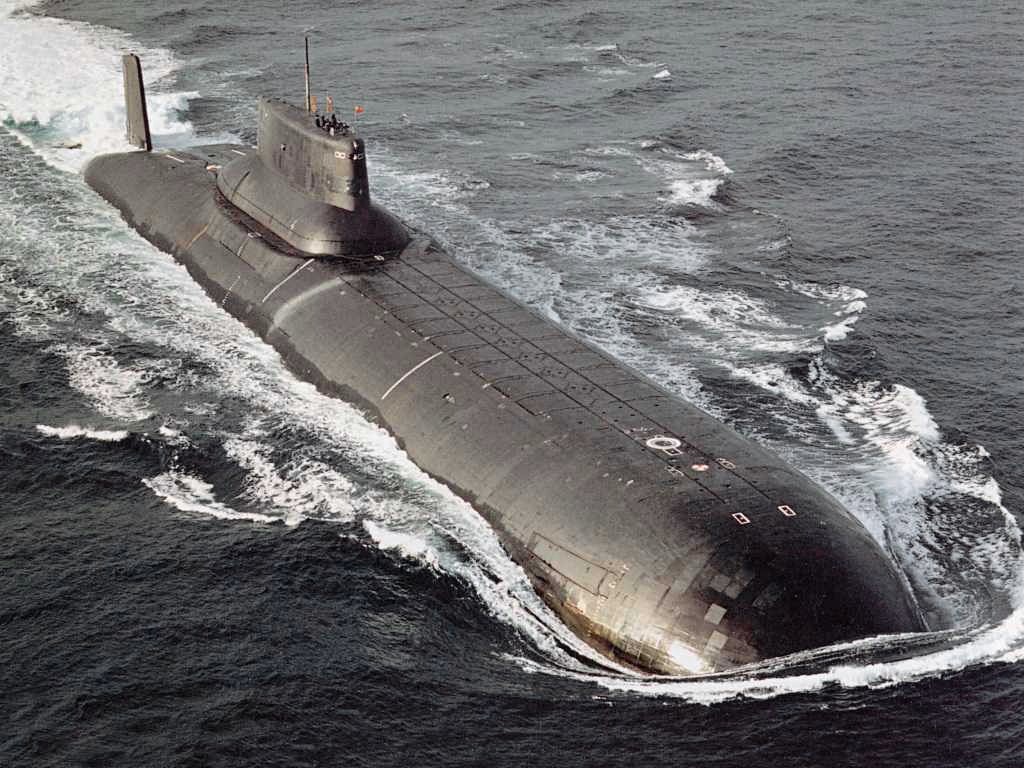
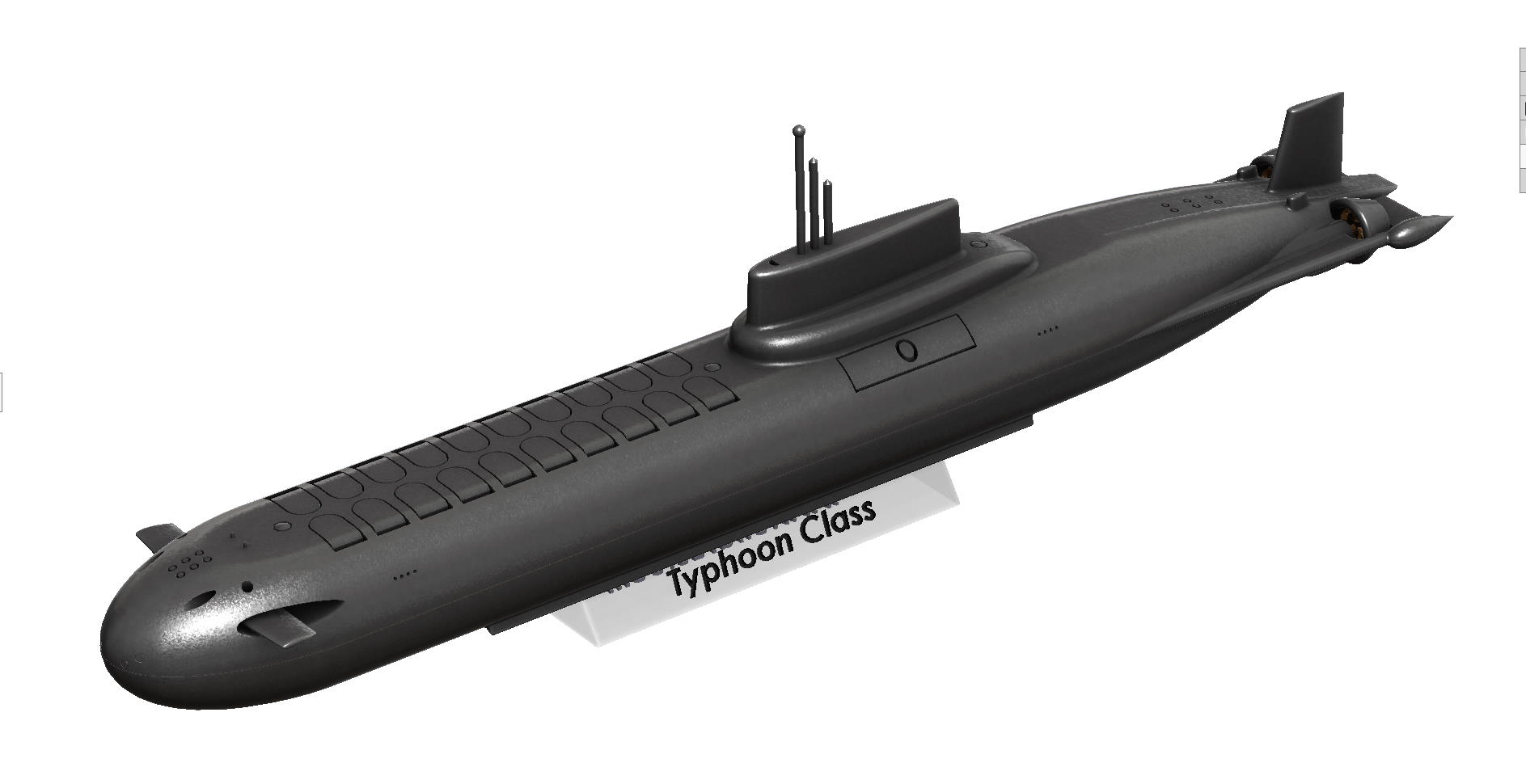
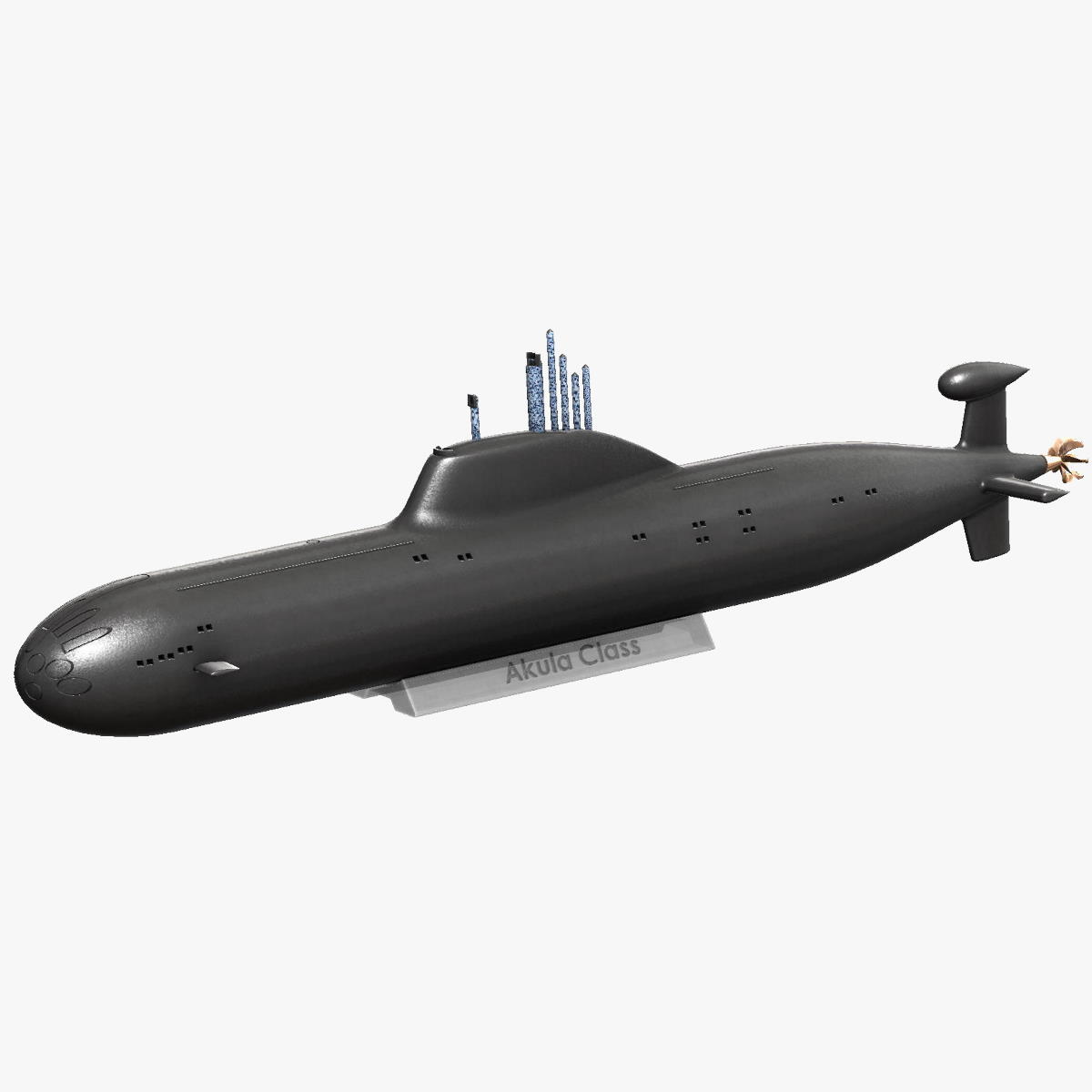
The Typhoon class, Soviet designation Project 941 Akula (Russian: Акула, meaning “shark”, NATO reporting name Typhoon), is a class of nuclear-powered ballistic missile submarines designed and built by the Soviet Union for the Soviet Navy. With a submerged displacement of 48,000 tonnes, the Typhoons are the largest submarines ever built, able to accommodate comfortable living facilities for the crew of 160 when submerged for months on end.
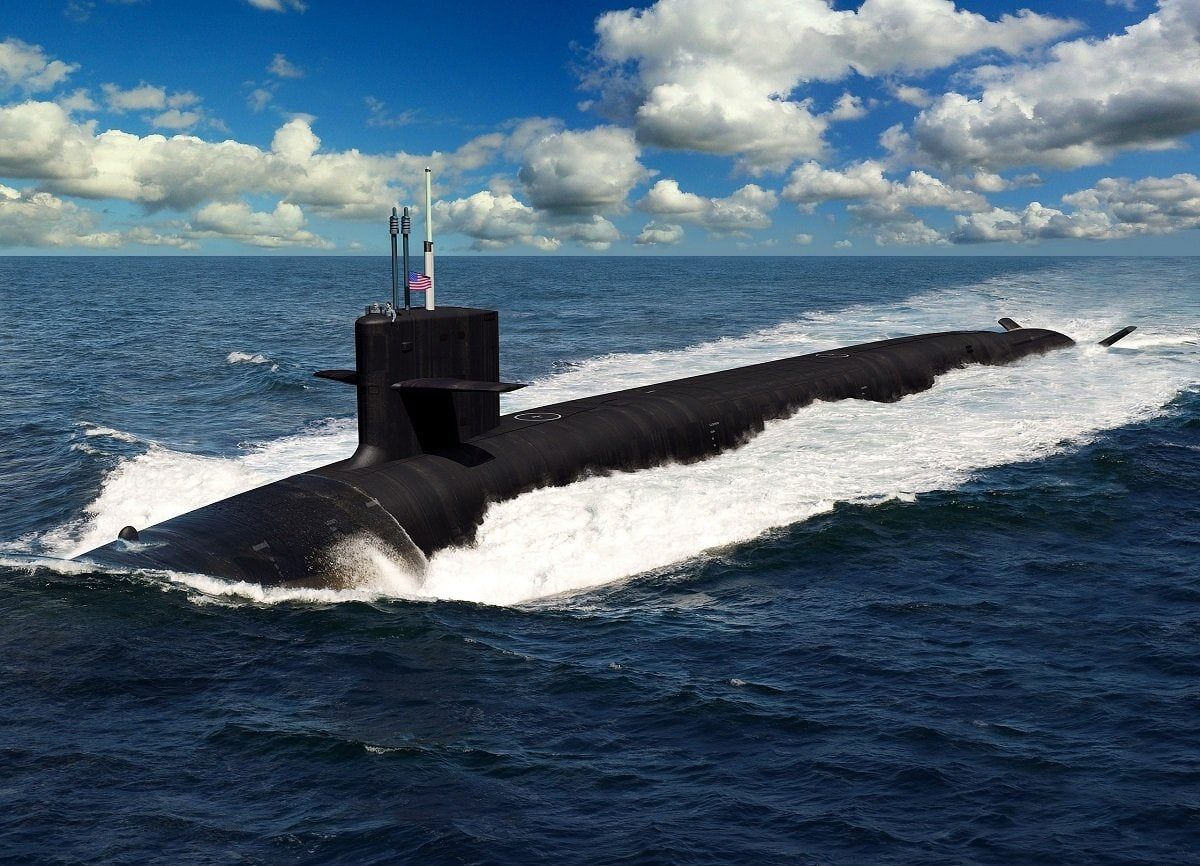
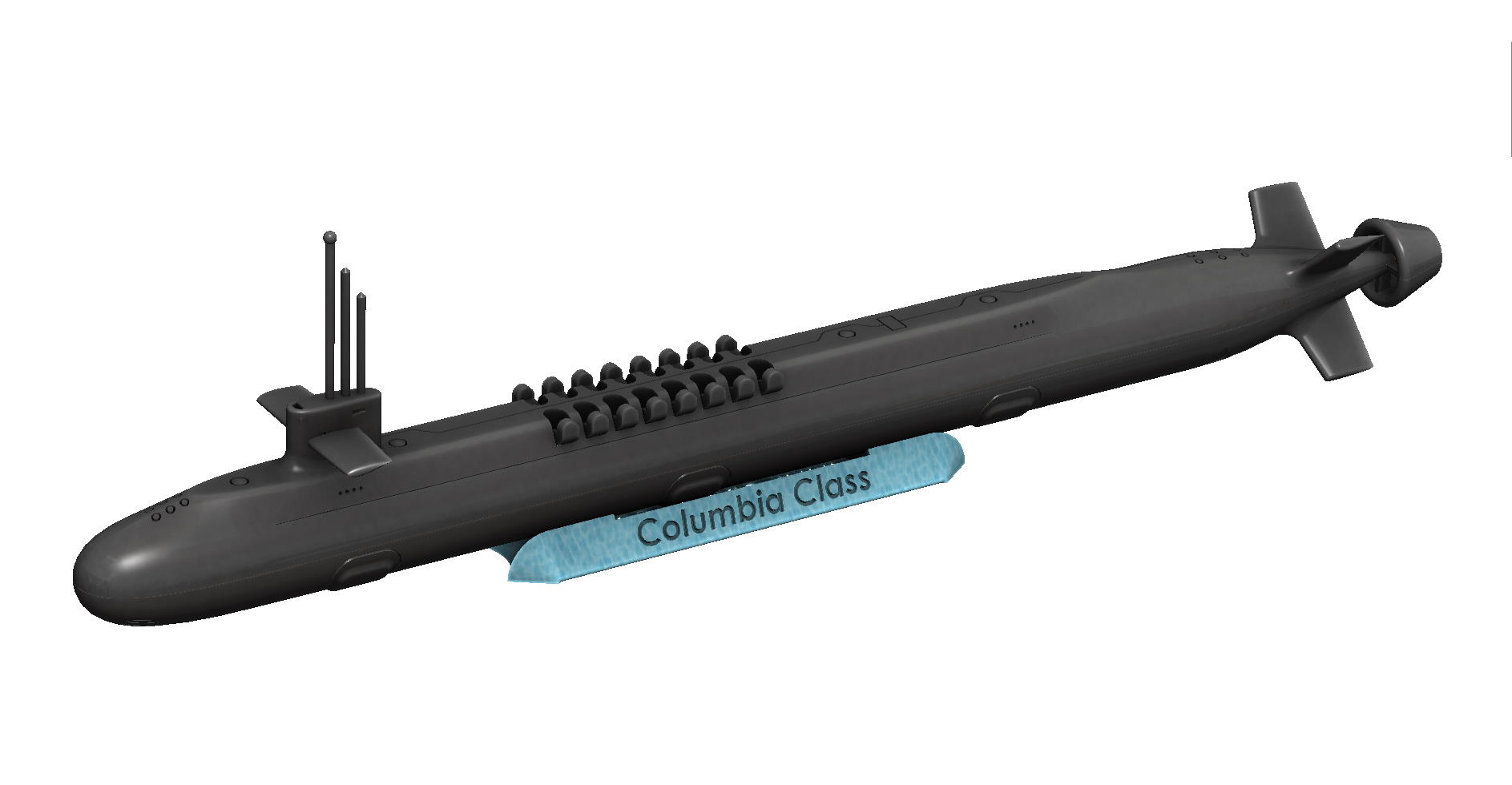
The Columbia-class submarine, formerly known as the Ohio Replacement Submarine and SSBN-X Future Follow-on Submarine, is an upcoming class of nuclear submarines designed to replace the Ohio-class ballistic missile submarines in the United States Navy. The first submarine officially began construction on October 1, 2020, and is scheduled to enter service in 2031.
This model is made according to the public renderings, artists’ impressions and other images of the vessel.
The model has movable front dive planes, a rotating propeller and opening-closing missile doors.
The Akula class submarines, also known as Project 971 Shchuka-B (NATO reporting name: Akula), stand as a testament to Russia’s prowess in submarine technology. These formidable underwater vessels have played a crucial role in the country’s naval capabilities and have garnered attention for their advanced features and capabilities. In this article, we delve into the fascinating world of the Russian Akula class submarines, examining their history, design, capabilities, and strategic significance.
History and Development:
The Akula class submarines were developed during the Cold War era by the Soviet Union to counter the perceived threat posed by the United States Navy’s submarine fleet. The construction of the first Akula-class submarine, the K-284 Akula, began in the early 1980s, and the class eventually included several submarines with different modifications.
Design and Features:
Size and Dimensions: The Akula-class submarines are sizable vessels, measuring around 110 meters (360 feet) in length. Their large size allows for greater endurance and accommodates a substantial crew and advanced equipment.
Stealth and Hydrodynamics: The Akula submarines are designed with stealth in mind, featuring a streamlined hull and advanced sound-dampening technologies to reduce their acoustic signature. This enhances their ability to operate covertly and avoid detection by enemy vessels.
Armament: Armed with a variety of weapons, including torpedoes and anti-ship missiles, Akula submarines are versatile in their offensive capabilities. They can carry a mix of torpedoes in their forward torpedo tubes and have the ability to launch cruise missiles from vertical launch systems.
Nuclear Propulsion: The Akula-class submarines are powered by a nuclear reactor, providing them with an extended range and the ability to remain submerged for prolonged periods. This nuclear propulsion system significantly enhances their operational capabilities compared to conventionally powered submarines.
Crew Accommodations: These submarines feature advanced living quarters for the crew, equipped with amenities to support long deployments beneath the ocean’s surface. This includes sleeping quarters, a galley, and recreational spaces, ensuring the crew’s well-being during extended missions.
Operational Capabilities:
Underwater Endurance: The Akula class submarines are known for their impressive underwater endurance, enabling them to conduct extended patrols and remain submerged for weeks or even months at a time. This makes them formidable assets for strategic and tactical naval operations.
Surveillance and Intelligence Gathering: Equipped with advanced sonar systems and sensors, Akula submarines are capable of conducting surveillance and intelligence-gathering missions. Their ability to operate quietly and stealthily enhances their effectiveness in monitoring and tracking potential adversaries.
Strategic Significance:
The Akula class submarines hold strategic importance for the Russian Navy, serving as both a deterrent and a powerful tool for projecting force. Their ability to operate in various environments, coupled with advanced technology, ensures that they remain a formidable presence in the underwater domain.
Conclusion:
The Russian Akula class submarines stand as a testament to the nation’s commitment to maintaining a powerful and technologically advanced naval fleet. With their impressive design, advanced features, and strategic capabilities, these submarines continue to play a crucial role in shaping the dynamics of naval warfare and undersea operations. As technology evolves, the Akula class submarines remain a key component of Russia’s maritime defense strategy, securing their place in the annals of naval history.
Read on for more information and free file downloads.
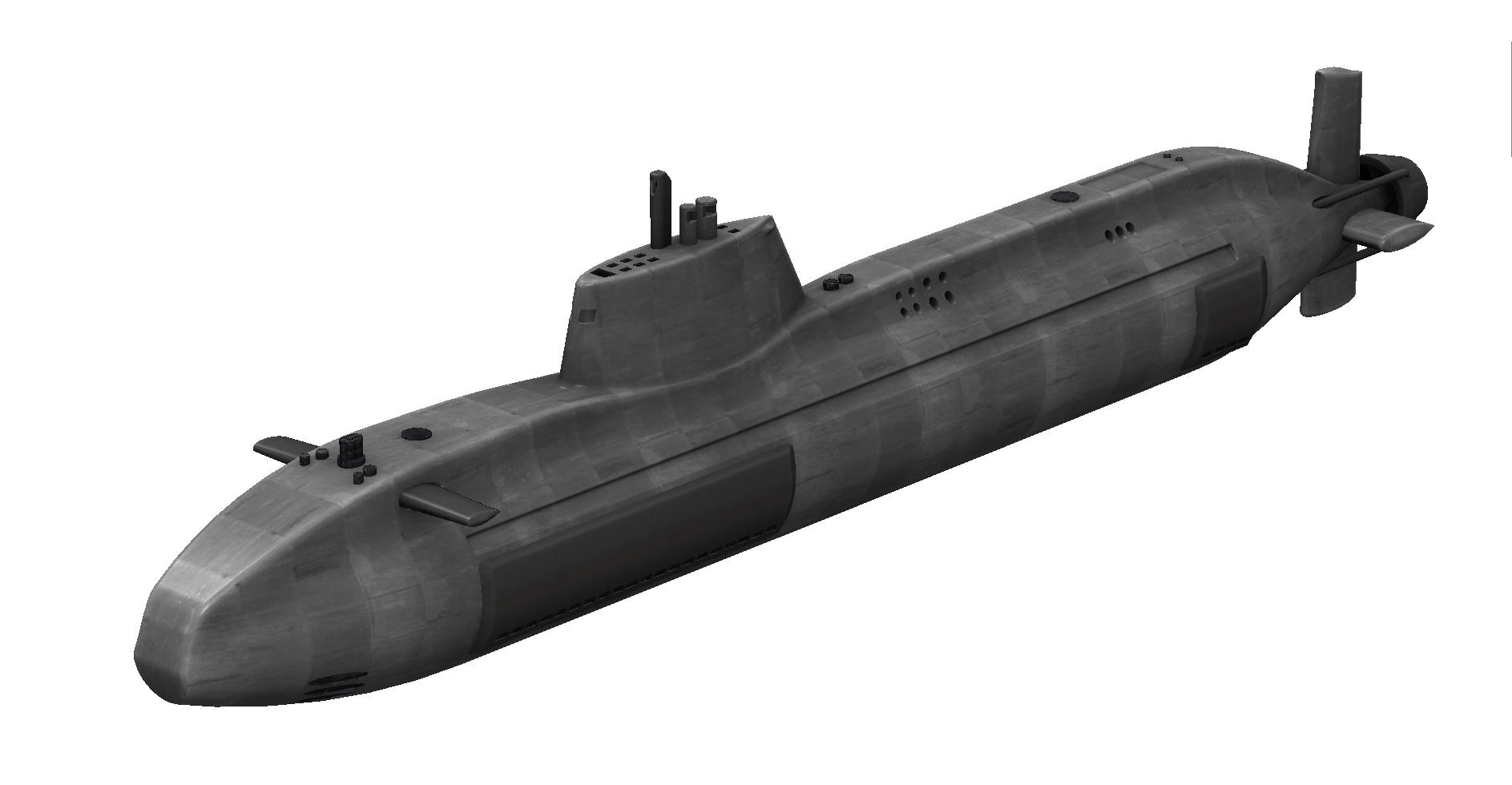
The Astute class is the latest class of nuclear-powered fleet submarines (SSNs) in service with the Royal Navy. The class sets a new standard for the Royal Navy in terms of weapons load, communication facilities and stealth. The boats are being constructed by BAE Systems Submarines at Barrow-in-Furness. Seven boats will be constructed: the first of class, Astute, was launched by Camilla, Duchess of Cornwall, in 2007, commissioned in 2010, and declared fully operational in May 2014. The Astute class is the replacement for the Trafalgar-class fleet submarines in Royal Navy service.