
RS 58 “Sørlandsskøyta”: Recreated as an RC-Ready 3D Printable Model
The history of maritime rescue is closely connected with the development of specialized vessels capable of operating in difficult coastal waters, often when ordinary boats could no longer safely do so. In Norway, this role has been carried out for more than a century by the Redningsselskapet, whose rescue boats have evolved alongside changes in boatbuilding technology, propulsion and the needs of coastal communities. Among the vessels from this period, RS 58 “Sørlandsskøyta” represents an important transition in Norwegian rescue-boat design. Launched in 1956 at Trosvik Verksted in Brevik, she was the first steel-hulled rescue boat in the Redningsselskapet’s fleet; after RS 58, steel became the standard hull material for the organization’s rescue boats. The vessel was designed by Rich. G. Furuholmen and entered operational service in 1956, remaining in service until 1987.
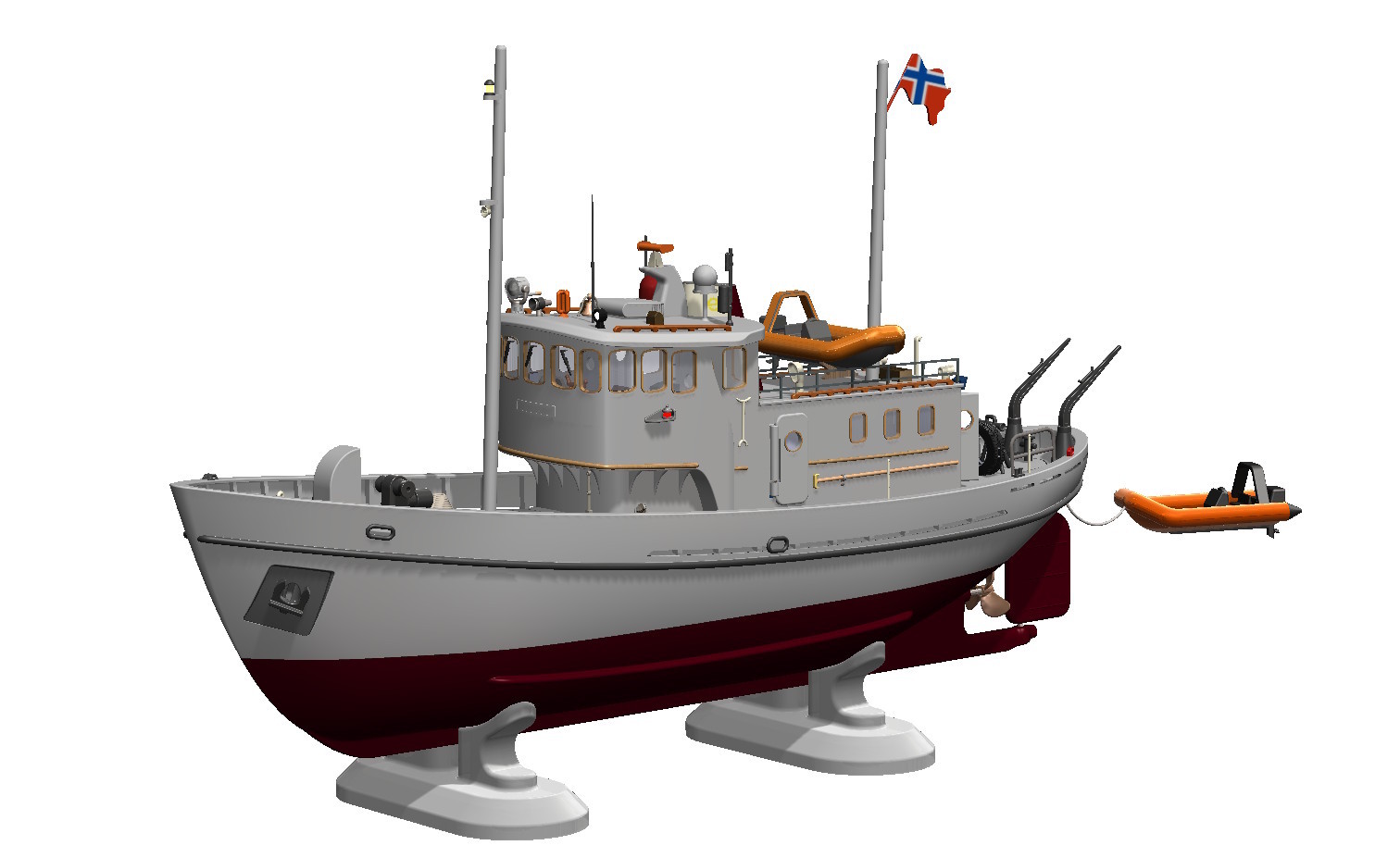
At 13 metres long, 4.03 metres wide and with a displacement of approximately 25 tonnes, Sørlandsskøyta was a relatively compact vessel, but she was designed for serious work. Her documented equipment included radar, direction-finding equipment, radio communication, a towing hook, hand-operated steering and anchor machinery, and a portable salvage pump. Her original engine was later replaced by a 170 hp General Motors diesel, giving the vessel a reported speed of approximately 9 knots. The boat’s working life extended over three decades and included service from Flekkefjord and Hvaler, followed later by service in Sør-Trøndelag before she was eventually used as a training and work vessel.
Continue reading for more information or
A Model Inspired by the Sørlandsskøyta and Her Era
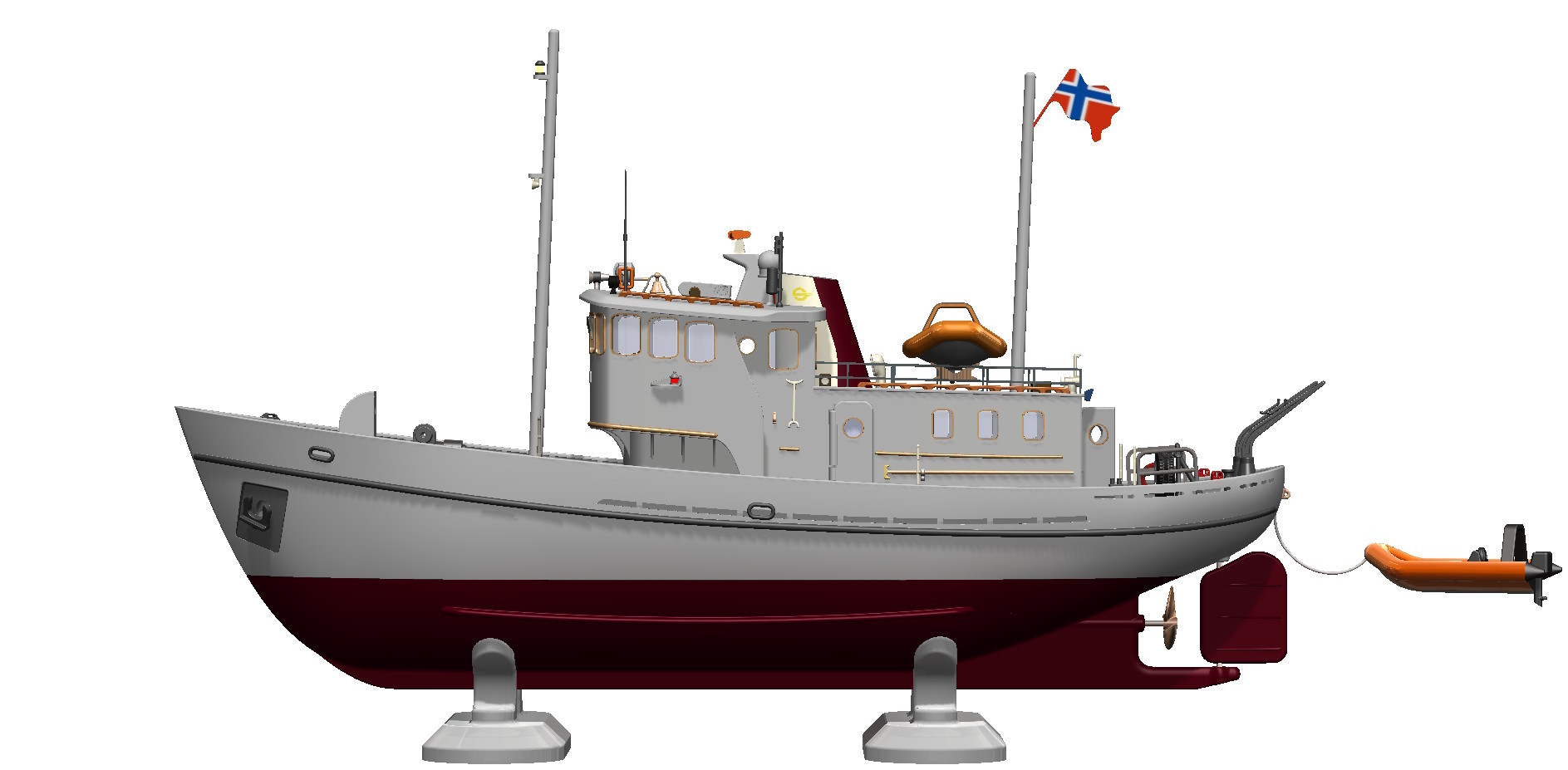
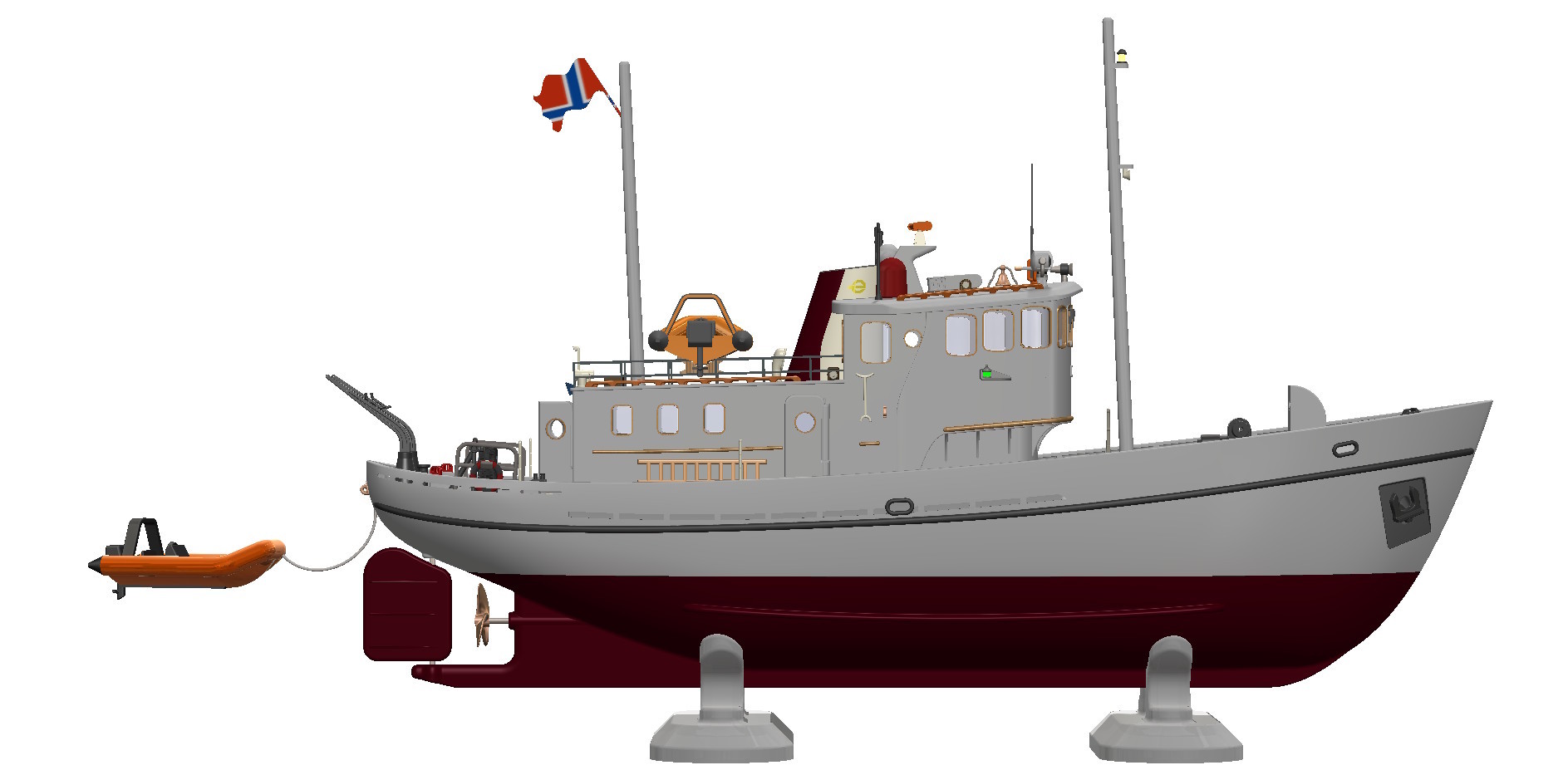
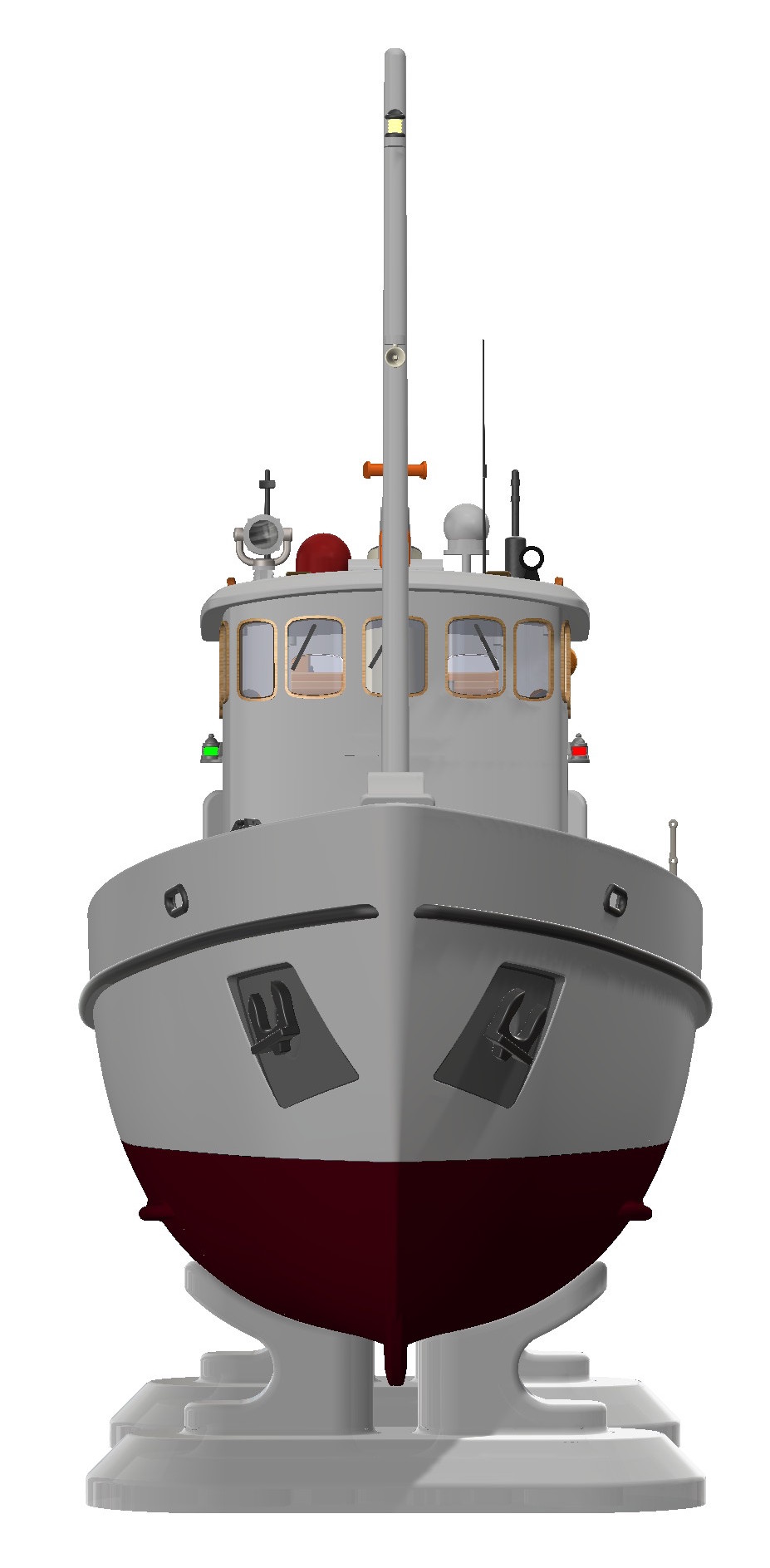
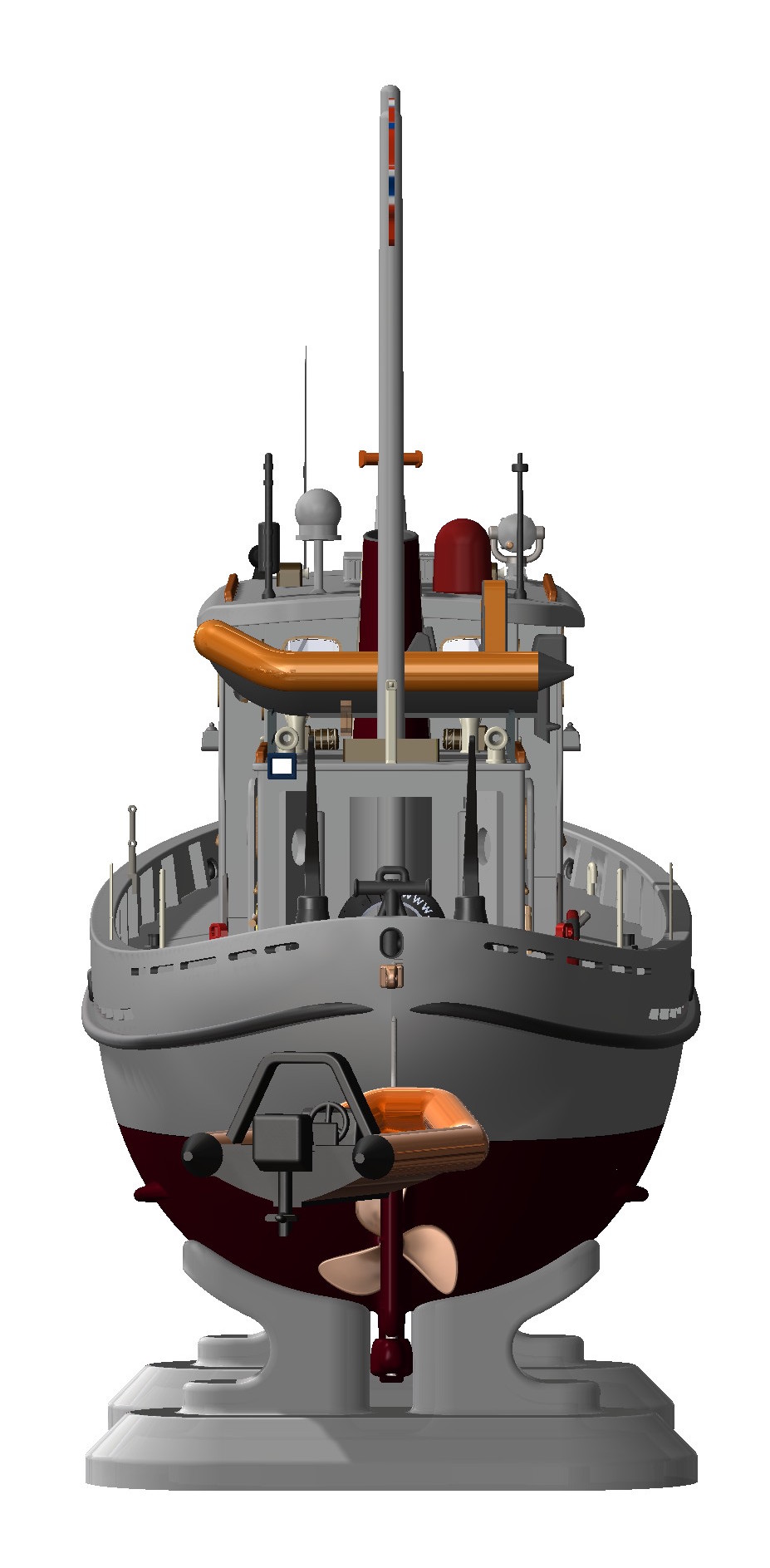
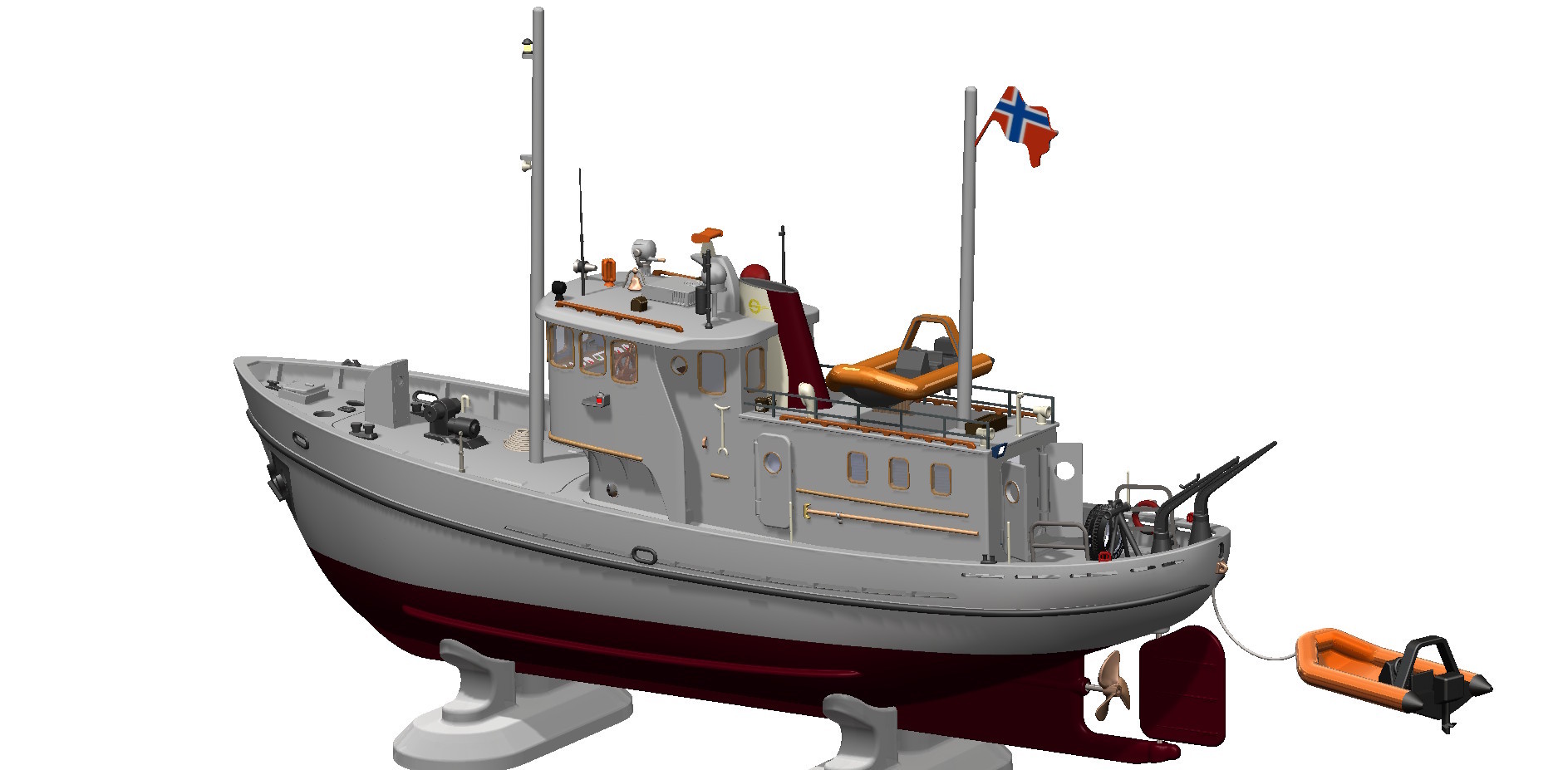
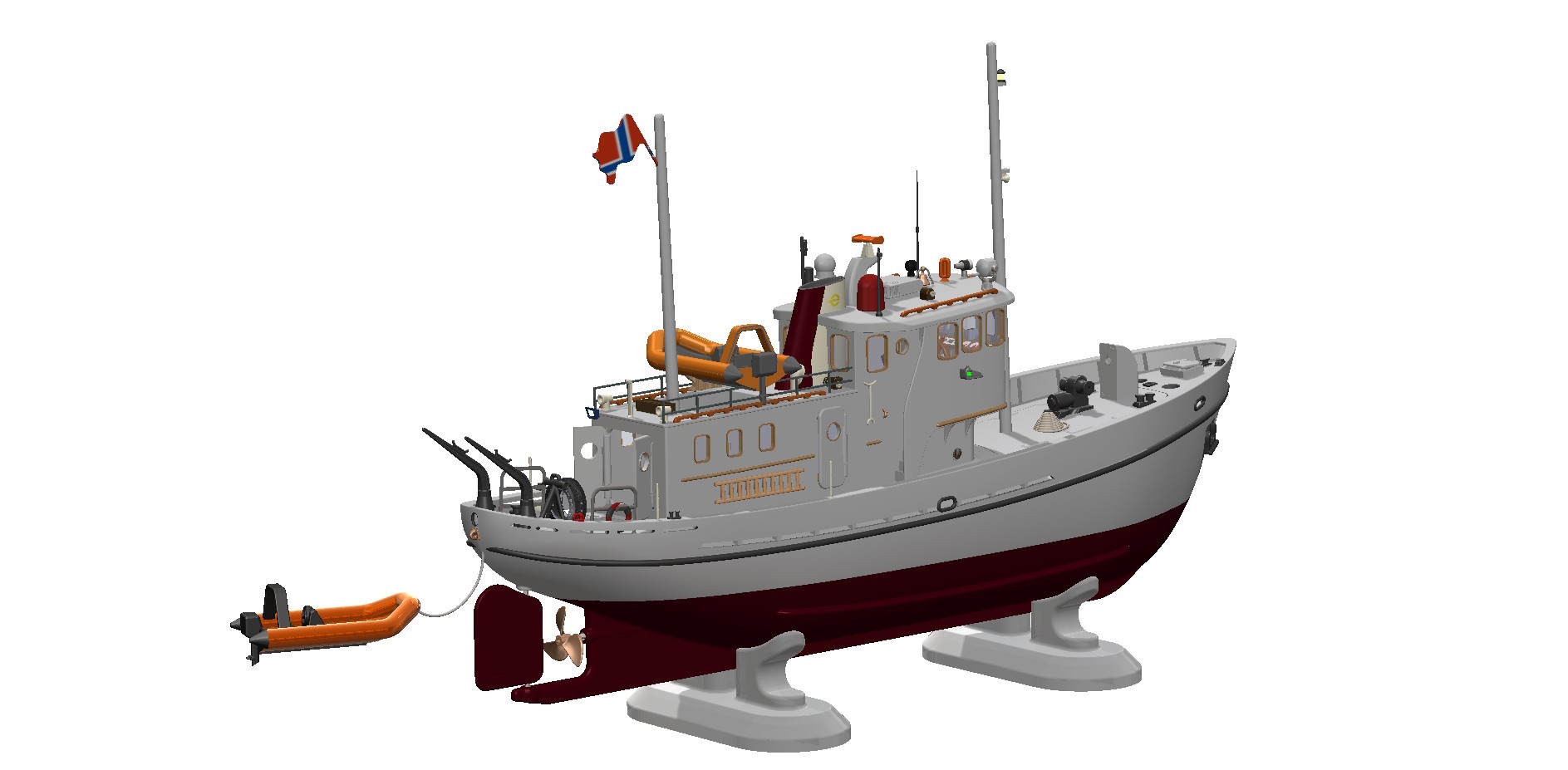
Our new model takes RS 58 “Sørlandsskøyta” as its principal inspiration. The model was developed primarily from available photographs and visual references, with the goal of capturing the characteristic proportions, layout, equipment and overall character of the vessel.
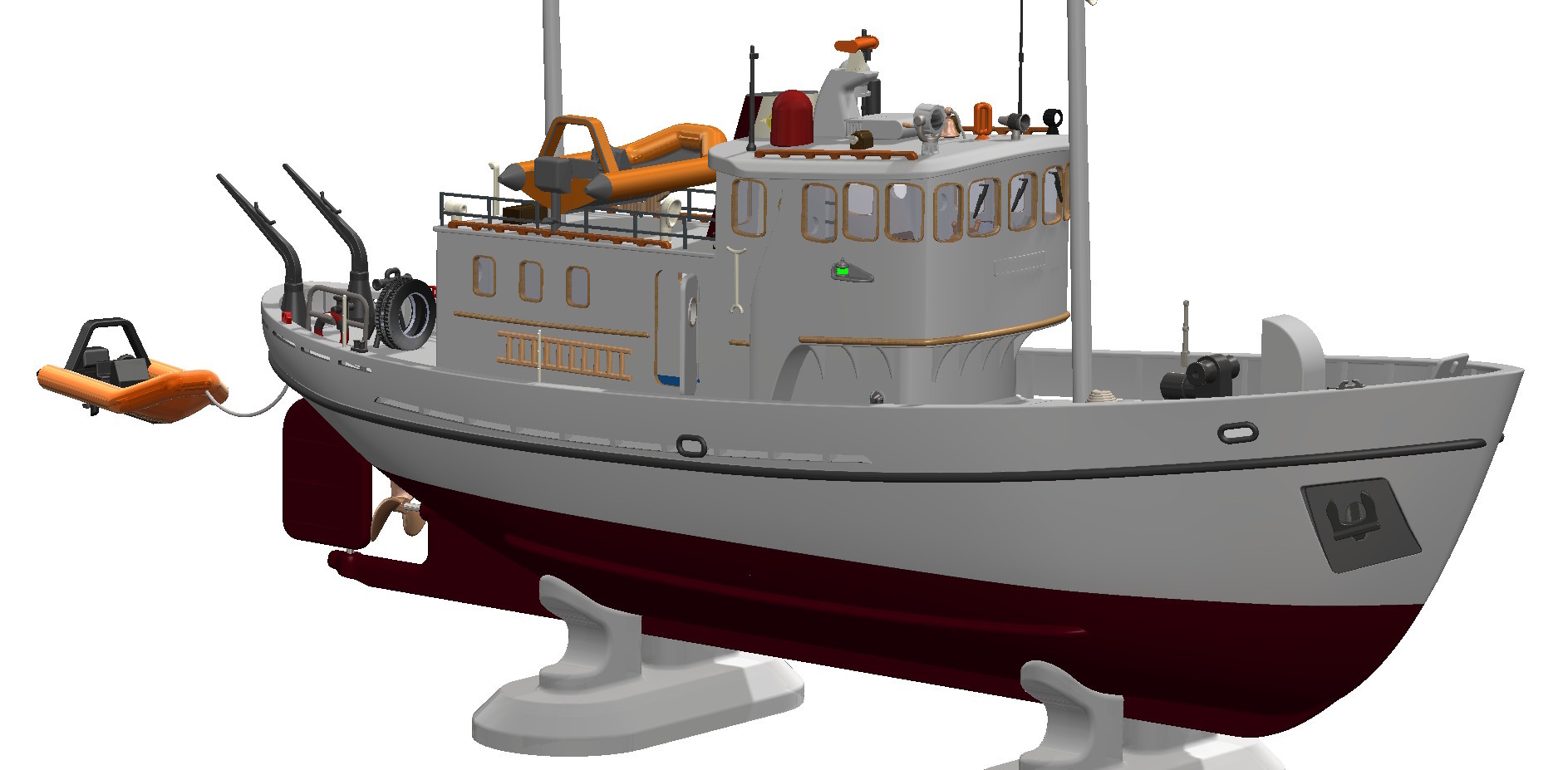
This approach also makes the model useful beyond RS 58 itself. The Norwegian rescue fleet of the 1950s and 1960s contained a number of vessels with related forms and design characteristics. Redningsselskapet’s historical fleet includes RS 59 Tønnes Puntervold, RS 60 Ulabrand II, RS 63 Torungen, RS 64 Oscar Nibe and RS 65 Karine Moe, among others from the same general period. Builders interested in this era can therefore use the model as a starting point for developing their own interpretation of a similar Norwegian rescue or working vessel, modifying the superstructure, fittings, windows, equipment and other details as required.
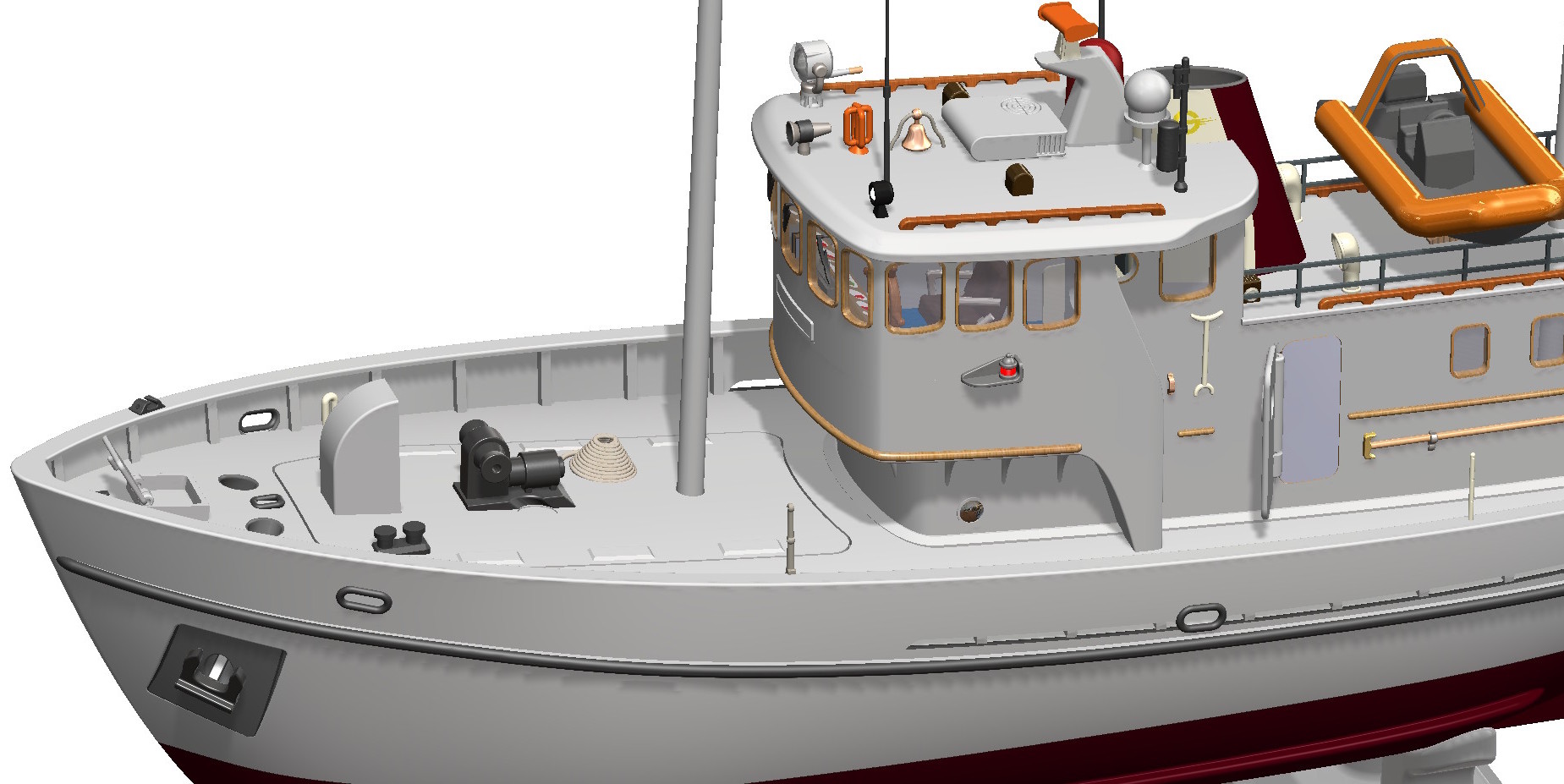
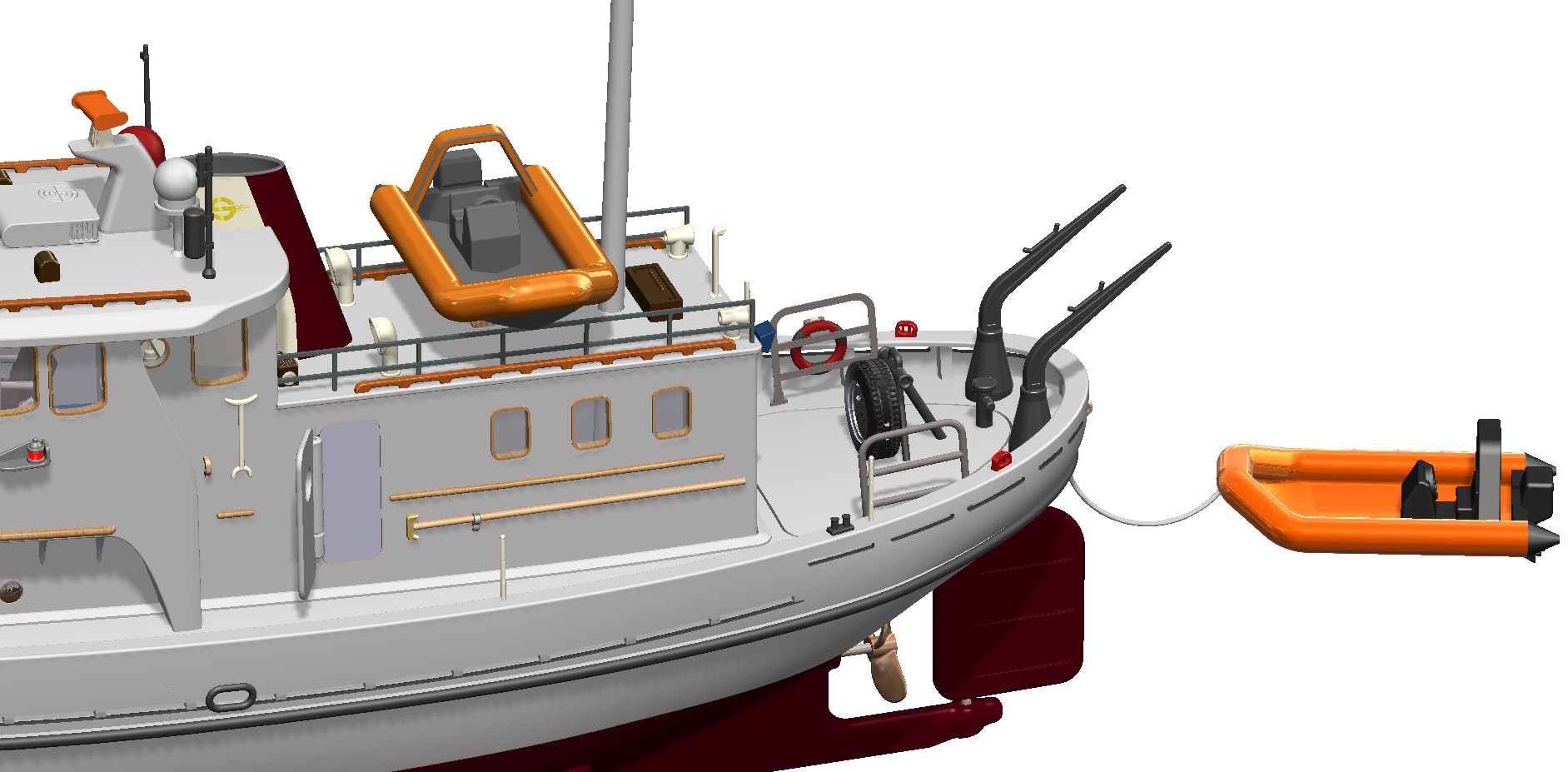
This is one of the aspects that makes historical workboat models particularly interesting. Unlike a modern production vessel with precisely documented CAD geometry, many older boats are encountered today primarily through photographs, drawings and surviving examples. A model based on such references inevitably involves interpretation. Rather than claiming an accuracy that the available historical material cannot support, our aim with this project was to create a convincing, highly usable scale model that preserves the visual identity and engineering character of the original vessel and its era.
80 cm of Norwegian Maritime History
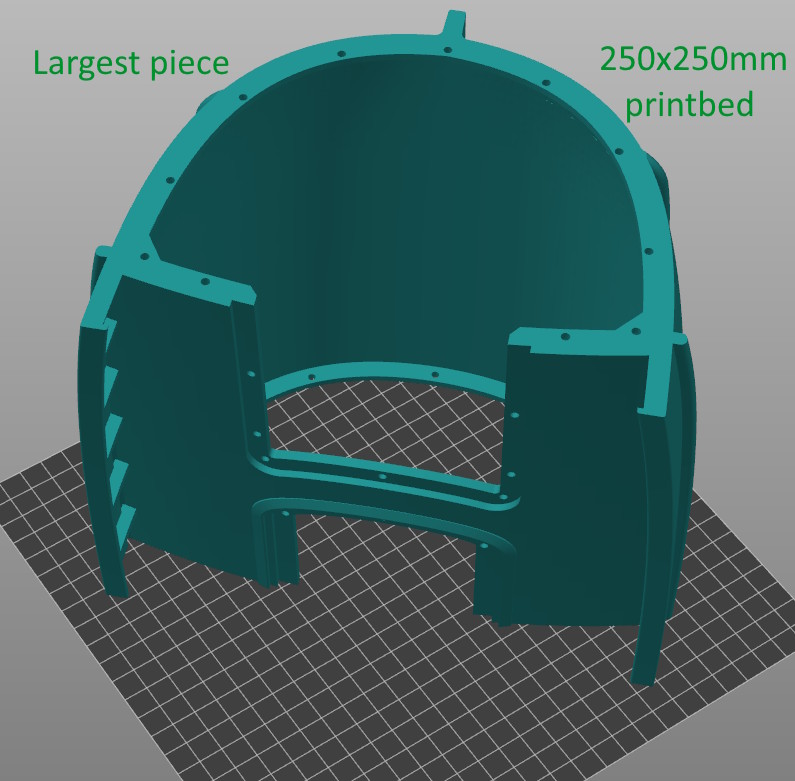
The finished model is approximately 80 cm long, making it large enough to show the proportions and details of the original vessel while still being practical for home 3D printing. At approximately 1:16 scale, it also provides enough internal volume to accommodate the equipment required for radio-controlled operation.
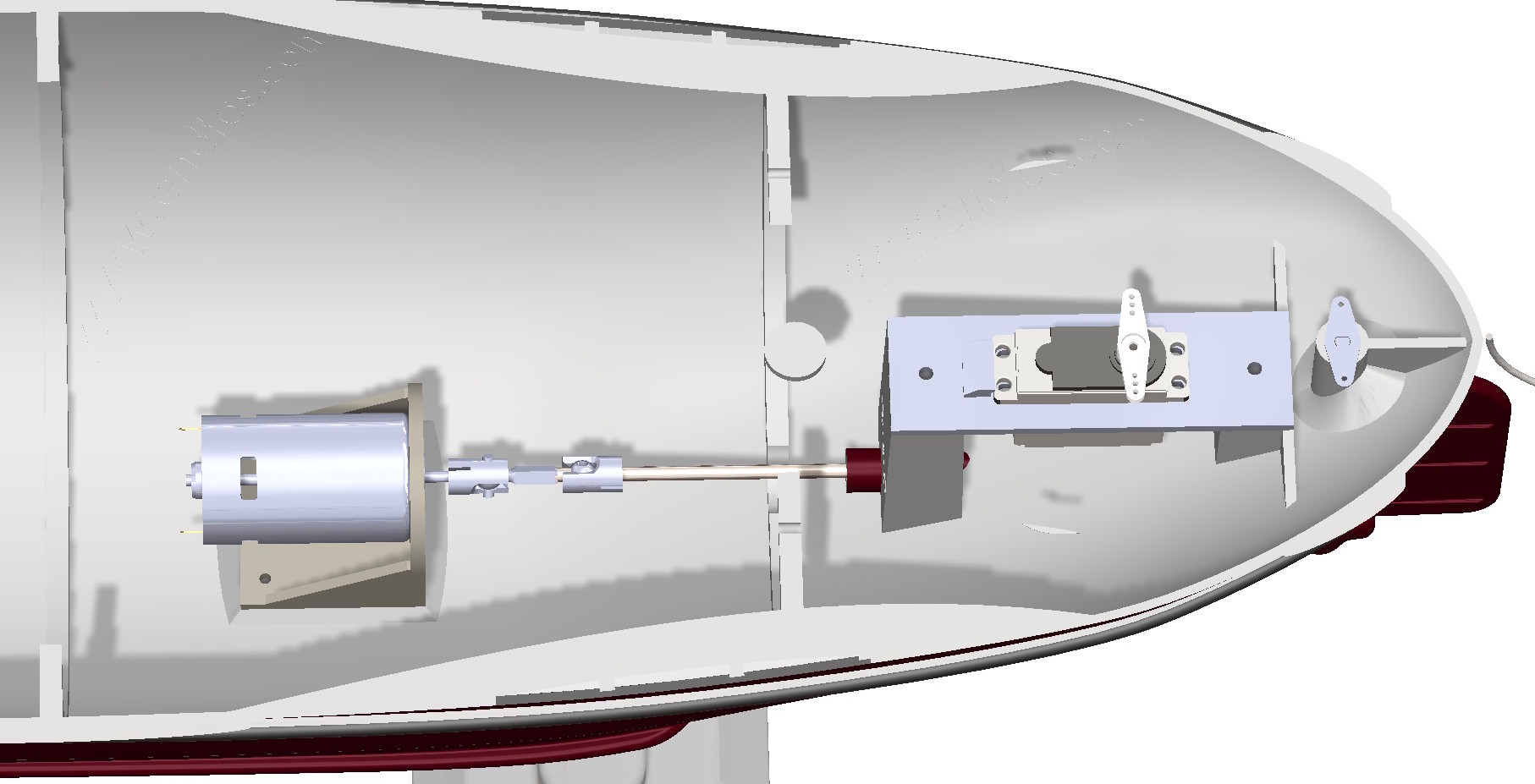
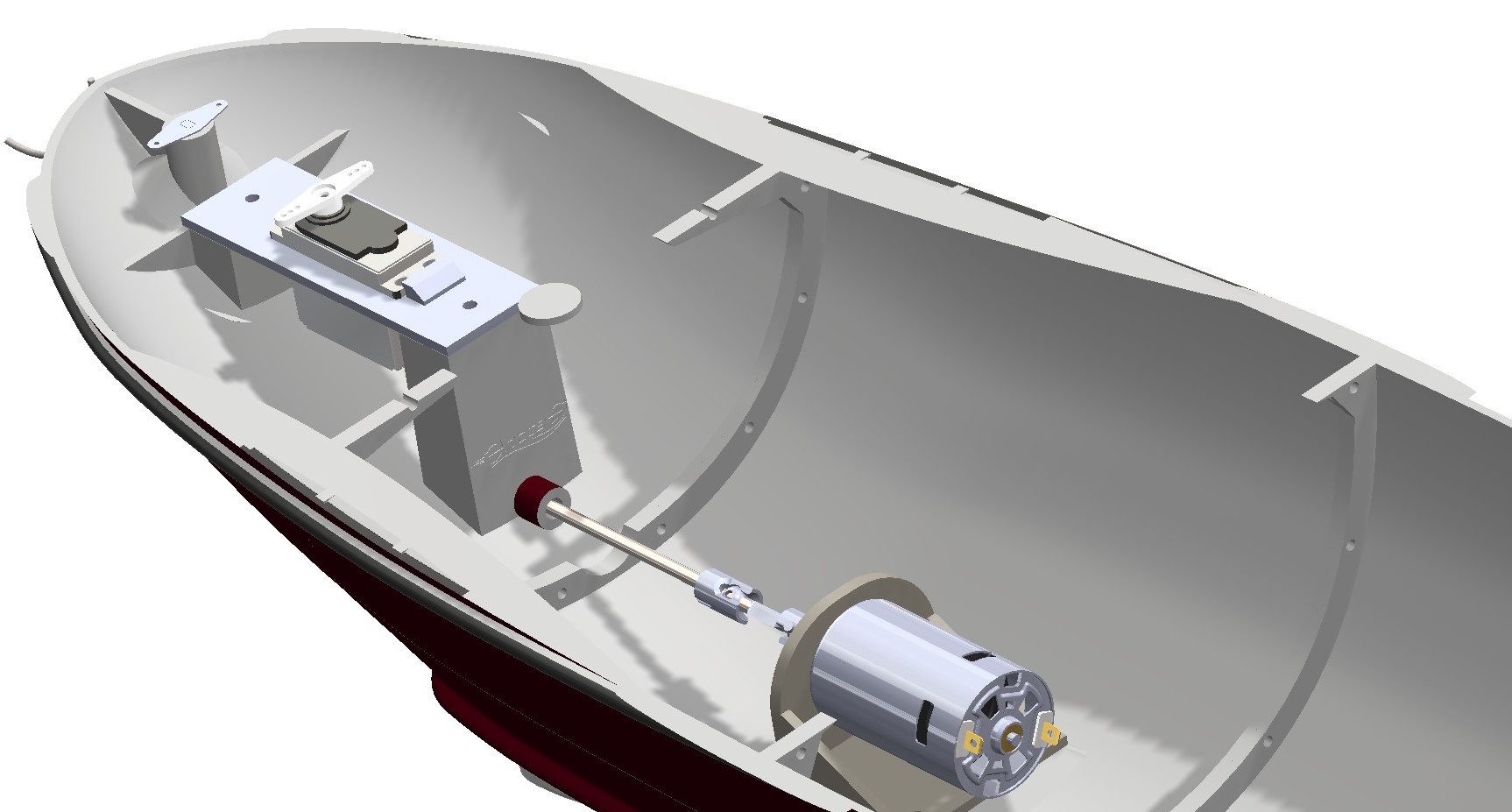
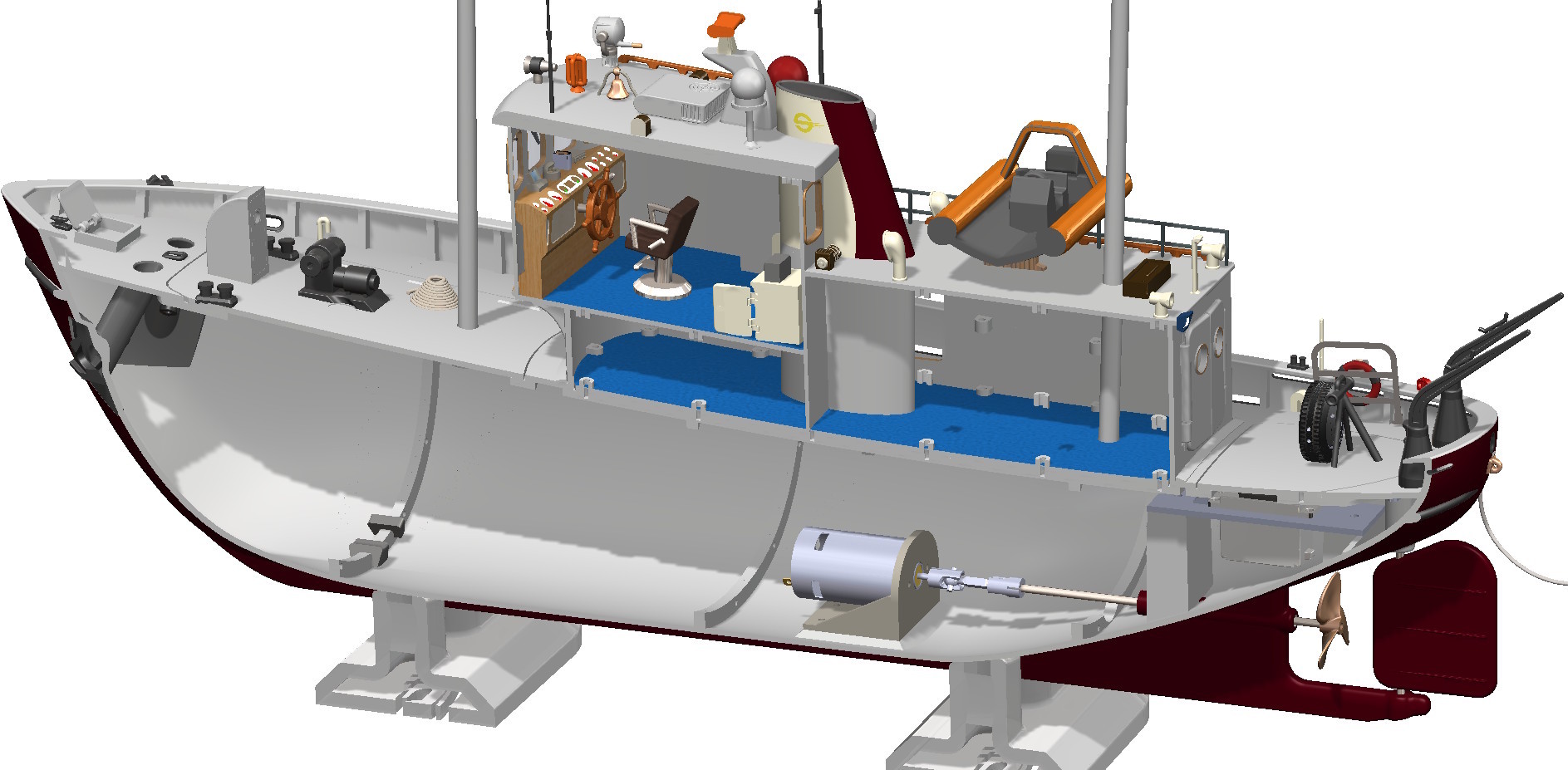
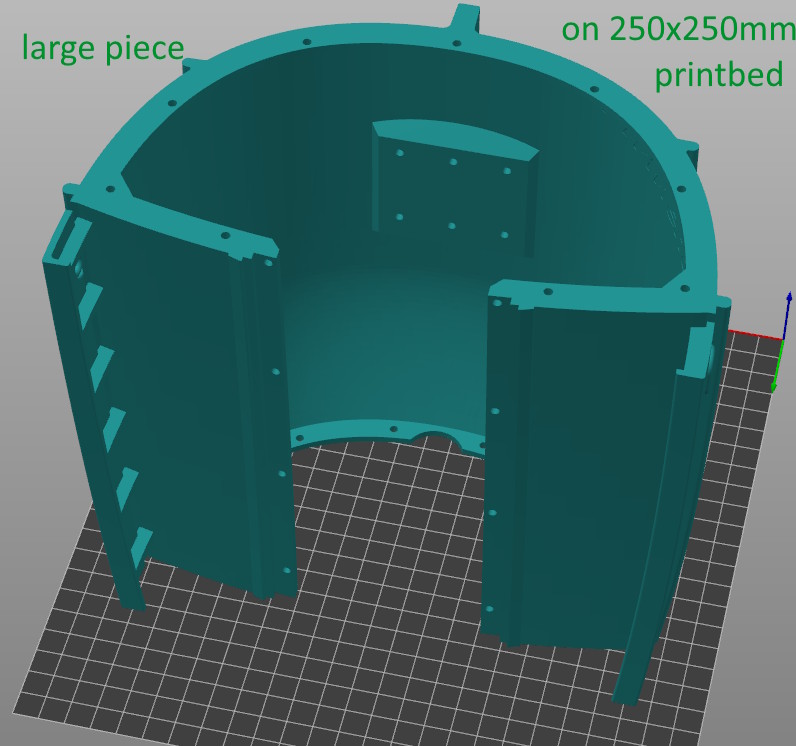
The model was designed from the beginning as an RC-ready platform rather than as a hollow static shell with the RC components left for the builder to figure out. At the same time, we wanted to keep the physical construction relatively straightforward. The main hull therefore consists of only four separate printable sections.
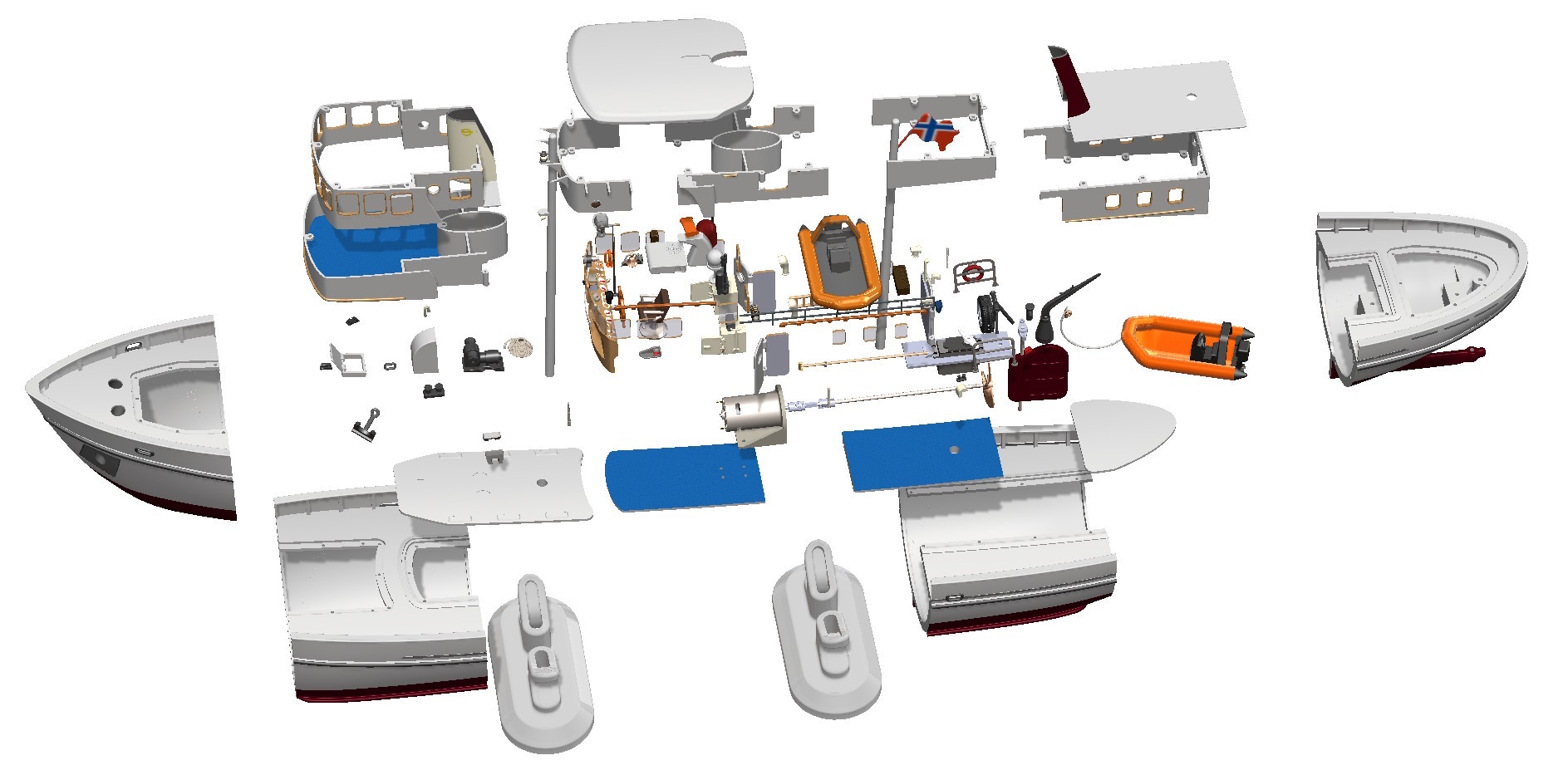
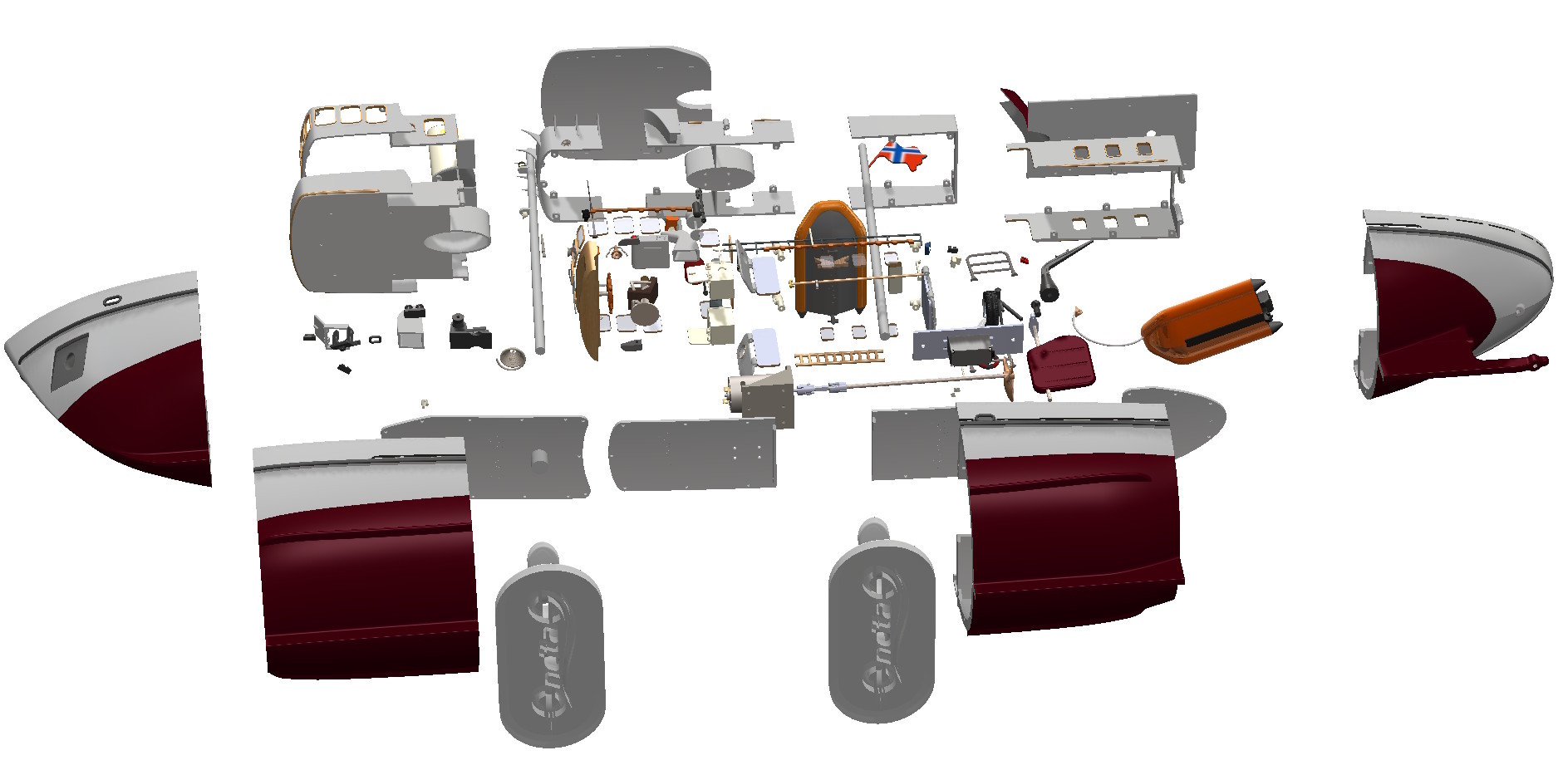
Each hull section incorporates assembly bosses that help align the pieces and provide a convenient means of holding them together while the adhesive sets. This makes the construction process considerably more predictable and avoids having to manually establish the alignment of large curved hull sections during assembly.
The superstructure is divided into eight separate parts. Separating these components makes them easier to print, handle, finish and paint, while also allowing different sections to be produced in different colors without unnecessary masking or painting.
Designed Around Access and Maintenance
One of the most important decisions in an RC model is how the builder will access the equipment after the boat has been completed. Motors, batteries, servos and electronics inevitably require adjustment or replacement, so we designed the Sørlandsskøyta around three large interior access hatches.
A hatch is provided at the forward deck, which can be used for a battery or other equipment. A second hatch is located toward the rear, directly above the steering mechanism and servo, allowing convenient access to the steering system. The largest opening is located in the middle of the vessel and provides access to the drive motor, electronics and battery.
The entire superstructure can also be made removable. Rather than permanently gluing it to the central hatch, builders can attach it using screws or 3 mm diameter magnets. This effectively turns the superstructure into a removable upper module, making the interior substantially easier to reach when installing or maintaining the RC equipment.
One Model, Two Different Approaches
The mounting provisions were deliberately designed to accommodate both display and RC builds. The relevant holes are fully drilled in areas where they remain hidden, while holes that would be visible on the finished model are only partially drilled. The builder can therefore decide whether to complete the openings depending on the intended use.
For an RC model, the holes can be opened fully and used for screws or magnets. For a display model, the builder can leave them partially closed or finish them according to their preferred method, avoiding unnecessary visible holes.
This philosophy extends throughout the model. Although the design provides the structure and provisions necessary for an operational RC boat, the builder remains free to decide how much of the functionality to implement. The same files can therefore produce a detailed static display model or a working boat intended for the water.
Bringing a Historic Rescue Boat Back to Life
There is something particularly appropriate about recreating an old rescue vessel as a functional RC model. Sørlandsskøyta was designed to leave the harbor and operate when other vessels needed assistance. Building a model that can eventually do the same—even at a much smaller scale—adds another dimension to the project.
The original vessel represents an important moment in Norwegian maritime rescue history: the move from the traditional wooden rescue boats toward steel-hulled vessels, a transition that began with RS 58 and continued for decades.
Our 3D printable interpretation is intended to make this relatively obscure but historically interesting vessel accessible to today’s makers. Whether printed as a detailed display model, adapted to represent another rescue boat from the same era, or equipped with a motor and radio control for operation on the water, the project offers an opportunity to explore a distinctive chapter of Scandinavian maritime engineering.
RS 58 “Sørlandsskøyta” may have spent its working life rescuing vessels along the Norwegian coast. Now, in 3D printable form, her distinctive character can become the starting point for a new generation of model builders.
Did you like the story? if yes please proceed to our cults3d listing for seeing the latest images, animations of this boat and purchase if you like and support our site.