
The Future of Stealth, Now at Your Desk
Where Science Fiction Meets the Workshop Bench
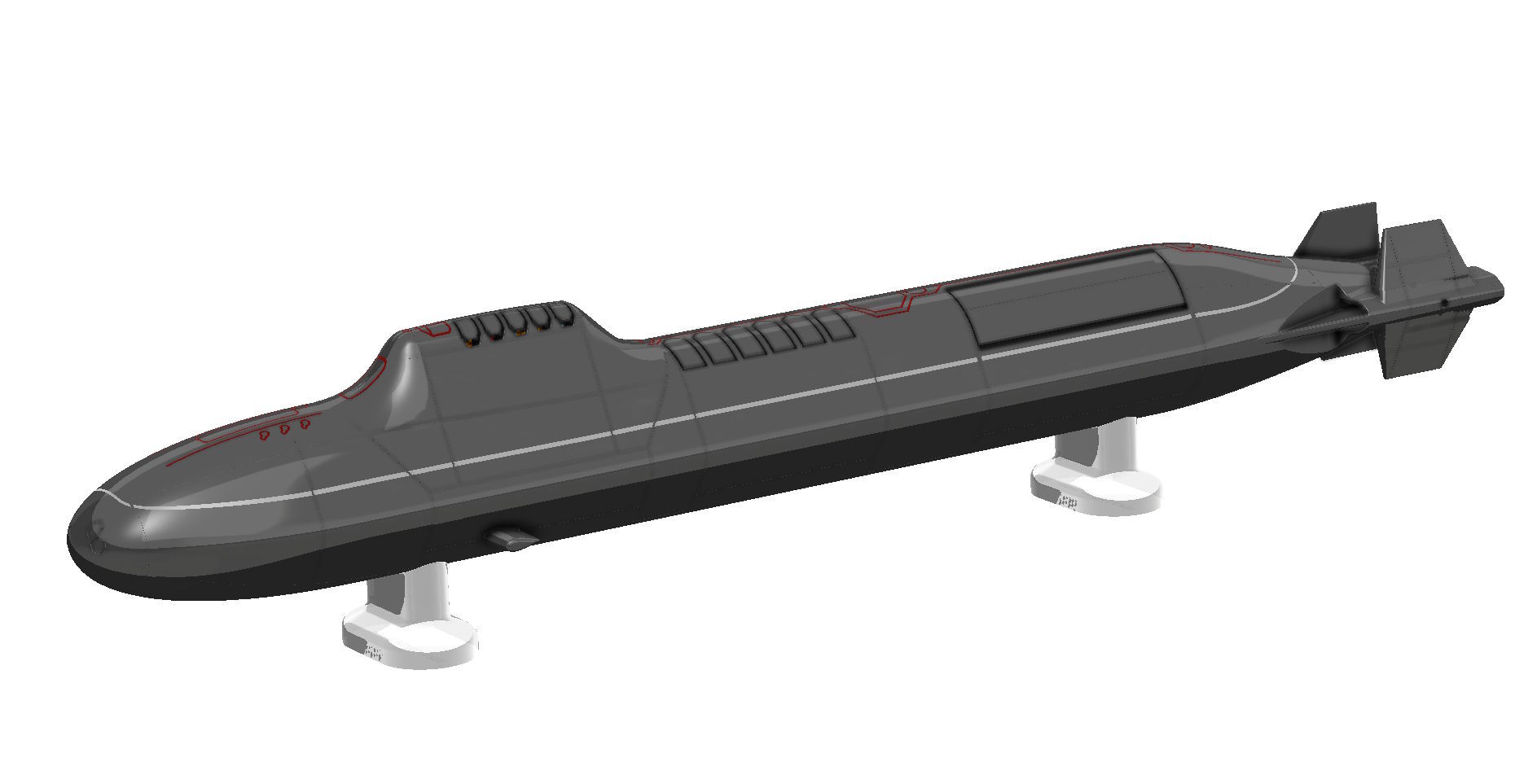
In August 2022, at the Army‑2022 defence expo, the Rubin Design Bureau unveiled a concept that looked more like a low‑observable aircraft than a traditional submarine. Named Arcturus (Арктур) after the brightest star in the northern celestial hemisphere, the design is the Russian answer to a new generation of ballistic‑missile submarines (SSBNs) that will eventually replace the Borei class. While the real vessel is still a paper project – its keel isn’t expected to be laid until the late 2030s, with operational capability projected for the 2040‑2050 timeframe – its faceted, angular hull and revolutionary propulsion system have already captured the imagination of naval analysts and hobbyists worldwide.
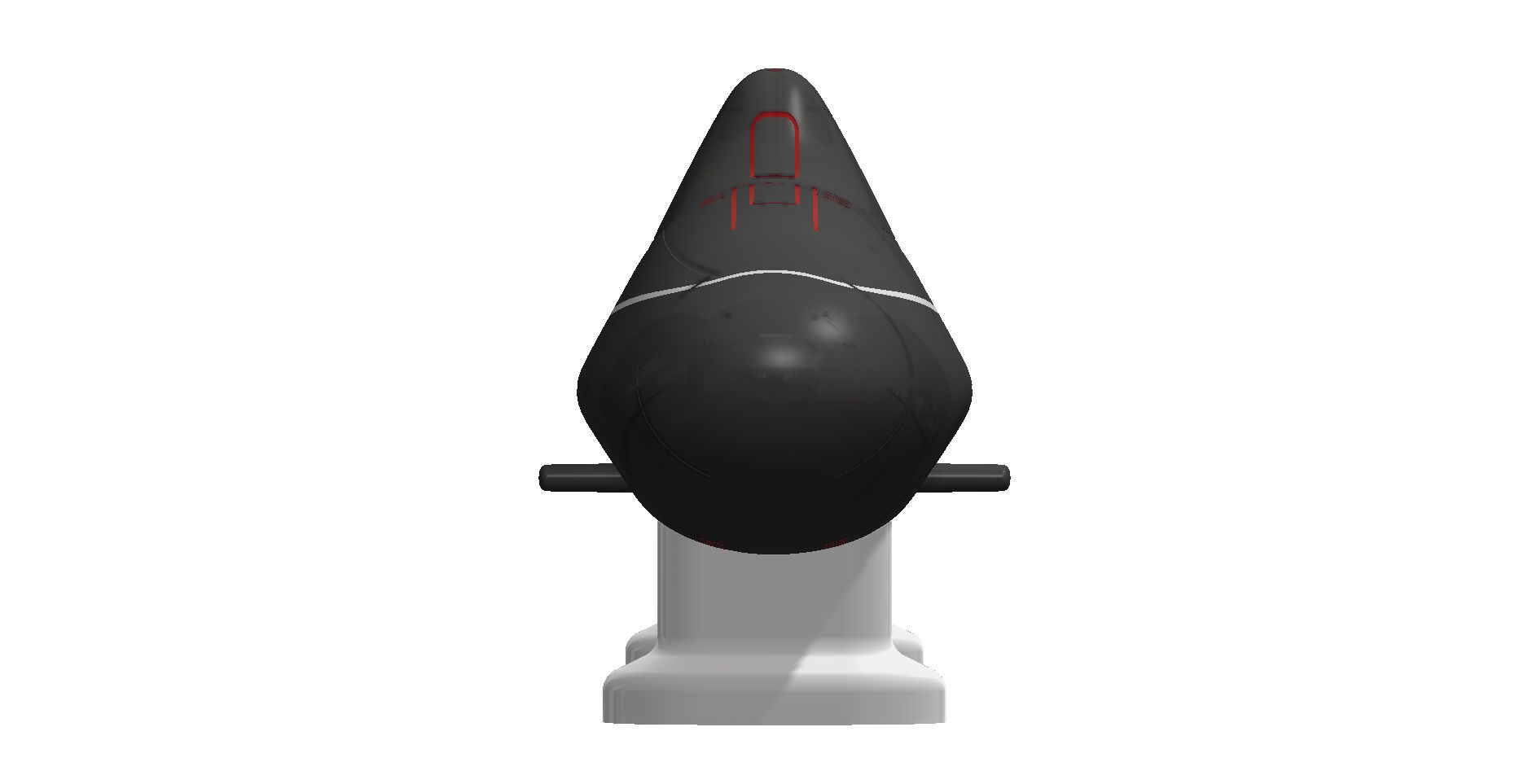
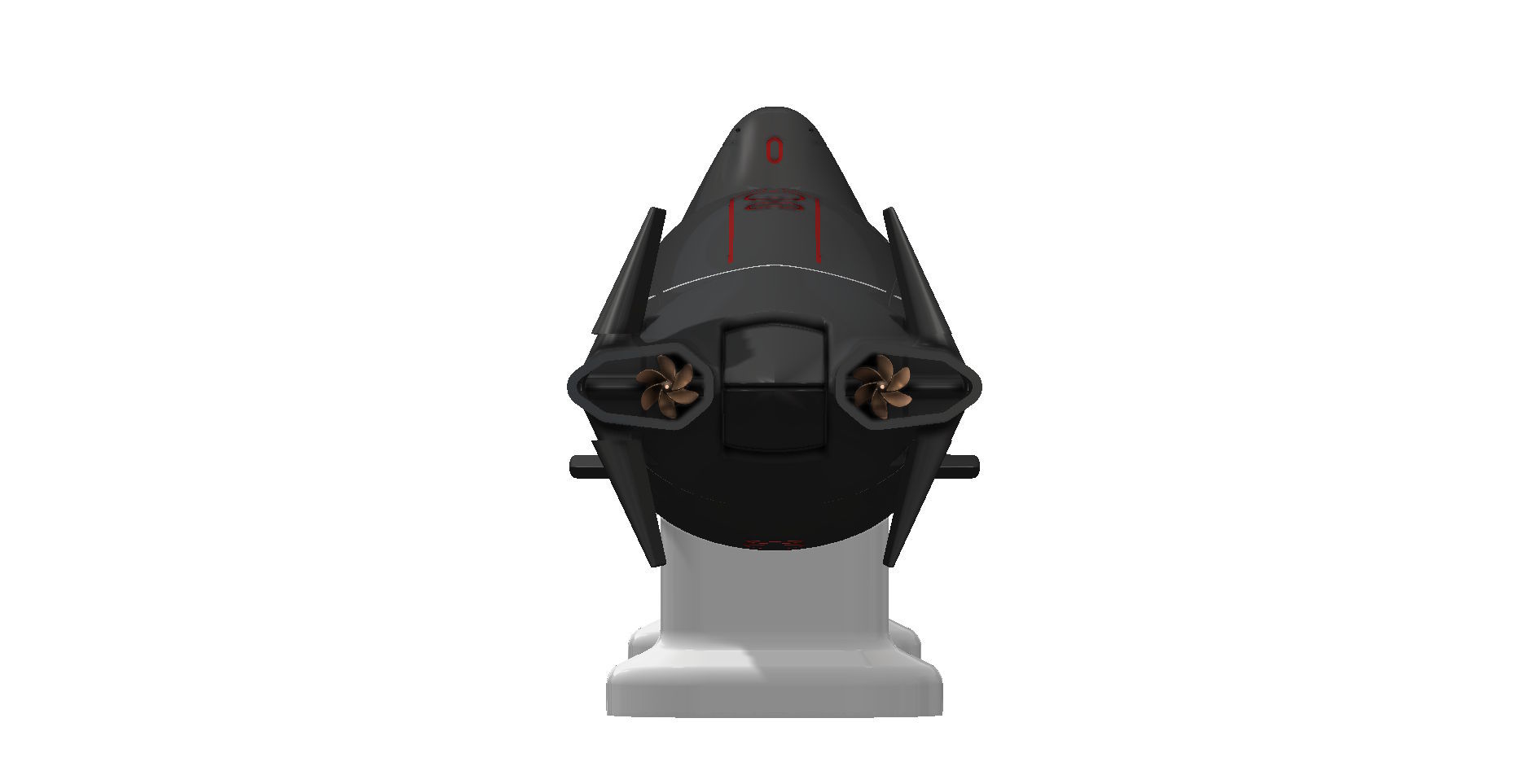
At EndtaS we decided to bring that future a little closer to the present. Our 75 cm Arcturus‑Class Submarine is a highly detailed, fully articulated 3‑D printable model that captures the spirit of Rubin’s concept while remaining practical for home printers. This article dives into what makes the real Arcturus special, what we’ve added to our 1 : ~200 scale replica, and how you can build it at home.
Continue reading for more information, or click here to proceed to our Cults3D page to get the model.


1. Why the Arcturus Design Matters
The Arcturus class is not just another incremental upgrade; it represents a paradigm shift in submarine stealth.
| Feature | Traditional SSBNs (e.g. Borei) | Arcturus Concept |
|---|---|---|
| Hull Shape | Smooth, cylindrical pressure hull | Faceted, angled outer hull with a chine that runs the length of the boat, similar to a stealth aircraft or the British Dreadnought class |
| Length | ~170 m (Borei) | 134 m |
| Beam | ~13 m | 15.7 m |
| Displacement | ~24,000 t (submerged) | 19,000 t (submerged) – 20 % lighter |
| Propulsion | Single shaft, nuclear‑steam turbine | Distributed, shaftless power plant with full electric propulsion and two propulsors for redundancy and manoeuvrability |
| Noise | Conventional machinery on rafts | Shaftless drive eliminates the propeller shaft as a noise source, further reducing radiated noise |
| Missile Tubes | 16 (Borei‑A) | 12 (fewer, but each missile is more capable) |
| Special Equipment | None | Hangars for the Surrogat‑V anti‑submarine warfare AUV, plus additional UUVs carried in the missile tubes or under the casing |
| Operating Area | Open ocean | Optimised for the high‑latitude Arctic – the faceted hull helps break ice and lets ice slide off the missile hatches |


The faceted hull is the most striking departure. Submarines have always been smooth to reduce drag and sonar reflection, but Rubin’s designers argue that an angled outer hull deflects active sonar pings away from the source, much like the faceted skin of a stealth aircraft. Combined with advanced anechoic coatings, this dramatically shortens the range at which the boat can be detected.
The shaftless, fully electric propulsion system is another leap forward. By removing the long propeller shaft, designers eliminate a major source of radiated noise and gain the flexibility to place thrust components anywhere along the hull. Two propulsors – one forward, one aft – give the boat unprecedented manoeuvrability, crucial for navigating under Arctic ice holes (polynyas) and for rapid course changes to evade detection.
Finally, the Surrogat‑V AUV is a game‑changer in its own right. Equipped with a conformal sonar array and a pump‑jet propulsor, it can operate at high speed, “sniff” the chemical and radiation wake of enemy submarines using the SOKS system, and relay targeting data back to its mother ship. In effect, the Arcturus becomes a mobile, underwater anti‑submarine warfare platform that can clear a path for itself or protect a strike group.


2. What We’ve Built: 75 cm of Future‑Stealth Engineering
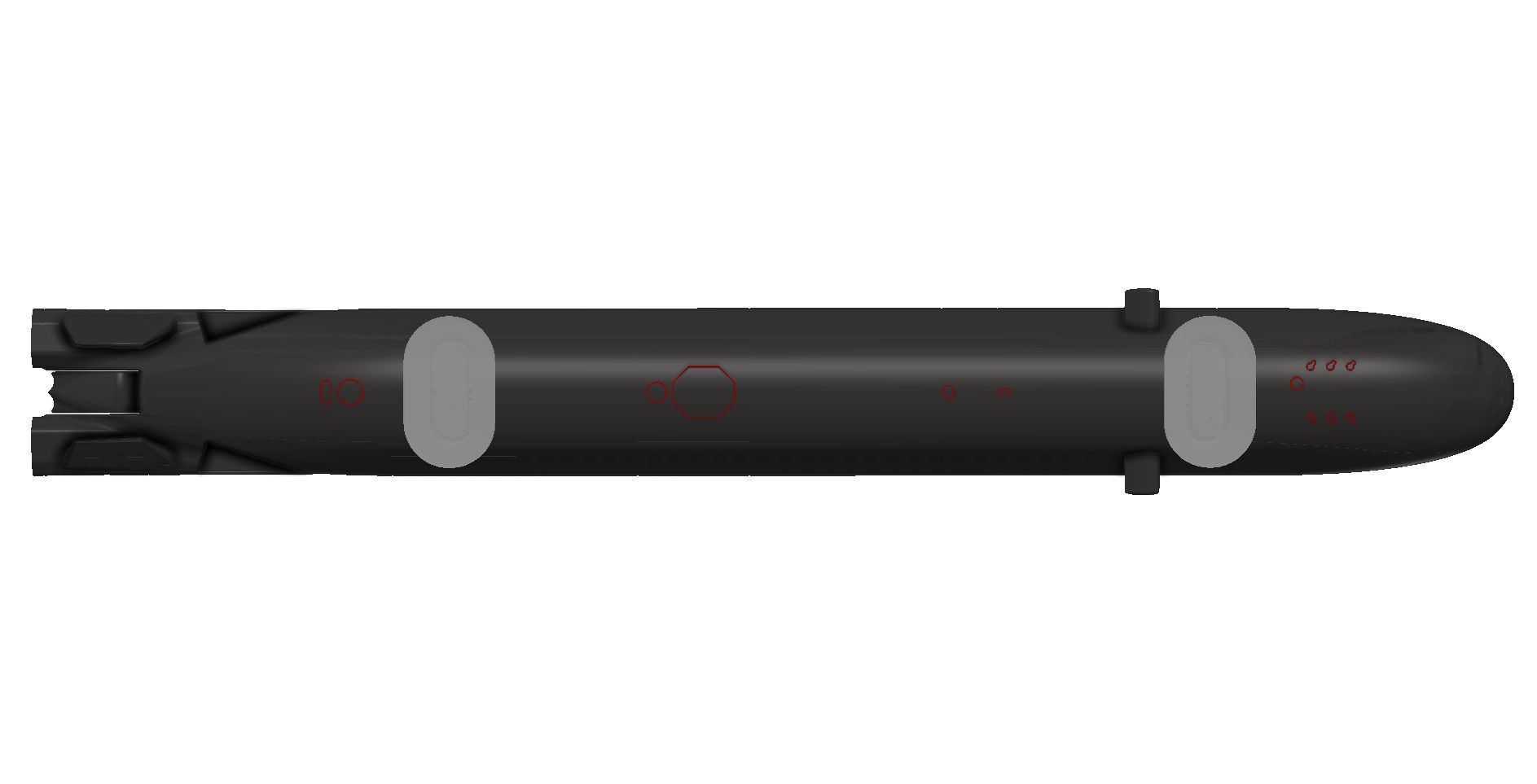
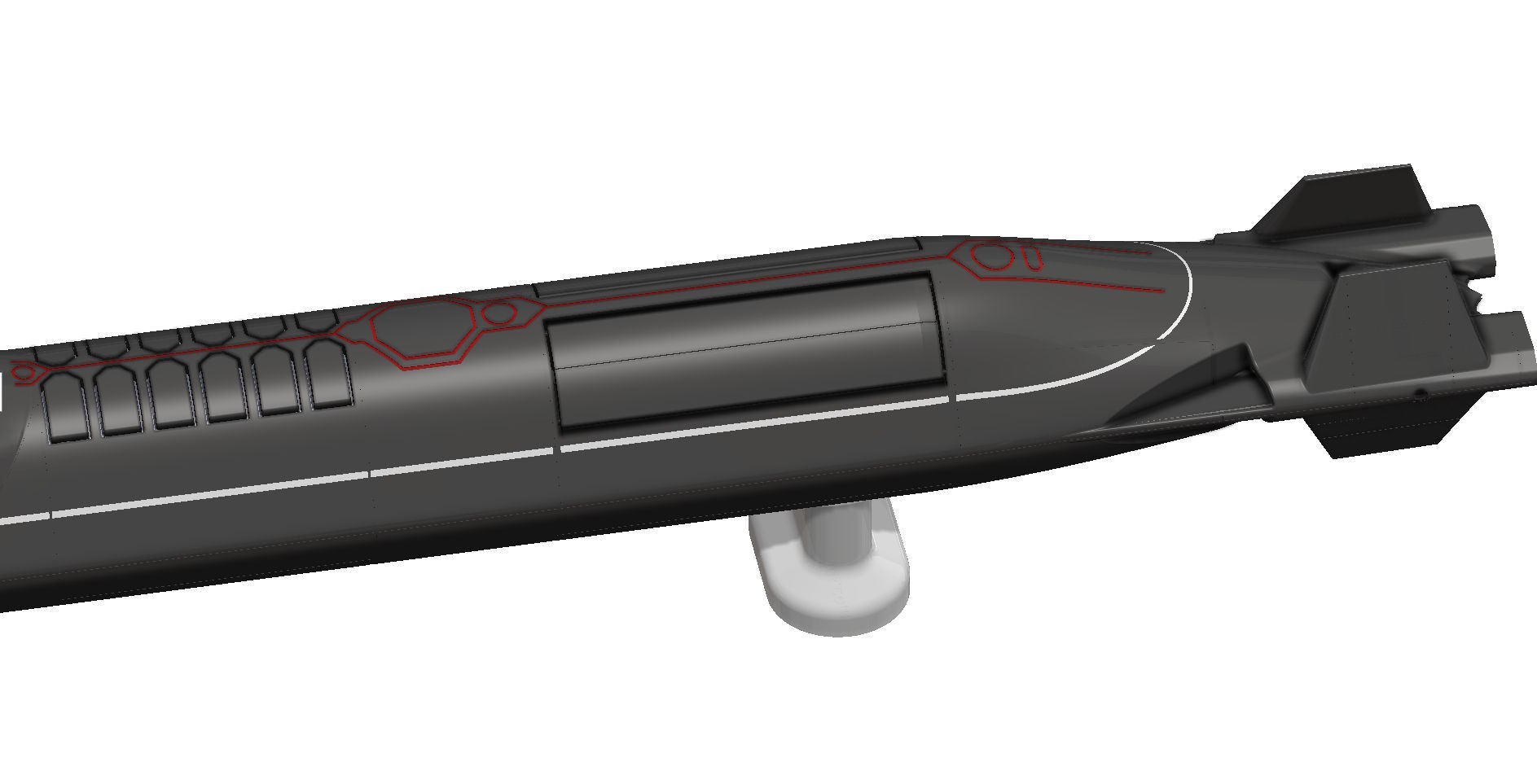
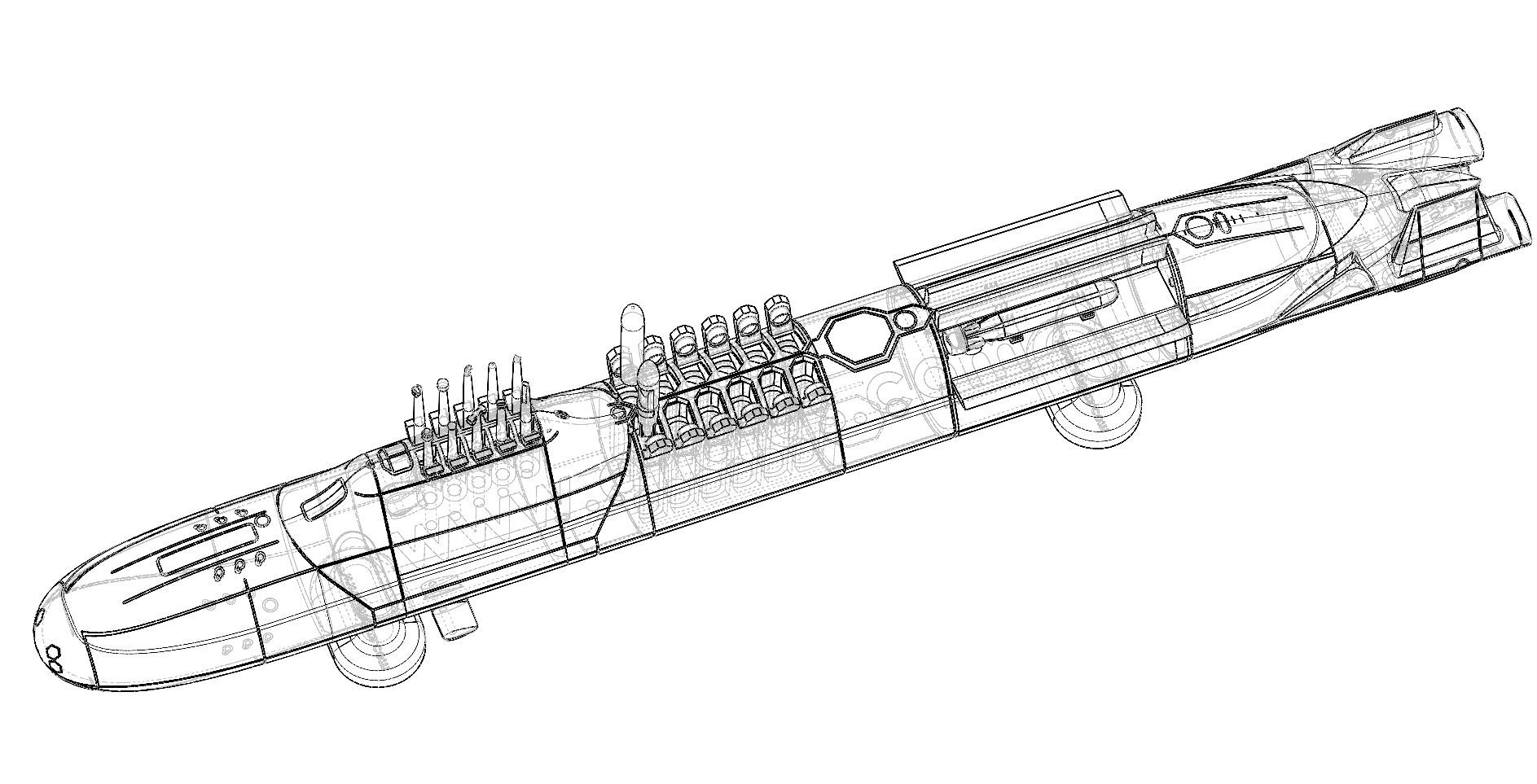
Our 75 cm Arcturus‑Class Submarine translates Rubin’s radical concept into a manageable, 3‑D printable model that fits on a standard 22 × 22 × 25 cm print bed. The file pack contains 53 high‑poly STL files that combine into over 60 individual parts once the duplicate components are counted. The result is a display‑grade replica with the following highlights:
- Fully Articulated Control Surfaces – Dive planes, rudders, and periscope masts all move. The dive planes are split into left‑front, right‑front and rear units, each printed as a single piece.
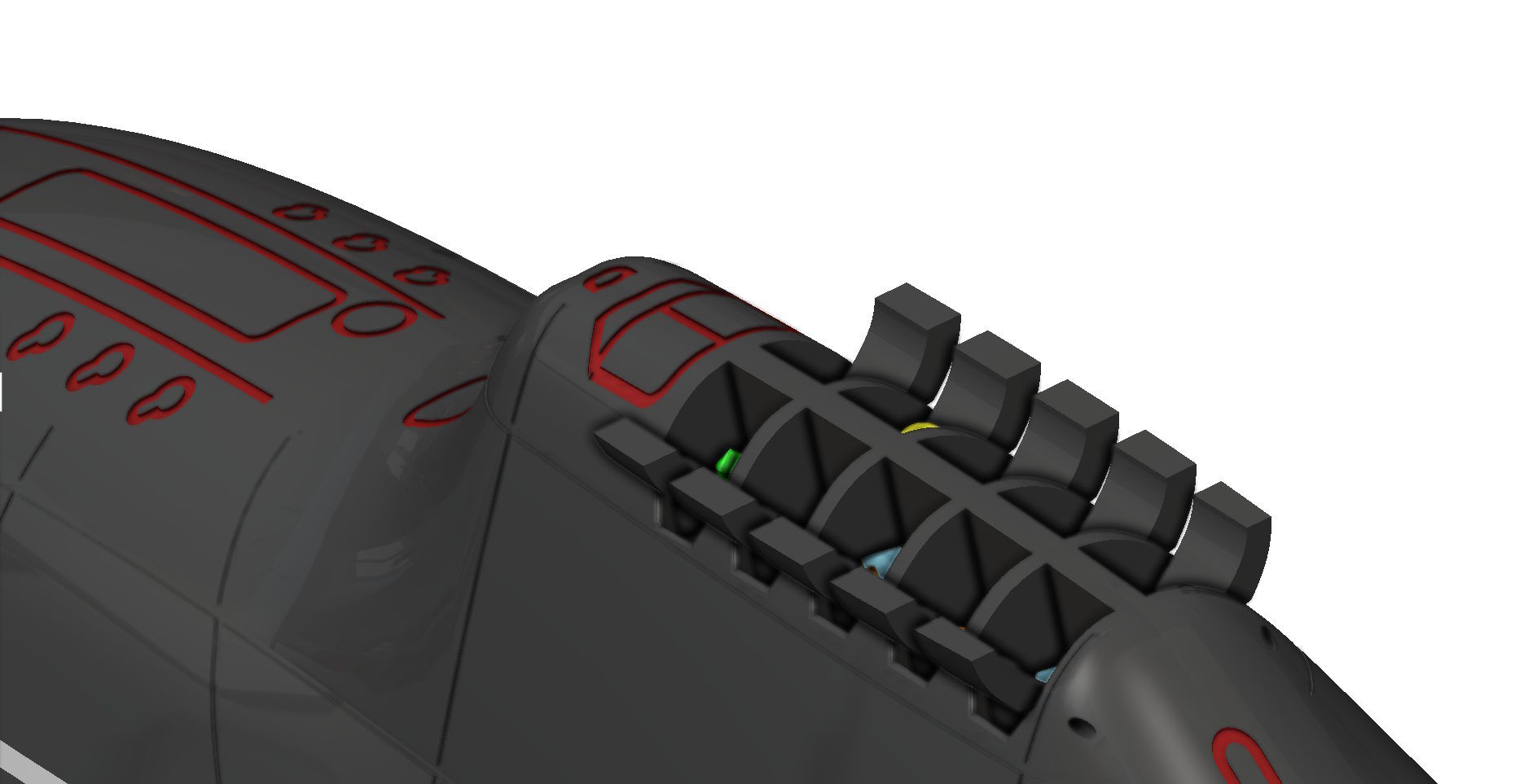
- Operational Hatches – Periscope hatches (5 sets), missile‑silo hatches, and minisub hatches can be opened and closed, giving the model a dynamic, “ready for launch” appearance.
- Working Missile Silos – Six missile tubes are visible, complete with a detailed cruise missile that can be displayed either stowed or in launch position.
- Onboard Minisub – A miniature submersible with its own internal launch bay replicates the Arcturus’ rumored special‑mission capability. The minisub has a rotating propeller and is designed to fit snugly inside the launch bay.
- High‑Detail Periscopes – Twelve individual periscope models (plus their hatches) add a level of surface fidelity rarely seen in 3‑D‑printed submarines.
- Display Stands – Front and rear display stands are included, allowing you to present the model in a static “on the surface” pose or in a dynamic “surfacing through ice” configuration.
The entire model is designed for easy printing. Most parts can be printed flat on the bed with minimal or no supports. For the finer details – periscope optics, hatch hinges, and the minisub’s propeller – we recommend a 0.16‑0.20 mm layer height and 15‑20 % infill, using PLA or PETG for a balance of strength and surface quality.

3. Printing, Assembly & Optional RC Conversion
Printing Tips
- Layer Height: 0.16 mm for the highest detail (periscopes, hatches), 0.20 mm for the hull and large parts.
- Material: PLA is the easiest to work with; PETG offers extra durability for moving parts.
- Infill: 15‑20 % is sufficient for the hull. For parts that will see repeated motion (rudders, dive planes, minisub propeller), bump the infill up to 25‑30 %.
- Supports: Enable supports only for the periscope optics, hatch interiors, and the minisub’s propeller hub. The rest of the model is self‑supporting.
- Orientation: Print hull sections with the “top” face down for the best surface finish on the exterior.



Assembly
- The model uses a click‑fit + glue assembly. Each hull section has alignment tabs that mate with the next section, making it easy to dry‑fit the whole boat before applying any adhesive.
- Use cyanoacrylate (super glue) for permanent joints. For moving parts, a tiny drop of glue on the pivot point is enough – you don’t want to lock the articulation.
- The exploded‑view renders in the download folder serve as your step‑by‑step guide. Print them out and keep them beside your workbench.
- Total build time is roughly 40‑60 hours of printing (depending on your printer) and 10‑15 hours of assembly.


RC Conversion (Optional)
While the Arcturus is sold as a display model, the hollow internal volume was deliberately designed to accommodate a full RC conversion. If you have the skills and the patience, you can add:
- Watertight WTC (Water‑tight Compartment) – A sealed electronics bay that houses the receiver, battery, and ESC.
- Pumps & Ballast – For a true submarine experience, small bilge pumps can be used to flood and blow ballast tanks.
- Servos for Control Surfaces – The rudder and dive‑plane linkages are already split into upper and lower halves, making it easy to install micro servos.
- Motor & Propeller – The twin‑propulsor arrangement of the real boat can be replicated with two small brushless motors and custom‑printed propellers.
This is an advanced project, but the satisfaction of watching a 75 cm faceted submarine dive and surface in a pool is hard to beat.
4. Why Build the Arcturus?
- Historical Significance – You’ll be holding a scale replica of a vessel that may define 21st‑century undersea warfare.
- Engineering Marvel – The faceted hull and shaftless propulsion are concepts that rarely make it into model form; this is your chance to study them up close.
- Display‑Grade Detail – From the twelve periscopes to the tiny minisub, the level of surface fidelity is on par with museum‑quality models.
- Community & Support – Join the EndtaS Discord and Cults3D community to share your build, get help, and showcase your finished submarine.


5. Get Started
The Arcturus‑Class Submarine – 75 cm is available now on Cults3D. The pack includes 53 high‑poly STL files.